How to Build Interconnected Systems Across Your Business
Most businesses are collections of functional silos each department running its own processes, maintaining its own data, and optimising for its own metrics with coordination happening through meetings and email rather than through designed system connections. Building interconnected systems means replacing coordination overhead with structural integration, and it is the operational foundation of every business that has scaled past ₹5 crore monthly revenue.
Manthan Sharma
Author
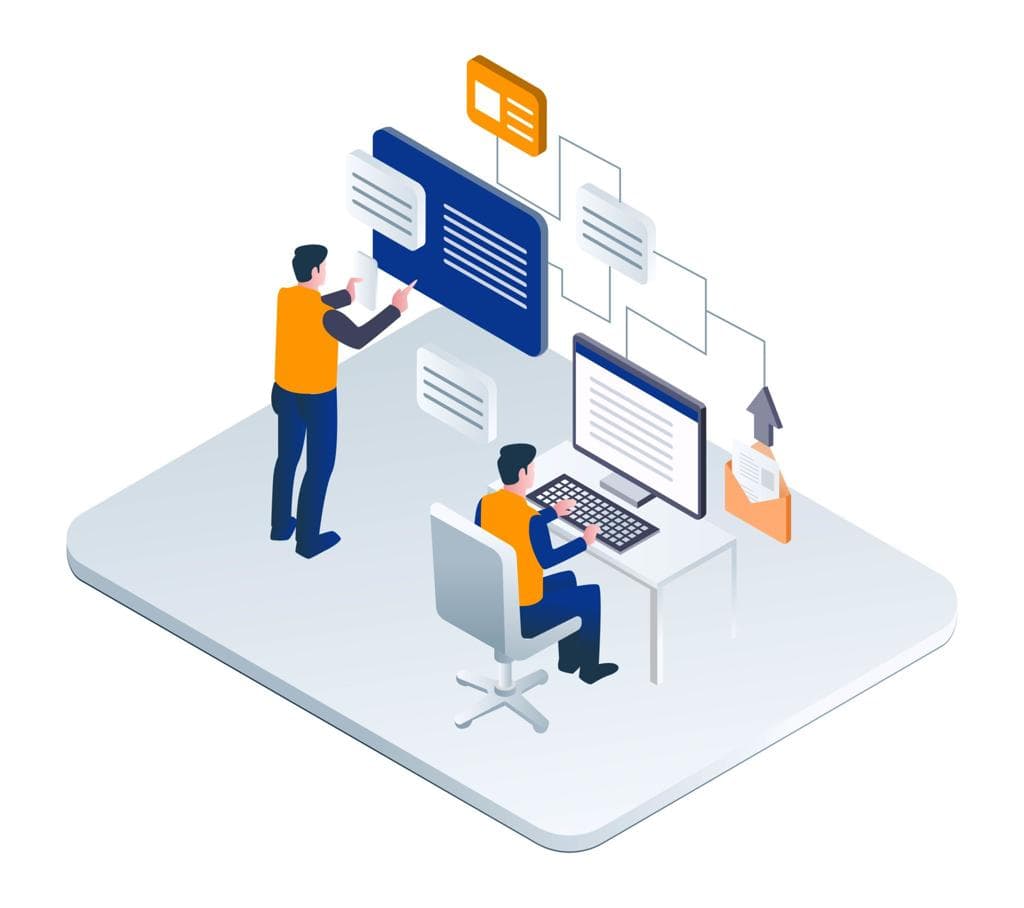
The demand planner updates the sales forecast on a Tuesday. The information sits in a spreadsheet. On Thursday, the procurement team working from a different spreadsheet that was last synced two weeks ago places a purchase order for inventory quantities that do not reflect the updated forecast. The warehouse team receives the inventory on the following Monday and updates their inventory management system. The marketing team, working from their own analytics dashboard that pulls from Shopify but not from the warehouse system, runs a promotional campaign on Tuesday for an SKU that has just gone out of stock. Customer orders come in. Fulfilment fails. Returns are raised. Customer trust erodes. Every person in this sequence was doing their job correctly within their own system. The business failed because the systems were not connected and the coordination overhead of manually bridging those connections was not sufficient to catch the mismatch before it became a customer problem. This is the operational reality of a business without interconnected systems, and it plays out in some variation across almost every D2C brand that has not deliberately designed the connections between its functional systems.
Why Silos Are the Default and Why They Fail at Scale
Functional silos emerge naturally in growing businesses for a straightforward reason: specialisation. As a business adds people and the functions diversify marketing, operations, finance, customer support each function develops its own tools, its own data models, and its own performance metrics. This specialisation is genuinely valuable; it allows each function to develop the domain expertise and operational processes that serve its specific responsibilities well. The problem emerges when the outputs of one function are required as inputs to another which, in any business with interconnected operations, is constant and continuous.In a small team, the connections between functions are maintained through personal relationships and informal communication the marketing lead and the operations lead sit near each other and talk regularly enough that misalignments are caught before they become problems. As the team grows and the operational complexity increases, informal communication is no longer sufficient to maintain the coordination required. The misalignments accumulate faster than they are caught. The coordination meetings multiply. The email chains lengthen. The data reconciliation work grows. The business is not growing because it is becoming less efficient it is becoming less efficient because it grew without building the system connections that would have made coordination structural rather than interpersonal.
The Five Critical System Connections
The most important system connections to build in a D2C or FMCG business are the five that most directly affect the business's ability to serve customers reliably and grow profitably. The first is the demand-to-inventory connection: the link between sales data, demand forecasting, and inventory replenishment that ensures procurement decisions are driven by forward-looking demand signals rather than backward-looking stock levels. The second is the inventory-to-marketing connection: the link between real-time inventory availability and marketing campaign decisions that prevents the promotion of out-of-stock products.The third is the order-to-fulfilment connection: the link between customer order data and warehouse operations that ensures fulfilment prioritisation reflects order age, customer tier, and SLA commitment rather than warehouse processing convenience. The fourth is the fulfilment-to-finance connection: the link between actual fulfilment outcomes units shipped, returns processed, marketplace settlements received and the financial reporting that tracks revenue, COGS, and contribution margin in real time rather than with a month-end lag. The fifth is the customer-to-product connection: the link between post-purchase customer feedback, return reasons, and support ticket patterns and the product development and quality control processes that should be responding to those signals. Each of these connections, when absent, creates a predictable category of operational failure. Each, when built, removes a category of coordination overhead and replaces it with structural information flow.
Building the Connections: Principles and Sequence
Building system connections is an architectural project, not a tool-buying project. The most common mistake is purchasing an integration tool or a unified platform and expecting the connections to emerge from the technology. Technology can facilitate connections, but only after the connection has been designed the data model defined, the flow mapped, the decision logic specified, and the ownership assigned. The sequence for building interconnected systems starts with mapping the current state of information flow across the business's critical operational processes, identifying the points where information needs to cross a functional boundary and currently does so through manual intervention, and prioritising those boundary crossings by the cost of the manual intervention (in time) and the cost of the failures that occur when the intervention is late or absent.The highest-priority connection to build first is almost always the demand-to-inventory connection because it sits at the upstream end of the operational system and its failures cascade through every downstream function. A business with a reliable, automated demand-to-inventory connection prevents the stockouts, overstock positions, and procurement inefficiencies that create operational chaos across fulfilment, marketing, and finance simultaneously. Once the highest-priority connection is built and stable, the next highest-priority connection is addressed in sequence. The goal is not to build all connections simultaneously it is to progressively replace the most expensive manual coordination points with structural system connections, in the order that delivers the highest operational improvement per unit of investment.

Related articles
View all → AI-Native Infrastructure
Why Global Enterprises Need AI-Native Operational Infrastructure
The operational infrastructure that global enterprises built in the pre-AI era was designed for a different competitive environment. Enterprises that try to layer AI on top of legacy operational infrastructure will capture a fraction of AI's potential. The ones that rebuild their operational foundations as AI-native will gain structural advantages their competitors cannot close.
 Strategic Execution
AI-Powered Enterprise Execution for Faster Strategic Outcomes
Strategic advantage in the current era is not determined by the quality of strategy alone it is determined by the speed at which strategy is executed. AI-powered enterprise execution systems are compressing the time from strategic decision to operational outcome in ways that are redefining competitive dynamics across every sector.
 Execution Speed
Why Enterprise Execution Speed Will Define Market Leadership in the AI Era
In the AI era, the fastest-executing enterprise wins. Not the best-strategised, not the most well-resourced the fastest. Execution speed is becoming the primary competitive variable, and the organisations that have built AI-powered execution infrastructure are setting a pace their competitors cannot match.