The Last Human-Only Professions: What Jobs Will Never Be Automated?
The WEF projects 92 million jobs displaced and 170 million created by 2030. Some professions will not be in either column. Here is an honest analysis of which jobs are structurally resistant to automation and why the reasons are more interesting than 'AI can't do that yet.'
Aditya Sharma
Author
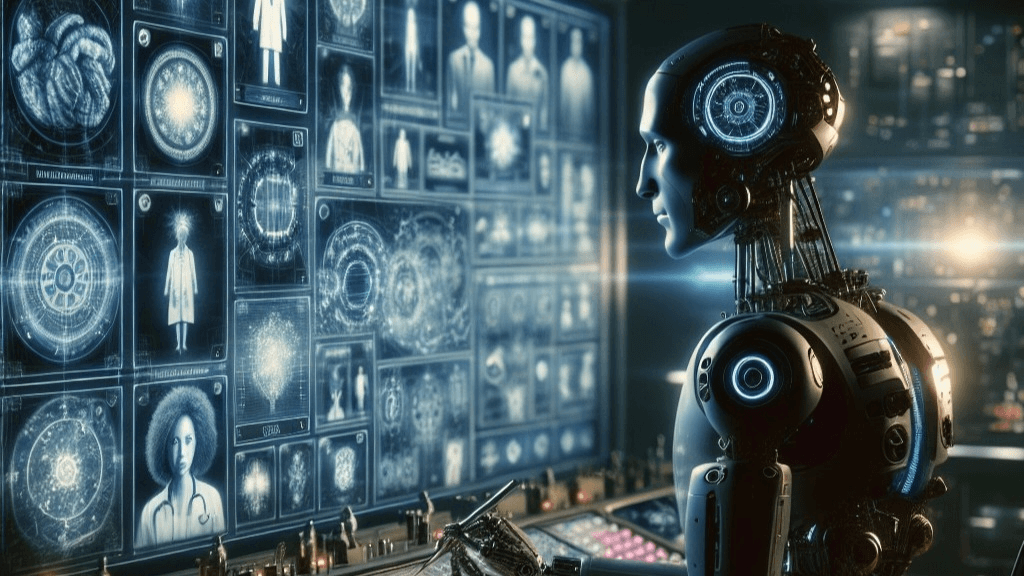
The question 'which jobs will AI never automate?' is asked constantly and answered badly. The most common answer 'creative jobs' or 'jobs requiring human empathy' is too broad to be useful and is already being disproven at the margins: AI generates creative work that passes for human production in many contexts, and AI systems deliver customer interactions that users rate as more empathetic than human ones in controlled studies. The more useful framing is: what specific capabilities do certain jobs require that AI cannot replicate, and are those capabilities structurally unavailable to AI systems or merely temporarily unavailable given the current state of the technology? Some jobs are protected only temporarily the AI capability to perform them is not yet sufficient but is on a plausible development path. Others are protected structurally they require capabilities that are not on the current AI development trajectory or that humans require from each other for reasons that have nothing to do with capability. The latter category is smaller than the optimists claim and larger than the pessimists fear.
The Temporary vs. Structural Distinction
Temporary protection describes jobs that AI cannot currently perform well but could plausibly perform in five to ten years as capability continues to develop. Entry-level nursing involves enough physical dexterity, sensory assessment, and contextual judgment that current AI robotics and reasoning systems cannot replicate it reliably but the trajectory of robotic and sensor technology makes this a temporary protection. First-response firefighting requires physical action in unpredictable, rapidly changing environments that autonomous systems cannot navigate reliably today but Boston Dynamics' robotics development and sensor AI advances suggest this protection may erode over the next decade.Structural protection describes jobs that require capabilities that are not on the current AI development trajectory, or that humans require from each other by preference or social norm regardless of AI capability. Understanding this distinction prevents the common error of treating 'AI cannot do this yet' as equivalent to 'AI will never do this' which produces false career security and the equally common error of treating all jobs as eventually automatable which produces false despair.
Structurally Protected: High-Stakes Human Accountability
A specific and underappreciated category of structural protection is the requirement for a human being to bear personal, legal, and professional accountability for high-stakes decisions. A surgeon who performs an operation is personally accountable for its outcome in ways that are legally and professionally meaningful they can be sued for malpractice, their licence can be revoked, their reputation is tied to their outcomes. An AI system that performs an operation cannot bear accountability in these forms. It cannot be sued, cannot have its licence revoked, and its 'reputation' in the sense of personal professional standing does not exist.This accountability requirement is not merely a regulatory artefact that will be updated when AI becomes capable enough. It reflects a genuine social need: when something goes wrong in a high-stakes context, human institutions require someone who can be held responsible, who can explain what happened and why, and who will experience the consequences of that explanation. This requirement applies to surgeons, judges, pilots (in civil aviation where the captain retains final authority), structural engineers who sign off on building certifications, and licensed professionals whose signature certifies that work meets a standard. The signature requirement the human stake is not just procedural. It is substantive.
Structurally Protected: Embodied Physical Presence
Some professions require physical human presence in ways that are not merely a technological challenge awaiting solution. A massage therapist provides therapeutic value through physical touch from a human body not because AI-controlled robotic massage cannot produce similar physical pressure, but because the therapeutic relationship and the perceived value of the experience are specifically tied to receiving human touch. Research on the therapeutic effects of human touch is not primarily about the mechanical properties of the touch. It is about the social and psychological meaning of being touched by another person who is present with you.The same logic applies to aspects of childcare, eldercare, and companionship services where the human relationship is intrinsic to the value not as a workaround for AI incapability but as the actual service being provided. A grandmother who wants a human carer for her parent is not necessarily making an assessment about AI capability versus human capability. She is expressing a preference for a human relationship for a person she loves. This preference is not irrational and it is not obviously going to change as AI capability improves.
The Honest Answer
The honest answer to 'what jobs will never be automated' is: fewer than the optimists claim, and more than the pessimists fear. The jobs that are structurally protected are the ones where human accountability, human presence, human relationship, or real-world physical navigation are intrinsic to the value delivered not as temporary limitations of current AI capability but as features of what the job actually is. The jobs that are temporarily protected are the ones where AI capability is not yet sufficient but the trajectory of AI development makes sufficient capability plausible within a decade.The most durable career strategy is not to identify a 'safe' profession and pursue it with the assumption of permanent security. It is to understand which capabilities within your profession are structurally human judgment, accountability, relationship, physical presence and to invest in those capabilities while using AI to handle the parts of your work that are not. The professional who has done this analysis honestly, who knows why their work requires a human and what specifically they bring that AI cannot, is positioned well regardless of what AI becomes capable of next.
The Specific Professions Most Resistant to Automation
| Profession | Primary Protection Mechanism | Nature of Protection | Vulnerability Watch |
|---|---|---|---|
| Surgeon (complex procedures) | Legal accountability + physical precision in unpredictable anatomy | Structural accountability requirement is not merely regulatory | Robotic-assisted surgery increasing; AI diagnostic support growing |
| Judge / arbitrator | Human accountability for legal decisions + legitimacy requirements | Structural legal systems require human accountability | AI legal research tools reducing need for junior legal staff |
| Skilled tradesperson (electrician, plumber) | Real-world physical environment navigation | Currently structural environment unpredictability is genuinely hard | Robotic capability improving; specific trade tasks increasingly automatable |
| Therapist / counsellor | Human relationship is intrinsic to therapeutic value | Structural for many patients, human relationship is the therapy | AI mental health tools growing; appropriate scope boundaries unclear |
| Emergency responder (paramedic, firefighter) | Real-time unpredictable physical environment + split-second human judgment | Temporary-to-structural robotic capability gap large but narrowing | AI dispatch optimisation and diagnostic support already deployed |
| Primary school teacher | Human relationship in child development + physical presence | Structural for developmental stages children need human relationship | AI tutoring tools supplementing instruction; full substitution socially contested |
| Palliative care specialist | Human presence at end of life social and psychological requirement | Structural human accompaniment at death is culturally and emotionally irreplaceable | AI emotional support tools supplementing but not replacing human presence |

Related articles
View all →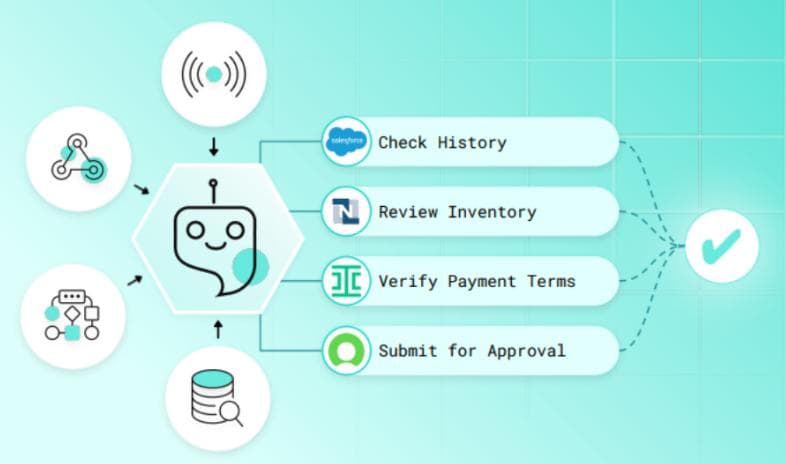 AI Execution
Why AI Execution Systems Will Define the Future of Enterprise Operations
The next frontier of enterprise competitive advantage is not strategy it is execution. AI execution systems that translate strategic intent into coordinated operational action, faster and more reliably than any human-managed process, are becoming the defining infrastructure of enterprise performance in every sector.
 Autonomous Coordination
The Rise of Autonomous Enterprise Coordination Platforms
Enterprise coordination the alignment of people, processes, information, and resources across organisational boundaries has always been expensive, slow, and error-prone when managed through human intermediaries alone. Autonomous coordination platforms powered by AI are replacing the coordination overhead of large organisations with intelligent systems that synchronise the enterprise continuously and without manual intervention.
 AI Agents
How AI Agents Are Transforming Enterprise Workflow Intelligence
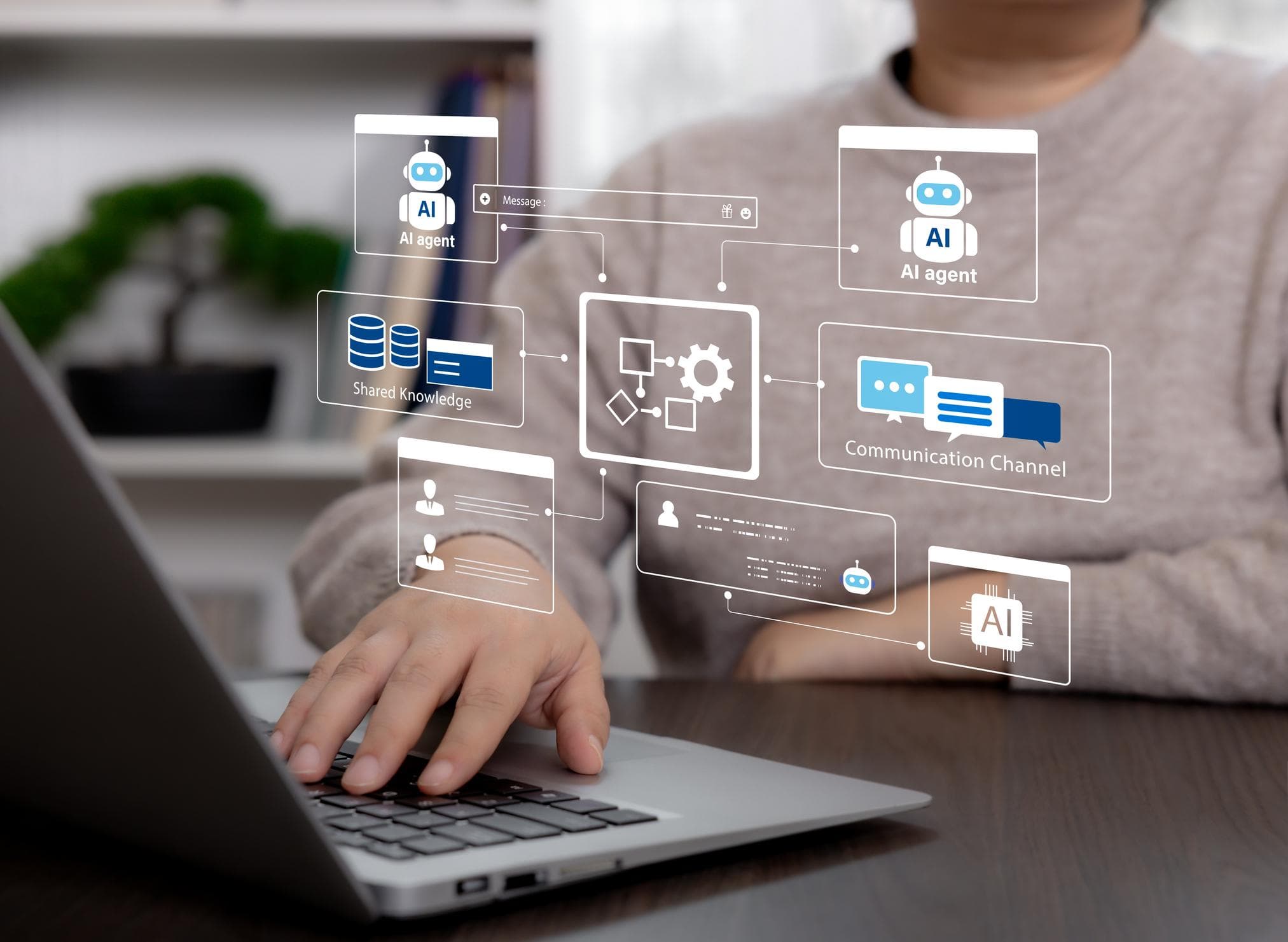
AI agents autonomous systems that perceive their environment, reason about objectives, and take action across enterprise workflows are moving from research concept to operational reality. The enterprises deploying AI agents at scale are discovering that workflow intelligence is not just about automation it is about creating organisational capability that compounds with every cycle.