Multi-Agent Systems: The Future of Enterprise Collaboration
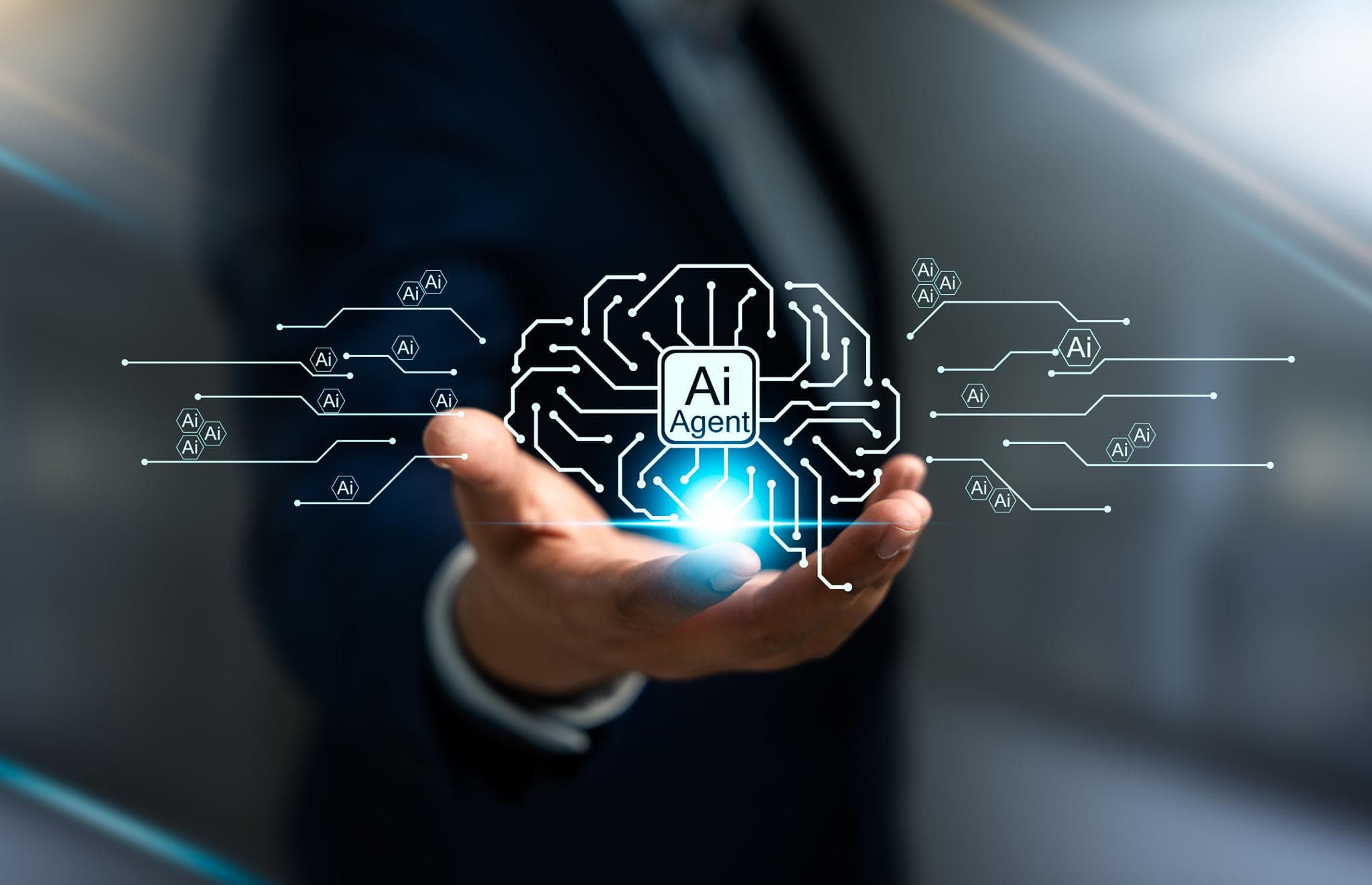
Enterprise collaboration has traditionally required human coordination: people communicate through meetings, emails, and messaging to align on objectives, share information, coordinate activities, and resolve conflicts. This model works when coordination demands are manageable relative to human communication bandwidth, but breaks down as organizational complexity increases. Multi-agent systemscollections of specialized AI agents that coordinate with each other through structured protocols rather than requiring human intermediationrepresent a fundamental evolution in how enterprise work gets coordinated. Instead of humans coordinating all inter-team activities, specialized agents handle routine coordination autonomously while humans focus on strategic collaboration requiring judgment and creativity. The performance characteristics are transformative: multi-agent systems can coordinate hundreds of workflows simultaneously, maintain perfect information consistency across activities, resolve conflicts through governance rules rather than negotiation, and scale coordination capacity computationally rather than through headcount growth.
Manthan Sharma
Author

Consider a product launch requiring coordination across product management, engineering, marketing, sales, customer support, and operations. Traditional collaboration model: weekly cross-functional meetings (30 person-hours weekly), daily email threads coordinating dependencies, ad-hoc meetings resolving blockers, status reports compiled manually, and constant context switching as team members coordinate across domains. Total coordination overhead: 150-200 person-hours weekly. Multi-agent collaboration model: specialized agents coordinate launch activities autonomouslyproduct agent maintains launch requirements and timeline, engineering agent coordinates development and deployment, marketing agent coordinates campaigns and content, sales agent coordinates training and enablement, support agent coordinates documentation and readiness, operations agent coordinates infrastructure and monitoring. Agents communicate through structured protocols sharing relevant information automatically, detecting conflicts and proposing resolutions based on governance rules, escalating only scenarios requiring human judgment. Human collaboration required: strategic decisions on positioning and pricing, creative decisions on messaging and branding, complex tradeoffs requiring judgment. Coordination overhead: 30-40 person-hours weekly80% reduction. The transformation is not replacing human collaborationit is eliminating routine coordination overhead so humans can focus on strategic collaboration that creates value. Research shows multi-agent systems deliver 40-60% efficiency gains in enterprise applications by enabling parallel processing and eliminating coordination bottlenecks that sequential human coordination creates. The architectural advantage is that agents can maintain perfect information consistency across domains while humans inherently lose context through specialization and cognitive limits. Organizations deploying multi-agent systems report dramatic improvements in coordination efficiency, decision speed, and execution consistency that human-coordinated models cannot match. The strategic implication is that collaboration competitiveness will increasingly depend on multi-agent orchestration capability rather than human coordination efficiencyshifting competitive advantage from organizations with strong human collaboration cultures to organizations with sophisticated agent orchestration platforms.
The Transformation Imperative: Why This Matters Now
The shift described in multi-agent systems: the future of enterprise collaboration is not a future possibility that organizations can evaluate leisurelyit is a present reality that early adopters are already operationalizing and capturing value from. The question is not whether this transformation will occur but which organizations will lead it and which will be forced to follow from disadvantaged positions. The early movers are establishing advantages that compound: they are developing organizational capabilities and operational expertise that takes years to build, they are capturing talent that understands autonomous operations creating human capital advantages, and they are establishing market positions as AI-first enterprises that attract customers and partners who want to work with advanced operational models.The window for establishing first-mover advantages is narrowing rapidly because the underlying technologies enabling this transformation have reached production viability and the playbooks for successful deployment are being documented through early adopter experiences. Organizations that commit to transformation in 2026-2027 will benefit from proven implementation approaches while still capturing first-mover advantages in their markets. Organizations that wait until 2028-2029 will face mature competition from enterprises that completed transformation earlier and established operational superiority. The strategic risk of delay is asymmetric: early transformation that encounters implementation challenges can be adjusted and refined, but delayed transformation that must compete against established AI-first competitors faces challenges that cannot be overcome through incremental catch-up efforts.
Implementation Framework: From Concept to Operational Reality
The gap between understanding the strategic importance of this transformation and successfully executing it is where most organizations struggle. The implementation challenges are not primarily technicalthe underlying AI capabilities largely exist and continue improving. The challenges are organizational, architectural, and governance-related: redesigning workflows around autonomous execution rather than human coordination, establishing governance frameworks that enable agent authority while maintaining controls, developing capabilities for operating AI systems at scale, and managing organizational change as roles and responsibilities evolve. The enterprises succeeding with implementation share consistent approaches that differ fundamentally from traditional IT deployment methodologies.Successful implementation follows a deliberate sequence: start with high-impact workflows where autonomous execution delivers measurable value and builds organizational confidence, establish governance frameworks proving agents can operate within risk controls before scaling deployment, invest heavily in monitoring and audit infrastructure making autonomous operations transparent, measure success through business outcomes not deployment metrics focusing on value delivery, plan for 18-36 month transformation timelines recognizing operational change takes longer than technical deployment, and maintain sustained executive commitment through the difficult middle period where investment is visible but full value has not yet materialized. The most critical success factor is treating implementation as operational transformation rather than technology deployment: the technology enables the transformation but success requires workflow redesign, organizational adaptation, and cultural evolution that technology alone cannot deliver. Organizations that understand this distinction and commit resources accordingly succeed, while organizations that treat this as a technology project fail despite equivalent or greater investment in AI capabilities.
The 2030 Landscape: Winners, Laggards, and Structural Advantages
By 2030, the enterprise landscape will clearly differentiate between organizations that successfully completed the transformation to multi-agent systems: future of enterprise collaboration and those that attempted incremental adoption without committing to architectural change. The winners will operate with capabilities that create permanent competitive advantages: coordination efficiency enabling operational throughput that human-coordinated models cannot match, decision velocity enabling market responses that competitors cannot execute, quality consistency creating customer experiences that competitors cannot replicate, and economic efficiency generating margins that fund continuous innovation while competitors struggle with operational costs.The laggards will face intensifying competitive pressure as performance gaps widen and strategic options narrow. They will lose market share to competitors with superior economics and execution capability, struggle to attract talent as the best employees gravitate toward advanced operational models, face customer defections as expectations rise based on AI-first competitor capabilities, and discover that the organizational transformation required to catch up becomes more extensive as gaps widen. The strategic imperative is unambiguous: commit to transformation now while implementation paths remain accessible and first-mover advantages are still available, or accept permanent competitive disadvantage against enterprises that established autonomous operations earlier. The organizations that act decisively in 2026-2028 will establish positions of strength that persist through 2030 and beyond. The organizations that delay will find themselves competing from structural disadvantages that cannot be overcome through incremental improvements or late-stage transformation efforts. The choice is not whether to transformit is whether to lead or follow the transformation that is already underway.

What an AI-First Fortune 500 Company Will Look Like in 2030
Related articles
View all → Enterprise Coordination
Why Traditional Enterprise Coordination Methods Are Becoming Obsolete
The weekly status meeting, the monthly business review, the quarterly planning cycle, and the annual strategy offsite these are not just inefficient. They are symptoms of an information architecture that was designed for a world without real-time data connectivity. In the world with it, they are being superseded by continuous intelligence systems that make scheduled information aggregation redundant.
 Coordination
AI-Powered Enterprise Coordination for Cross-Functional Business Teams
Cross-functional coordination is one of the highest-cost, highest-friction activities in enterprise management. AI-powered coordination systems are reducing this friction dramatically and the teams that adopt them are moving faster, with fewer misalignments and less coordination overhead.
 Multi-Agent AI
The Future of Enterprise Coordination Through Multi-Agent AI Systems
Multi-agent AI systems networks of specialised AI agents that coordinate with each other to accomplish complex enterprise goals represent the next frontier of enterprise AI deployment. Where single agents handle isolated workflows, multi-agent systems handle the interconnected, cross-functional complexity that constitutes the majority of high-value enterprise operational challenges.