Offline + Online: The New Growth Formula
The debate between offline and online as competing growth channels is over. In 2026, the winning formula is the deliberate integration of both using online to build brand awareness and acquire high-LTV customers, and offline to capture the impulse purchase, the tactile product trial, and the local market trust that digital channels cannot replicate.
Manthan Sharma
Author
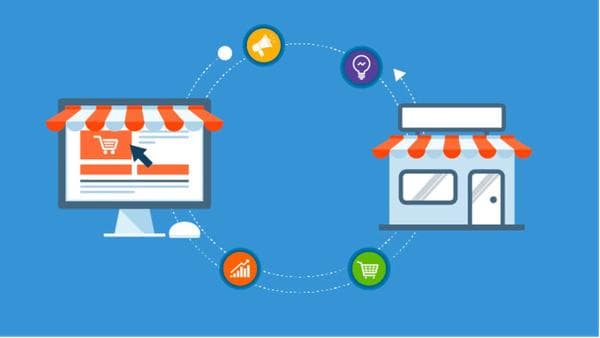
The D2C founder had resisted offline retail for three years on principle, on margin grounds, and on the operational complexity argument that managing retail channels would distract from the digital business. The principle was that D2C meant direct. The margin argument was that distributor and retailer margins would compress the unit economics that the digital model had carefully built. The operational argument was that the sales, distribution, and trade marketing functions required for retail were a completely different business from the performance marketing and fulfilment infrastructure the brand had built. All three arguments contained genuine truth. All three were ultimately outweighed by a single data point: when the brand ran a geo-targeted experiment, increasing offline retail presence in Pune from twelve pharmacy outlets to eighty-five outlets over six months, online sales in Pune increased by 34% over the same period while online sales in the control cities where offline presence was unchanged grew by 11%. The offline presence was driving online sales. The two channels were not competing. They were compounding. The new growth formula is offline plus online and understanding why and how they compound is the strategic insight most D2C founders are still missing.
Why Offline Presence Drives Online Sales
The mechanism by which offline retail presence drives online sales operates through three distinct pathways. The first is ambient familiarity: a consumer who regularly sees a brand on the pharmacy shelf or in the modern trade store develops a brand recognition that reduces the perceived risk of a first online purchase. The cognitive barrier to buying a brand online for the first time is significantly lower when the consumer has seen the physical product multiple times in a trusted retail context even if they have never purchased it offline. Offline presence generates the familiarity that reduces the CAC of online acquisition.The second pathway is trial-to-loyalty conversion: a consumer who tries a product for the first time through an offline impulse purchase attracted by the packaging, a pharmacist recommendation, or a point-of-sale display and has a positive experience is likely to move to online repeat purchase for the convenience and loyalty programme benefits that the brand's digital channels offer. Offline is the trial surface. Online is the repeat purchase surface. The brand that has both surfaces captures a larger share of the customer lifetime than the brand that has only one. The third pathway is social proof amplification: offline retail presence generates a category of social proof 'I saw it at the chemist,' 'it's available on Blinkit' that online presence alone cannot generate. This type of social proof accelerates organic recommendation and reduces the friction of influencer and content-driven online acquisition.
Why Online Presence Drives Offline Sales
The reverse flow online presence driving offline sales is equally important and equally underappreciated. The consumer who discovered a brand through Instagram advertising or an AI search recommendation and wants to purchase immediately before the two-to-five-day e-commerce delivery window will seek the product in their local retail environment if they know it is available there. The brand's digital presence created the purchase intent. The offline availability converted it. Without offline availability, the purchase intent either waits for e-commerce delivery or converts to a competitor that is available immediately.The brand that communicates its offline availability through its digital marketing 'available at 500+ pharmacies across India' in the Instagram bio, 'find us near you' in the website header converts the digital-created purchase intent into offline store visits that the brand would not otherwise have generated. This is the compounding mechanism of offline-online integration: digital creates awareness and intent at scale, offline converts intent at the moment of purchase readiness regardless of delivery timeline, and the combination produces a purchase conversion rate that neither channel achieves independently.
Building the Integrated Model: Operational Requirements
The operational requirements of the offline-online integrated model are more complex than either channel independently but the complexity is manageable if the integration is built sequentially rather than simultaneously. The starting point is a selective offline launch: identifying the two to three cities where the brand's online sales density is highest (indicating strong consumer demand for the product) and building offline presence in those specific geographies rather than attempting national retail distribution from the outset. This concentration allows the brand to test the compounding effect of offline-online integration with a manageable operational investment.The critical operational requirement is pricing coherence: the consumer who sees the brand online at ₹799 and finds it in a pharmacy at ₹899 (with retail markup) or ₹699 (with a retail promotional price) will experience a brand consistency failure that undermines the trust the digital presence has built. Managing retail pricing requires an active trade pricing policy, distributor agreement enforcement, and ongoing monitoring of retail price points the trade marketing operational capability that most digital-first D2C brands have not built. Investing in this capability is the operational cost of the offline-online integration model, and it is a cost that the compounding revenue benefits of the integrated approach consistently justify.
Why D2C Is Growing Faster Than Marketplaces
Related articles
View all → Growth
The Future of Enterprise Growth Through AI Innovation
AI is not just improving the efficiency of existing growth strategies it is enabling entirely new growth models. The enterprises that understand how to use AI as a growth driver, not just a cost reducer, are accessing markets, customer segments, and revenue streams that were previously out of reach.
 Scalability
AI-Powered Systems for Enterprise Scalability and Resilience
The ability to scale without proportional cost increases and to absorb shocks without operational failure is what separates enterprises that grow sustainably from those that grow into crisis. AI-powered systems are the infrastructure through which scalability and resilience are built.
 AI
AIThe Future of AI-Powered Digital Marketplaces
Digital marketplaces are evolving from transactional platforms into intelligent commerce ecosystems. AI is reshaping how buyers discover products, how sellers manage operations, and how platforms create value for everyone in the ecosystem and the pace of this transformation is accelerating.