Pricing Strategy in a Competitive D2C Market
Price is not just a revenue variable it is the most direct signal of brand positioning, the primary lever of gross margin, and the mechanism through which a brand communicates its value proposition to a consumer who has ten alternatives visible on the same screen. Getting pricing right in a competitive D2C market requires a strategy that connects positioning, margin requirements, and competitive dynamics simultaneously.
Nirmal Nambiar
Author
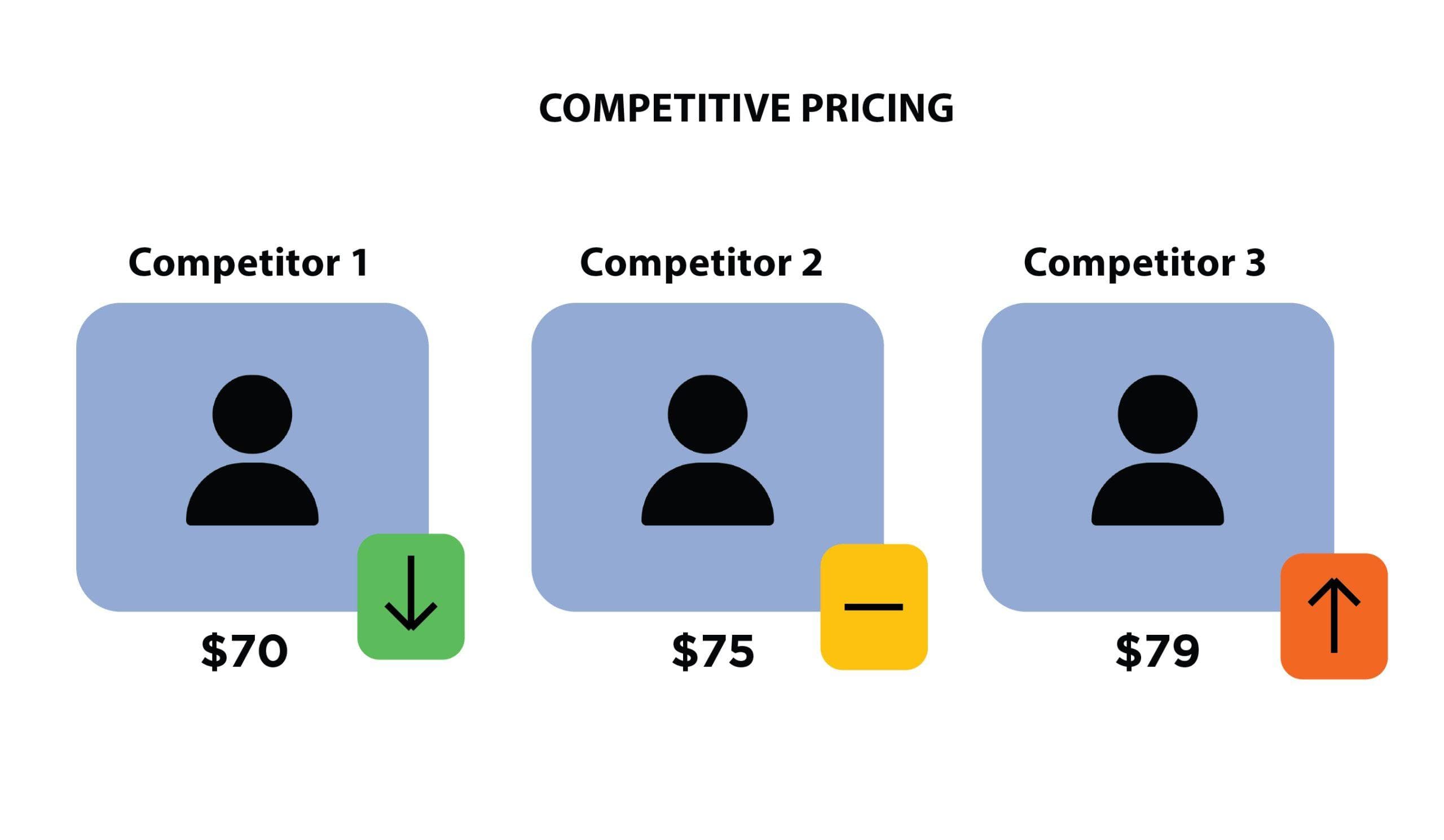
The brand launched at ₹599 for a 30-day supply of its magnesium supplement. The decision was made by benchmarking against the two best-known competitors in the category one priced at ₹549, one at ₹699 and choosing a price that felt competitive without being the cheapest. Eighteen months later, the brand was stuck. The consumer who was price-sensitive bought the ₹549 competitor. The consumer who was quality-sensitive bought the ₹699 competitor and associated higher price with higher quality. The brand at ₹599 was the middle option that satisfied neither decision criterion not the value choice, not the premium choice. Revenue had plateaued. CAC was rising as the brand competed for an increasingly narrow segment of consumers who were neither price-led nor quality-led in their purchase decision. The pricing strategy that had felt like a safe middle ground had become a brand positioning problem. Price is not just a number. It is a positioning statement and in a crowded D2C category, a positioning statement that fails to claim a clear space in the consumer's decision framework is a liability, not an asset.
Price as a Positioning Signal
In a crowded D2C category, the consumer's first and most immediate signal of a brand's value proposition is its price relative to the alternatives visible in the same marketplace or search result. Price communicates quality expectation, target consumer segment, and brand confidence in its product before the consumer has read the product description, looked at the packaging, or read a single review. A brand that prices below the category midpoint signals that it is competing on value. A brand that prices above the category midpoint signals that it is competing on quality or premiumness. A brand that prices at the category midpoint signals that it has not made a positioning choice and in a market where consumer attention is scarce, the absence of a clear positioning signal is a competitive disadvantage.The pricing-positioning connection means that the right starting point for a pricing strategy is not a COGS-plus-margin calculation or a competitor benchmark. It is a positioning question: who is the consumer this brand is designed for, what is the primary value the brand is delivering to that consumer, and at what price point does that value proposition make the most sense both economically and perceptually? A brand built for the performance-conscious consumer who wants the highest-quality ingredients and is willing to pay for them should price at a premium not just because the premium is economically attractive but because pricing at the category midpoint undermines the positioning claim that the brand's product and marketing are trying to establish.
The Margin Requirement: Pricing Floors That Cannot Be Compromised
While positioning determines the strategic direction of pricing, margin requirements define the floor below which no pricing decision should go regardless of competitive pressure. The pricing floor is the minimum price at which the product can be sold while generating a contribution margin sufficient to cover the brand's fixed costs and leave a viable profit at the brand's target revenue scale. This floor is a mathematical calculation, not a negotiation.The error that most D2C founders make under competitive price pressure is treating the margin floor as flexible accepting lower margins in exchange for higher volume under the assumption that volume will eventually restore margin through scale efficiencies. In most cases, this assumption is wrong. Gross margin on a physical consumer product improves with scale through COGS reduction better supplier terms, higher production volumes but the improvement is incremental, typically 3 to 8 percentage points over a doubling of volume. If the price reduction accepted to compete has compressed margin by 15 percentage points, the volume-driven COGS improvement will not close the gap. The pricing floor must be defined, communicated internally, and defended against the short-term pressure to chase volume at uneconomic prices.
Dynamic Pricing and Promotional Strategy
Once the positioning and margin floor are established, the dynamic element of pricing strategy how the brand uses price variation, promotions, and bundle pricing across channels and time periods becomes a tool for revenue optimisation rather than a reaction to competitive pressure. Channel-specific pricing, where the brand maintains a higher list price on its own website while offering marketplace-specific prices that reflect the additional platform commission cost, preserves direct channel margin while remaining competitive on platforms where price comparison is frictionless.Promotional pricing seasonal discounts, first-purchase offers, subscription discounts should be designed with the contribution margin impact explicitly calculated before the promotion is launched. A 20% introductory discount on a product with a 58% gross margin and a 26% CAC-to-revenue ratio generates a contribution margin of approximately 8% on the discounted orders acceptable if the promoted customers have the cohort retention to repurchase at full price within ninety days, unacceptable if they do not. The discipline of calculating the full contribution margin impact of every pricing decision including promotional decisions before the decision is made is the operational foundation of a pricing strategy that serves both the brand's positioning goals and its financial sustainability simultaneously.

Related articles
View all → AI
AIThe Future of AI-Powered Digital Marketplaces
Digital marketplaces are evolving from transactional platforms into intelligent commerce ecosystems. AI is reshaping how buyers discover products, how sellers manage operations, and how platforms create value for everyone in the ecosystem and the pace of this transformation is accelerating.
 Customer Support
How AI Can Transform Enterprise Customer Support Systems
Customer support is one of the highest-cost, highest-impact functions in a growing enterprise. AI is transforming it from a cost centre with linear scaling constraints into an intelligent service layer that delivers better customer outcomes at a fraction of the traditional cost per interaction.
 Logistics
The Future of Smart Logistics and Autonomous Delivery Systems
Autonomous vehicles, drone delivery, AI-powered routing, and real-time supply chain visibility are moving from pilot projects to operational infrastructure. The logistics industry is undergoing its most significant transformation since containerisation and the businesses that adapt earliest will define the next era of commerce.