Real-Time Systems: The Backbone of Modern Businesses
The business that knows what happened yesterday is making decisions on stale information. In 2026, the operational cadence of e-commerce, quick commerce, and omnichannel retail requires real-time visibility inventory, orders, fulfilment, and financial performance visible as it happens, not as it was twelve hours ago. Real-time systems are not a technical upgrade. They are a competitive requirement.
Nirmal Nambiar
Author

A D2C brand running across five channels website, Amazon, Flipkart, Blinkit, and two hundred modern trade outlets generates operational events continuously: orders placed, inventory decremented, shipments dispatched, returns initiated, payments received. Each of these events has downstream implications: a stockout at a Blinkit dark store affects a marketing campaign that is actively driving traffic to that SKU. A sudden spike in returns on a specific product variant might indicate a quality issue that should trigger a hold on new shipments. A fulfilment delay accumulating at a specific 3PL node is creating SLA breaches that will show up in marketplace performance metrics tomorrow morning. In a business with batch data updates daily inventory syncs, overnight order reports, weekly financial reconciliations these events are invisible until they have already caused damage. The marketing campaign has run for eight hours against an out-of-stock product. The quality issue has generated two hundred returns before anyone noticed the pattern. The SLA breaches have already affected the marketplace ranking. Real-time systems do not just make operations more efficient. They change the category of problems the business is capable of preventing versus the ones it can only respond to after the damage is done.
What Real-Time Actually Means in a D2C Context
Real-time in a D2C operational context does not mean millisecond latency the precision required for financial trading systems. It means a data latency sufficiently low that the operational decision that depends on the data can be made before the window for effective action has closed. For inventory management, real-time means inventory levels updated within minutes of a pick, receipt, or return so that availability status on the website reflects actual availability and fulfilment decisions are made on current stock positions. For order management, real-time means order status visible to both fulfilment teams and customers within minutes of each status change so that the customer is not calling support to ask where their order is, and the fulfilment team is not reconciling order status manually at the end of each shift.For financial management, the real-time requirement is different: daily revenue and cost visibility is usually sufficient for operational decision-making, with intraday visibility required only for high-volume promotional periods where spend and revenue need to be monitored together to manage CAC in real time. Defining the appropriate real-time requirement for each operational domain rather than pursuing universal real-time data collection for its own sake is the architectural discipline that produces systems with genuine operational value rather than complex real-time infrastructure that collects more data than the organisation can act on.
The Operational Domains Where Real-Time Matters Most
The three operational domains where real-time data most directly affects business outcomes in D2C are inventory visibility, order status management, and marketing performance monitoring. In inventory visibility, the gap between real-time and batch updates creates two specific failure modes: overselling (accepting orders for products that have already sold out because the stock level update has not yet propagated to the e-commerce platform) and underutilisation (restricting sales for products that show low stock in the system but have available inventory that has not yet been recorded due to receiving lag). Both failure modes have direct, measurable revenue and customer experience costs.In order status management, batch updates create the customer experience failure of invisible orders the period between order placement and the first tracking update during which the customer has no information about their order and is most likely to contact support or initiate a cancellation. In marketing performance monitoring, batch reporting creates the budget management failure of overspend running campaigns for hours against CPAs that have exceeded the acceptable threshold because the performance data that would have triggered a pause or budget cap is only available in the morning report. Each of these failures has a specific technical solution that requires real-time or near-real-time data, and each has a quantifiable cost that can be compared against the cost of the technical investment required.
Building Real-Time Capability: Practical Architecture
Building real-time operational capability in a D2C business does not require a complete technology re-architecture. It requires the identification of the specific data flows where batch latency is causing the highest operational cost, and the targeted replacement of those batch flows with real-time or near-real-time alternatives. For inventory visibility, the highest-value real-time investment is a webhook-based integration between the warehouse management system (or 3PL portal) and the e-commerce platform so that every warehouse event (pick, receive, return intake) is pushed to the e-commerce platform immediately rather than synced on a schedule. Most modern 3PL platforms and WMS systems support webhook-based event publishing, and most major e-commerce platforms support API-based inventory updates.For order status management, the equivalent investment is a real-time order status API integration between the e-commerce platform and the logistics carrier most major Indian logistics providers (Delhivery, Shiprocket, Bluedart) provide real-time tracking webhooks that can be integrated into the e-commerce platform's order management system and the customer-facing tracking experience. The principle across both examples is the same: replace the scheduled batch pull (the system checks for updates every four hours) with the event-driven push (the upstream system sends an update immediately when a relevant event occurs). This architectural shift, applied to the two or three highest-cost batch data flows in the business, delivers the majority of the real-time operational value at a fraction of the complexity of a comprehensive real-time data architecture.
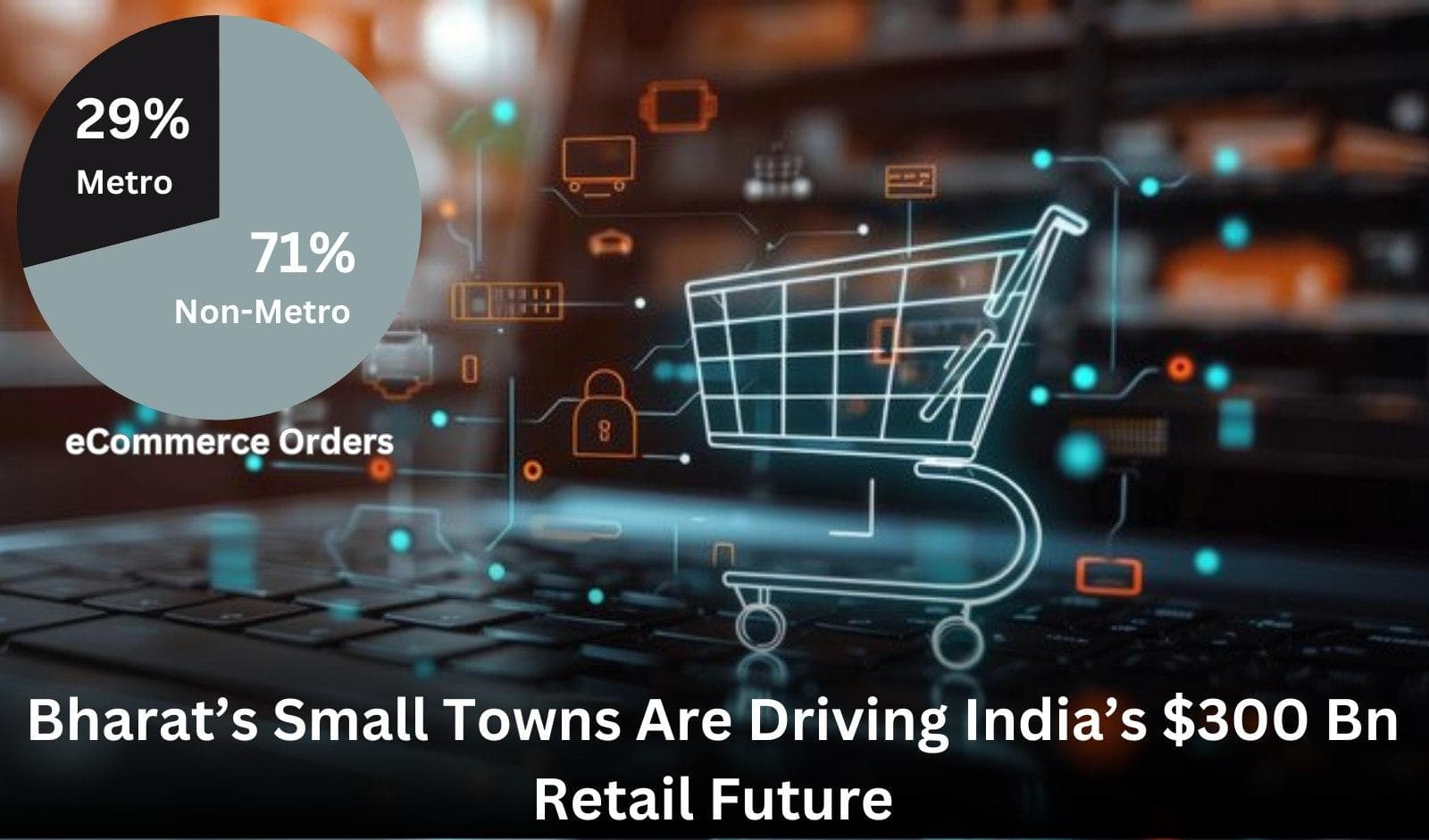
Why Tier-2 & Tier-3 Cities Will Drive the Next Wave of Growth
Related articles
View all → Autonomous Coordination
The Rise of Autonomous Enterprise Coordination Platforms
Enterprise coordination the alignment of people, processes, information, and resources across organisational boundaries has always been expensive, slow, and error-prone when managed through human intermediaries alone. Autonomous coordination platforms powered by AI are replacing the coordination overhead of large organisations with intelligent systems that synchronise the enterprise continuously and without manual intervention.
 AI Agents
How AI Agents Are Transforming Enterprise Workflow Intelligence
AI agents autonomous systems that perceive their environment, reason about objectives, and take action across enterprise workflows are moving from research concept to operational reality. The enterprises deploying AI agents at scale are discovering that workflow intelligence is not just about automation it is about creating organisational capability that compounds with every cycle.
 Enterprise Management
The Future of Enterprise Management Through AI Execution Layers
Enterprise management is being restructured by AI execution layers intelligent systems that sit between strategic direction and operational action, translating intent into coordinated execution at a speed and consistency that human management hierarchies cannot match. The enterprises that deploy these layers effectively are redefining what management means and what managers do.