The Future of Remote Work in AI-Enhanced Organizations
The remote work debate has moved past whether remote work is viable it clearly is to the more important question of how organisations build AI-enhanced remote work environments that are more productive, more collaborative, and more engaging than the office environments they are supplementing or replacing.
Aditya Sharma
Author

The organisations that navigated the forced remote work transition of the early 2020s are now making deliberate strategic choices about what their work environments will look like in an era where AI tools, virtual collaboration platforms, and asynchronous work practices have matured significantly. The question is no longer whether remote work is productive extensive data now confirms that knowledge workers in well-designed remote environments are at least as productive as their office-based counterparts, and often more so. The question is how to build the AI-enhanced remote work infrastructure, management practices, and cultural norms that make distributed organisations genuinely high-performing rather than merely functional. The organisations that answer this question well will access a global talent pool, reduce real estate costs, and build workforce models that adapt to changing talent expectations advantages that office-centric competitors cannot easily replicate.
What AI Changes About Remote Work
The primary criticisms of remote work that it reduces collaboration quality, weakens team cohesion, makes knowledge sharing harder, and creates management visibility challenges are all real problems in poorly designed remote work environments. AI is solving each of these problems in ways that were not available during the initial forced adoption of remote work. AI meeting tools produce real-time transcripts, summaries, and action items that make asynchronous participation in meetings viable. AI writing assistants reduce the friction of written communication that distributed work depends on. AI project management tools provide visibility into team progress without requiring the constant check-ins that drain remote manager and employee time. AI knowledge management systems capture and surface institutional knowledge that would otherwise require physical proximity to access.The AI-enhanced remote organisation is not the pandemic-era remote organisation with better video tools it is a structurally different operating model where AI handles the coordination, communication, and knowledge management overhead that made remote work less effective than office work in its early form. The organisations that build this model deliberately, with the right tools, management practices, and cultural infrastructure, will outperform those that either return entirely to office-centric work or continue with unenhanced remote work models.
Four Design Principles for AI-Enhanced Remote Organisations
Principle 1: Asynchronous by default, synchronous by design
AI-enhanced remote organisations design their workflows to be asynchronous by default meaning that the primary mode of work and communication does not require simultaneous presence. AI tools that summarise meetings, transcribe decisions, and route action items make asynchronous participation viable without the information loss that characterised early asynchronous work. Synchronous interaction real-time meetings, collaborative work sessions, team connection time is designed deliberately for the situations where it adds unique value: complex problem solving, relationship building, and high-stakes decisions that benefit from real-time dialogue.
Principle 2: AI-augmented management visibility
Remote management fails when managers compensate for lack of physical visibility with excessive check-ins, status meetings, and reporting requirements that consume the time and autonomy that make remote work valuable. AI tools that provide managers with real-time visibility into project progress, workload distribution, and team health signals without requiring employees to produce the visibility manually solve this problem. Managers can stay informed without becoming a productivity tax on the teams they are managing.
Principle 3: Deliberate culture infrastructure
Organisational culture in remote environments does not develop organically through physical proximity it must be built deliberately through consistent communication, shared rituals, transparent decision-making, and intentional connection opportunities. AI-enhanced remote organisations invest in the cultural infrastructure that distributed teams need: regular all-hands communication with AI-translated versions for global teams, structured peer recognition systems, virtual social spaces, and leadership visibility that does not depend on physical presence.
Principle 4: Global talent architecture
The strategic advantage of AI-enhanced remote work that office-centric organisations cannot replicate is access to a global talent pool. Organisations that design their remote work model to accommodate talent across time zones, cultures, and languages with AI translation, localisation, and coordination tools can recruit the best people globally rather than the best people within commuting distance. This talent architecture advantage compounds over time as the organisation builds a more diverse, more capable team than geography-constrained competitors can access.
Remote Work Model Diagnostic Questions
- What percentage of your knowledge worker roles genuinely require physical presence for their core responsibilities, versus roles where presence is habitual rather than necessary? This distinction is the foundation of a rational hybrid work policy.
- Do you have AI tools that provide meeting summaries, decision records, and action item tracking that make asynchronous participation in key decisions viable? Without this infrastructure, remote participants are systematically disadvantaged relative to in-room participants.
- How do you currently measure remote employee productivity and engagement? If the answer is meeting attendance and availability signals, your measurement model is producing compliance behaviours rather than performance outcomes.
- What is your current geographic spread of talent recruitment? If hiring is primarily local or national, the global talent pool advantage of remote work is not being realised.
- Do remote employees in your organisation have equal access to career development, mentorship, and advancement opportunities as office-based employees? Structural disadvantage for remote employees creates retention risk in the talent segments most capable of choosing their work arrangement.
- How does your organisation build team cohesion and organisational culture across distributed teams? If the answer relies primarily on annual offsites, the cultural investment is insufficient for the connection needs of distributed teams.
AI-Driven Competitive Intelligence for Modern Businesses
Related articles
View all → Autonomous Coordination
The Rise of Autonomous Enterprise Coordination Platforms
Enterprise coordination the alignment of people, processes, information, and resources across organisational boundaries has always been expensive, slow, and error-prone when managed through human intermediaries alone. Autonomous coordination platforms powered by AI are replacing the coordination overhead of large organisations with intelligent systems that synchronise the enterprise continuously and without manual intervention.
 AI Agents
How AI Agents Are Transforming Enterprise Workflow Intelligence
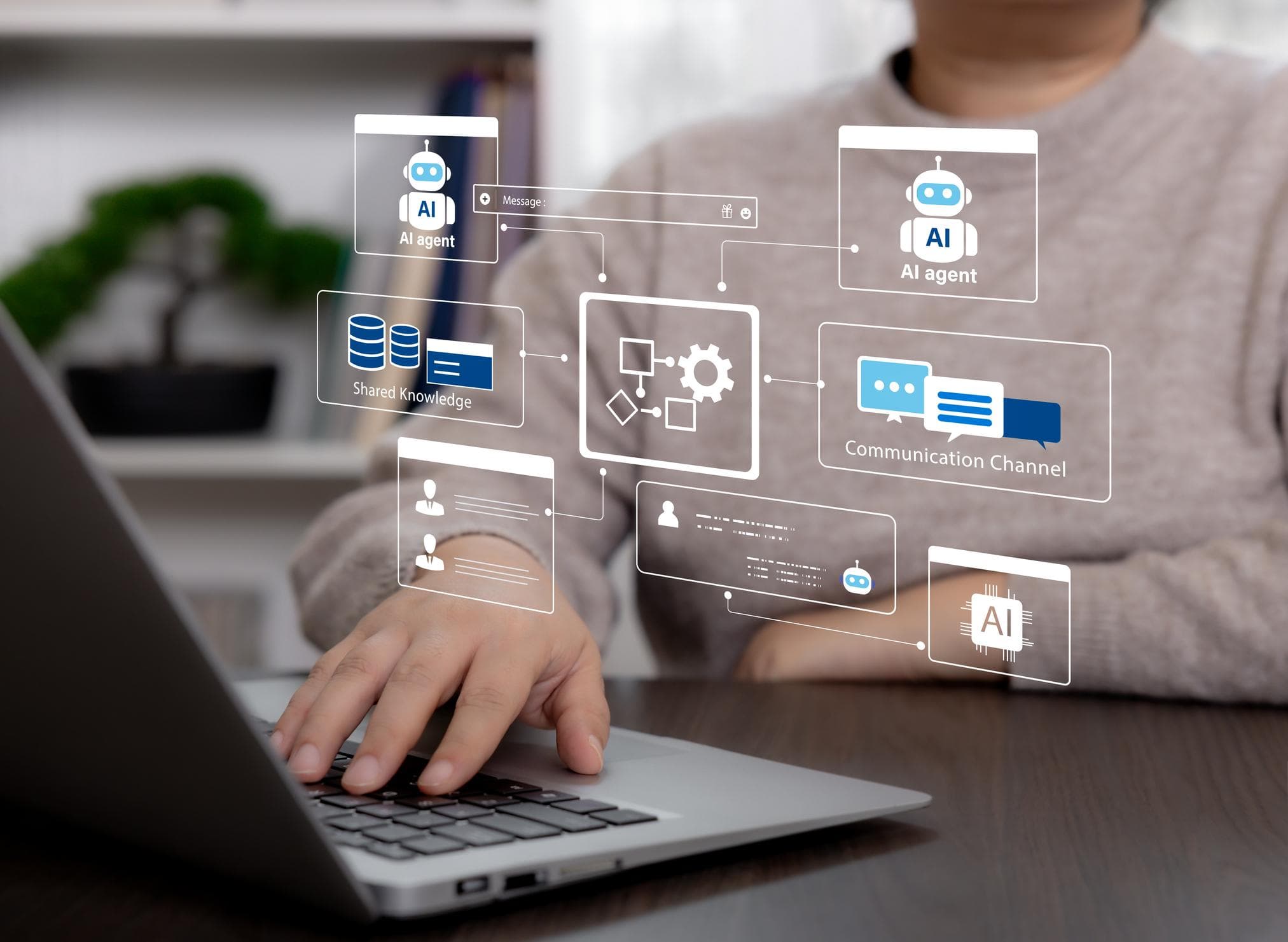
AI agents autonomous systems that perceive their environment, reason about objectives, and take action across enterprise workflows are moving from research concept to operational reality. The enterprises deploying AI agents at scale are discovering that workflow intelligence is not just about automation it is about creating organisational capability that compounds with every cycle.
 AI-Native Infrastructure
Why Global Enterprises Need AI-Native Operational Infrastructure
The operational infrastructure that global enterprises built in the pre-AI era was designed for a different competitive environment. Enterprises that try to layer AI on top of legacy operational infrastructure will capture a fraction of AI's potential. The ones that rebuild their operational foundations as AI-native will gain structural advantages their competitors cannot close.