Why 'Clean Data' Is More Important Than Big Data
The pursuit of more data has distracted an entire generation of D2C brands from the more important pursuit of better data. Clean, consistent, well-structured data that accurately reflects the business's actual performance is more valuable than a vast, fragmented data lake that requires extensive preparation before it can be used for any decision. Data quality is the foundation of execution clarity.
Aditya Sharma
Author
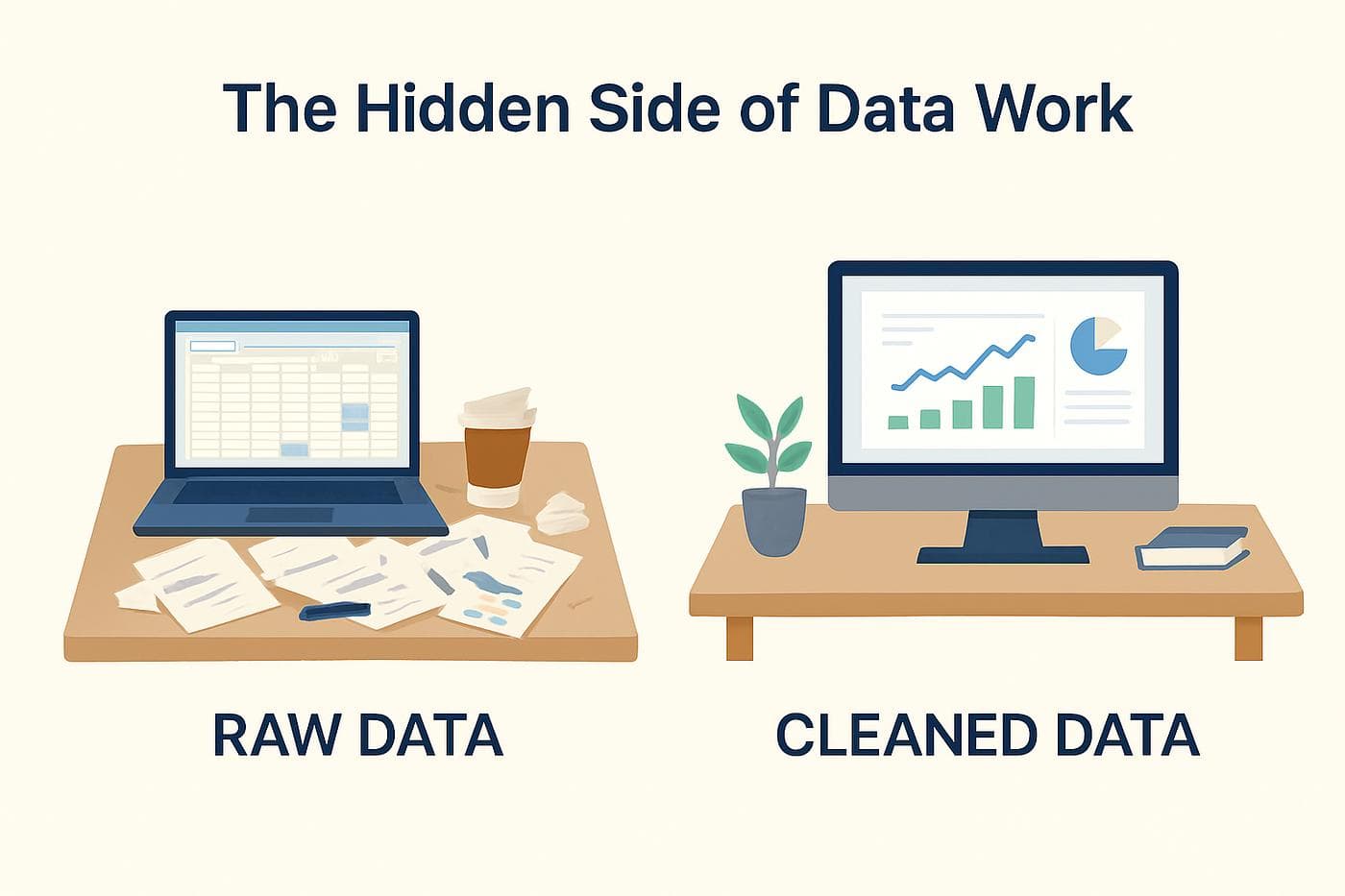
The brand's analytics stack included a data warehouse aggregating from seven source systems, a business intelligence tool with forty-three pre-built dashboards, and a data team of two analysts who spent the majority of their time cleaning and reconciling data rather than generating insights. The most common output of the data team's work was not a recommendation or an analysis. It was a note explaining why the number in Dashboard 7 was different from the number in Dashboard 12 for the same metric over the same period. The discrepancy was caused by the definition of 'revenue' differing between the Shopify integration (which recorded revenue at order creation) and the accounting system integration (which recorded revenue at payment confirmation), with the difference being the value of orders placed but not yet paid a small number in normal operations but a significant number during promotional periods when buy-now-pay-later purchases were elevated. The business had big data. It did not have clean data. And the practical consequence was that the management team had stopped trusting the dashboards and had reverted to making decisions based on gut instinct and the Shopify revenue figure the one number they were confident in regardless of what the more sophisticated analysis suggested. Clean data is not a technical nicety. It is the prerequisite for any data-driven decision-making to actually drive decisions.
What Makes Data 'Clean' And Why It Requires Deliberate Investment
Clean data has four characteristics: it is accurate (the numbers correctly reflect the underlying reality they are measuring), consistent (the same metric is defined and calculated the same way across all systems and time periods), complete (there are no material gaps in the data that would distort any important analysis), and timely (the data is available at the frequency and latency appropriate for the decisions it supports). Each of these characteristics requires deliberate architectural and operational investment to achieve and each is violated routinely in D2C businesses that have accumulated data infrastructure reactively rather than designed it deliberately.Accuracy failures occur when source systems record events differently from how those events affect the business's actual performance the order creation versus payment confirmation example above, or inventory systems that record goods received before quality inspection rather than after. Consistency failures occur when the same metric is derived differently from different source systems 'revenue' from Shopify, Amazon, and the accounting system will almost always differ unless someone has explicitly defined a single derivation logic and applied it consistently across all sources. Completeness failures occur when data for specific channels, time periods, or product categories is missing or excluded from the data model due to integration gaps. Timeliness failures occur when data is updated less frequently than the decisions that depend on it require.
The Cost of Dirty Data: Decisions Made on Wrong Information
The business cost of dirty data is not the cost of the data cleaning work it is the cost of the decisions made on incorrect information before the data quality problem was identified. A demand forecast built on order-creation revenue rather than confirmed revenue will overstate demand during promotional periods when cancellation rates are elevated, leading to inventory over-procurement that creates working capital strain and potential markdown losses. A contribution margin analysis that excludes marketplace returns from the COGS calculation will overstate the margin of marketplace channels, leading to over-investment in channels whose true economics are less attractive than the dirty data suggests.These are not hypothetical examples they are the categories of decision error that data quality problems routinely produce in D2C businesses. The common thread is that the decision-maker believed they were working from accurate data, made a decision that was rational given that data, and discovered the data quality problem only when the downstream consequences of the decision became visible at which point the cost of the error was already largely irreversible. The investment in clean data is an insurance premium against this category of expensive decision error.
Building Clean Data: Practical Starting Points
The path to clean data does not start with a data warehouse migration or a new analytics platform. It starts with a metric dictionary: a document that defines every key business metric revenue, CAC, contribution margin, cohort retention, stockout rate in precise operational terms, specifying exactly which source systems contribute to the metric, which calculation logic is applied, and how edge cases (returns, partial payments, cancelled orders) are handled. This document, once created and enforced, eliminates the majority of consistency failures by making the definition of each metric unambiguous across the organisation.The second step is a data audit against the metric dictionary: for each defined metric, tracing the actual data flow from source system through any intermediate transformations to the final number visible in the reporting tool, and identifying the points at which the actual flow deviates from the defined logic. These deviations are the specific data quality problems to fix and fixing them in the order of their impact on the most important business decisions is the sequencing logic that produces the fastest improvement in decision quality per unit of data engineering investment. The goal is not perfect data across every dimension it is accurate, consistent data for the ten to fifteen metrics that most directly govern the business's most consequential decisions.
Related articles
View all → Autonomous Coordination
The Rise of Autonomous Enterprise Coordination Platforms
Enterprise coordination the alignment of people, processes, information, and resources across organisational boundaries has always been expensive, slow, and error-prone when managed through human intermediaries alone. Autonomous coordination platforms powered by AI are replacing the coordination overhead of large organisations with intelligent systems that synchronise the enterprise continuously and without manual intervention.
 AI Agents
How AI Agents Are Transforming Enterprise Workflow Intelligence
AI agents autonomous systems that perceive their environment, reason about objectives, and take action across enterprise workflows are moving from research concept to operational reality. The enterprises deploying AI agents at scale are discovering that workflow intelligence is not just about automation it is about creating organisational capability that compounds with every cycle.
 Enterprise Management
The Future of Enterprise Management Through AI Execution Layers
Enterprise management is being restructured by AI execution layers intelligent systems that sit between strategic direction and operational action, translating intent into coordinated execution at a speed and consistency that human management hierarchies cannot match. The enterprises that deploy these layers effectively are redefining what management means and what managers do.