Why D2C Is Growing Faster Than Marketplaces
After years of marketplace dominance, the direct-to-consumer channel is growing at a faster rate than Amazon and Flipkart in several key D2C categories in India. The shift is driven by consumer preference for brand relationships, the maturation of India's UPI and logistics infrastructure, and the growing recognition among founders that marketplace dependency is a strategic risk they can no longer ignore.
Manroze
Author
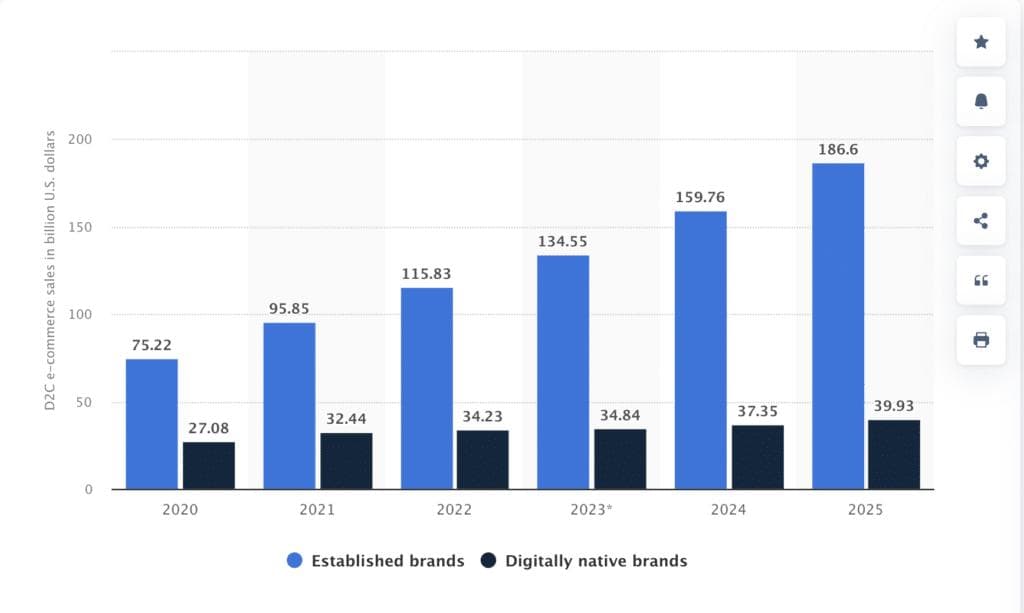
For much of the last decade, the conventional wisdom in Indian e-commerce was simple: marketplace first, D2C website as a secondary channel. Amazon and Flipkart had the traffic, the trust, the logistics infrastructure, and the consumer habit. A brand that tried to build a D2C website-first strategy was swimming against the current of where Indian consumers actually bought things online. The conventional wisdom was accurate until it started becoming less accurate. In 2026, the data from multiple consumer categories tells a more nuanced story: D2C website and app sales are growing at 28 to 45% year-on-year in premium consumer categories, while the same brands' marketplace revenues are growing at 12 to 18% year-on-year. The consumer behaviour shift is real, it is measurable, and it reflects a set of structural changes in the Indian digital consumer market that brands can either lead or follow.
Why Consumers Are Shifting Toward Direct Brand Channels
The consumer shift toward direct brand channels is driven by four factors that have matured simultaneously. The first is trust infrastructure: UPI has made direct brand website payments as frictionless as marketplace checkout for most Indian consumers. The anxiety about paying directly to a brand rather than through the intermediary trust layer of Amazon or Flipkart the fear that the product would not arrive or the return would not be processed has been substantially reduced for brands that have invested in transparent fulfilment communication, easy return policies, and visible customer service.The second factor is loyalty economics: the consumer who understands that buying from the brand's website earns loyalty points, provides access to exclusive products, and often saves 10 to 15% versus the marketplace price (because the brand can pass through the marketplace commission as a direct channel discount) has a clear financial incentive to shift their repeat purchases to the direct channel. The third factor is brand relationship preference: the consumer who has had multiple positive purchase experiences with a brand develops a genuine preference for the brand relationship over the marketplace convenience, particularly for high-involvement categories like health, skincare, and specialty food. The fourth factor is the growing quality-versus-counterfeit concern on marketplaces: in several high-growth D2C categories, marketplace listings for premium brands have been compromised by counterfeit or grey-market products, driving quality-conscious consumers to the brand's direct channel as the only guaranteed source of authenticity.
The Strategic Implications of the Shift
The growth of the direct channel relative to marketplaces has three strategic implications for D2C brands. The first is the margin opportunity: a brand that shifts 20% of its revenue from marketplace (with 18 to 22% commission plus fulfilment fees) to direct website has materially improved its contribution margin on that 20% of revenue typically by 12 to 18 percentage points. At ₹1 crore monthly revenue, a 20% channel shift with a 15-percentage-point margin improvement generates ₹3 lakh of additional monthly contribution capital that compounds into reinvestment capacity.The second implication is the data advantage: direct channel sales generate first-party customer data purchase history, browsing behaviour, email and push notification engagement that marketplace sales do not. This data is the foundation of the personalisation, retention, and loyalty capabilities that create the customer lifetime value advantage that justifies the higher CAC of direct acquisition. The third implication is the dependency risk reduction: a brand that has built 60 to 70% of its revenue on two marketplace platforms has a structural vulnerability to policy changes, commission increases, or algorithm shifts on those platforms that a brand with a diversified channel mix does not. The shift toward direct is not just a margin improvement it is a risk management strategy.
Accelerating the Shift: What Works
The brands that have most successfully accelerated the shift of revenue from marketplace to direct have used three specific mechanisms. The first is the first-purchase incentive: offering a meaningful discount or bonus on the first direct website purchase typically communicated in the marketplace product packaging as an insert with a QR code converts a marketplace customer into a direct customer at the moment they are most engaged with the brand, immediately after a positive product experience.The second mechanism is the subscription model: offering a subscription or auto-replenishment programme with a meaningful discount (typically 15 to 20%) that is available exclusively through the direct channel creates a compelling financial incentive for the high-frequency repeat buyer to migrate from marketplace to direct. Subscription customers on the direct channel have LTVs that are typically two to three times higher than equivalent non-subscription marketplace customers, and the predictability of subscription revenue creates the demand forecasting accuracy that improves operational efficiency across the supply chain. The third mechanism is exclusive direct-channel products or formats products or pack sizes available only through the brand's website and app, giving the brand's most engaged customers a reason to maintain a direct channel relationship that the marketplace cannot replicate.

Consumer Expectations in 2026: Speed, Clarity, Consistency
Related articles
View all → AI
AIThe Future of AI-Powered Digital Marketplaces
Digital marketplaces are evolving from transactional platforms into intelligent commerce ecosystems. AI is reshaping how buyers discover products, how sellers manage operations, and how platforms create value for everyone in the ecosystem and the pace of this transformation is accelerating.
 Customer Support
How AI Can Transform Enterprise Customer Support Systems
Customer support is one of the highest-cost, highest-impact functions in a growing enterprise. AI is transforming it from a cost centre with linear scaling constraints into an intelligent service layer that delivers better customer outcomes at a fraction of the traditional cost per interaction.
 Logistics
The Future of Smart Logistics and Autonomous Delivery Systems
Autonomous vehicles, drone delivery, AI-powered routing, and real-time supply chain visibility are moving from pilot projects to operational infrastructure. The logistics industry is undergoing its most significant transformation since containerisation and the businesses that adapt earliest will define the next era of commerce.