Why Enterprise AI Adoption Fails And How to Fix It
Despite massive investment in enterprise AIwith organizations spending an average of $1M+ annually on AI technology79% of organizations face significant adoption challenges and only 29% report meaningful ROI according to 2026 research. This failure rate is not caused by immature technology or insufficient investmentit is caused by fundamental misalignment between how enterprises approach AI deployment and what actually drives successful AI adoption. Organizations treat AI as a technology project requiring deployment planning, integration work, and user training. But successful AI adoption requires operational transformation: workflow redesign around autonomous execution, governance frameworks enabling agent authority, organizational change as roles evolve from execution to oversight, and sustained executive commitment through the difficult implementation period. The enterprises succeeding with AI deployment understand this distinction and approach implementation as organizational transformation rather than technology deployment.
Nirmal Nambiar
Author
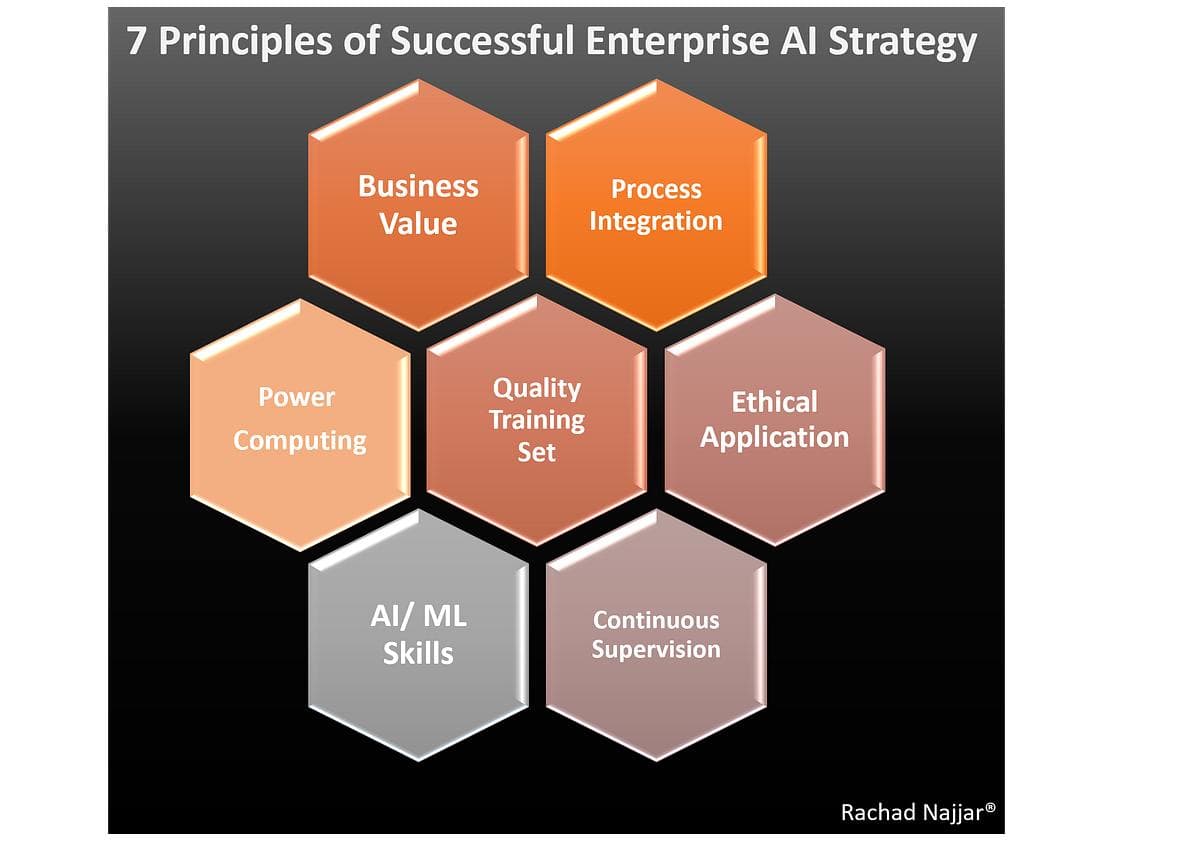
The pattern of AI implementation failure is consistent and predictable: organizations identify high-value AI use cases through consulting engagements or internal analysis, launch pilot projects that demonstrate technical feasibility and initial value, attempt to scale pilots to production but encounter organizational resistance, integration complexity, or governance concerns, stall in the pilot-to-production transition consuming resources without delivering enterprise-scale value, and eventually de-prioritize AI initiatives as other pressing concerns demand executive attention. Research shows 88% of AI pilots never reach production, and of those that do, 22% report negative ROI at 12 months. The root causes are not technicalmodern AI capabilities are sufficient for most enterprise use cases. The root causes are organizational: enterprises lack governance frameworks for autonomous AI operations with only 21% having mature governance models, attempt deployment without redesigning workflows resulting in AI recommendations that require human coordination to execute, underinvest in change management treating AI as technology rather than operational transformation, and lack sustained executive commitment through the difficult middle period between pilot success and production value realization. The enterprises succeeding with AI adoption share four critical characteristics that differentiate them from the 70%+ that struggle: they treat AI deployment as operational transformation requiring workflow redesign and organizational change not just technology integration, they establish governance frameworks before scaling pilots proving autonomous operations can operate within risk controls, they tie AI metrics directly to business outcomes measuring value delivery not deployment activity, and they maintain multi-year executive commitment recognizing transformation takes 18-36 months from first pilot to enterprise-scale value. The most instructive insight from successful adopters is that AI adoption failure is a choice: organizations that approach deployment as transformation rather than technology succeed, while organizations that treat AI as another IT project fail despite equivalent or greater technology investment.
The Transformation Imperative: Why This Matters Now
The shift described in why enterprise ai adoption fails and how to fix it is not a future possibility that organizations can evaluate leisurelyit is a present reality that early adopters are already operationalizing and capturing value from. The question is not whether this transformation will occur but which organizations will lead it and which will be forced to follow from disadvantaged positions. The early movers are establishing advantages that compound: they are developing organizational capabilities and operational expertise that takes years to build, they are capturing talent that understands autonomous operations creating human capital advantages, and they are establishing market positions as AI-first enterprises that attract customers and partners who want to work with advanced operational models.The window for establishing first-mover advantages is narrowing rapidly because the underlying technologies enabling this transformation have reached production viability and the playbooks for successful deployment are being documented through early adopter experiences. Organizations that commit to transformation in 2026-2027 will benefit from proven implementation approaches while still capturing first-mover advantages in their markets. Organizations that wait until 2028-2029 will face mature competition from enterprises that completed transformation earlier and established operational superiority. The strategic risk of delay is asymmetric: early transformation that encounters implementation challenges can be adjusted and refined, but delayed transformation that must compete against established AI-first competitors faces challenges that cannot be overcome through incremental catch-up efforts.
Implementation Framework: From Concept to Operational Reality
The gap between understanding the strategic importance of this transformation and successfully executing it is where most organizations struggle. The implementation challenges are not primarily technicalthe underlying AI capabilities largely exist and continue improving. The challenges are organizational, architectural, and governance-related: redesigning workflows around autonomous execution rather than human coordination, establishing governance frameworks that enable agent authority while maintaining controls, developing capabilities for operating AI systems at scale, and managing organizational change as roles and responsibilities evolve. The enterprises succeeding with implementation share consistent approaches that differ fundamentally from traditional IT deployment methodologies.Successful implementation follows a deliberate sequence: start with high-impact workflows where autonomous execution delivers measurable value and builds organizational confidence, establish governance frameworks proving agents can operate within risk controls before scaling deployment, invest heavily in monitoring and audit infrastructure making autonomous operations transparent, measure success through business outcomes not deployment metrics focusing on value delivery, plan for 18-36 month transformation timelines recognizing operational change takes longer than technical deployment, and maintain sustained executive commitment through the difficult middle period where investment is visible but full value has not yet materialized. The most critical success factor is treating implementation as operational transformation rather than technology deployment: the technology enables the transformation but success requires workflow redesign, organizational adaptation, and cultural evolution that technology alone cannot deliver. Organizations that understand this distinction and commit resources accordingly succeed, while organizations that treat this as a technology project fail despite equivalent or greater investment in AI capabilities.
The 2030 Landscape: Winners, Laggards, and Structural Advantages
By 2030, the enterprise landscape will clearly differentiate between organizations that successfully completed the transformation to enterprise ai adoption fails and to fix it and those that attempted incremental adoption without committing to architectural change. The winners will operate with capabilities that create permanent competitive advantages: coordination efficiency enabling operational throughput that human-coordinated models cannot match, decision velocity enabling market responses that competitors cannot execute, quality consistency creating customer experiences that competitors cannot replicate, and economic efficiency generating margins that fund continuous innovation while competitors struggle with operational costs.The laggards will face intensifying competitive pressure as performance gaps widen and strategic options narrow. They will lose market share to competitors with superior economics and execution capability, struggle to attract talent as the best employees gravitate toward advanced operational models, face customer defections as expectations rise based on AI-first competitor capabilities, and discover that the organizational transformation required to catch up becomes more extensive as gaps widen. The strategic imperative is unambiguous: commit to transformation now while implementation paths remain accessible and first-mover advantages are still available, or accept permanent competitive disadvantage against enterprises that established autonomous operations earlier. The organizations that act decisively in 2026-2028 will establish positions of strength that persist through 2030 and beyond. The organizations that delay will find themselves competing from structural disadvantages that cannot be overcome through incremental improvements or late-stage transformation efforts. The choice is not whether to transformit is whether to lead or follow the transformation that is already underway.

Related articles
View all → AI Workflow Intelligence
AI Workflow Intelligence: The Next Frontier of Enterprise Transformation
AI Workflow Intelligence the capability of AI systems to understand, optimise, coordinate, and autonomously execute enterprise workflows with the contextual reasoning of an experienced operational expert is the next frontier of enterprise transformation. It moves AI from a support tool for human workflows to an active participant in workflow management and execution.
 Enterprise Transformation
The Future of Enterprise Transformation with Autonomous AI Workflows
Enterprise transformation programmes have historically struggled with execution discipline at scale. Autonomous AI workflows are changing this handling the coordination complexity of large-scale transformation with a consistency and speed that human programme management cannot match.
 AI Coordination
AI Coordination Frameworks for Scalable Enterprise Transformation
Enterprise transformation fails at scale not because the ideas are wrong but because the coordination infrastructure is inadequate. AI coordination frameworks are the missing architecture that allows transformation initiatives to be designed, executed, and adapted at the speed and scale that modern enterprises require.