Why Founders Need 'Decision Systems,' Not More Employees
The reflexive response to an overwhelmed founder is to hire more people. The correct response is to build decision systems documented frameworks, defined authority structures, and measurement mechanisms that allow teams to make good decisions without founder involvement. Scaling clarity is more valuable than scaling headcount.
Manthan Sharma
Author
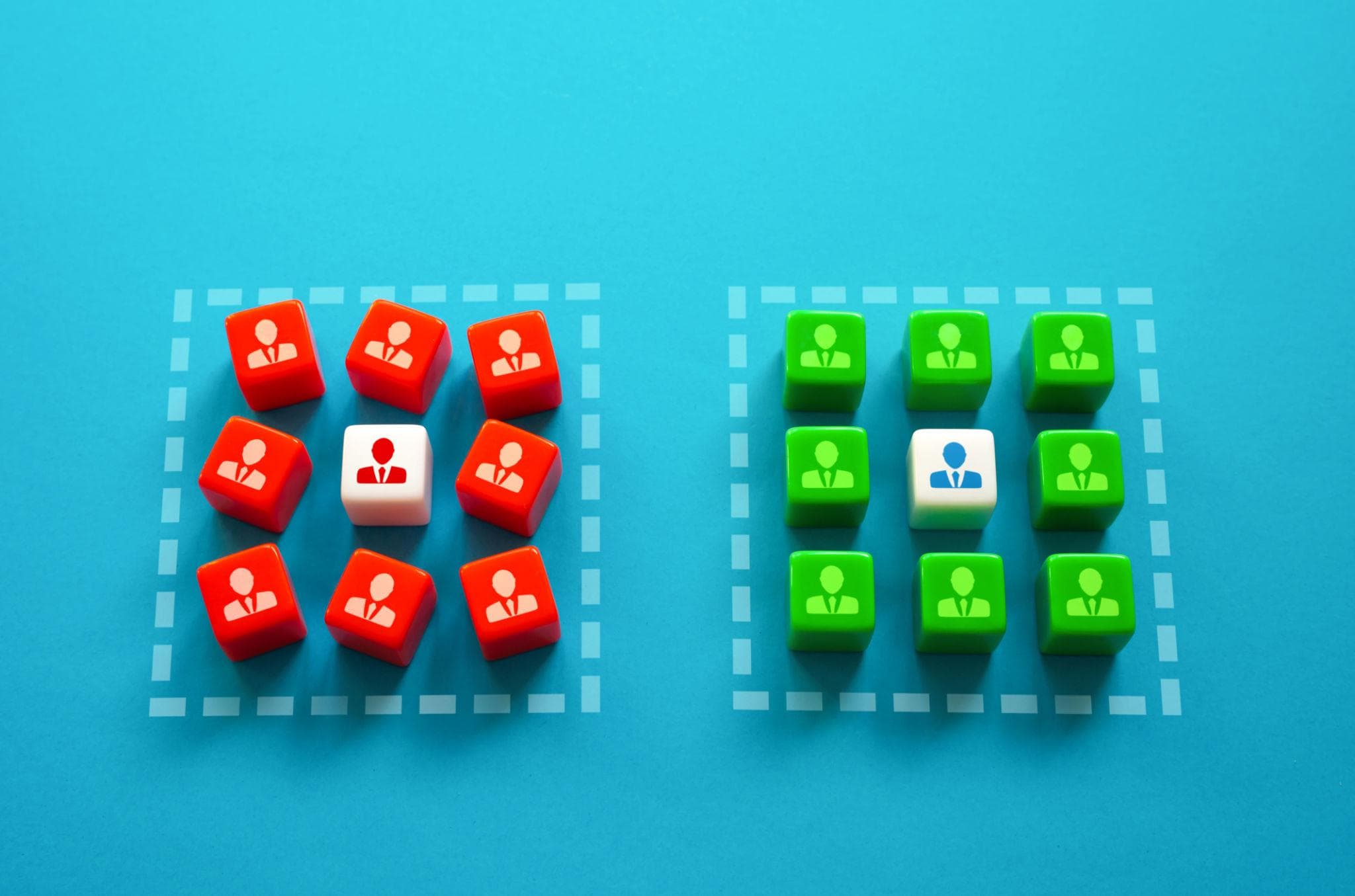
The founder made 47 decisions on a Tuesday. Not 47 strategic decisions 47 decisions of varying significance, from approving a ₹4,200 supplier payment to choosing the background colour of a social media post to deciding whether to accept a return request that fell slightly outside the standard return window to approving the wording of an email subject line. The founder was a decision bottleneck every decision that required approval, judgement, or context that the team did not have was queuing at the founder's desk and waiting for the founder's attention. The team was competent. The problem was not competence. The problem was the absence of decision systems: the documented frameworks, authority thresholds, and decision criteria that would allow each team member to resolve the routine decisions in their domain independently without founder escalation. Forty of the 47 decisions the founder made on Tuesday could have been made by the relevant team member if a decision system had existed for that category. The seven decisions that genuinely required the founder's involvement had to wait in the same queue as the forty slowed down by the volume of decisions that should not have reached the founder at all.
What Decision Systems Are and Why They Are Missing
A decision system is a documented set of criteria, thresholds, and frameworks that enables a team member to make a specific category of decision autonomously without founder input with confidence that the decision will be consistent with the organisation's strategy and values. Decision systems exist in every mature organisation: the procurement policy that specifies which levels of the organisation can approve which purchase amounts, the customer service policy that specifies which categories of complaints can be resolved with what categories of remedies without management approval, the inventory policy that specifies reorder points and quantities for each SKU tier.Decision systems are missing from most early-stage D2C businesses for the same reason that operational processes are missing: in the founder-led startup, the founder is the decision system. The founder's judgment applied in real time to each decision as it arises substitutes for the documented framework that would allow others to make the same decision without the founder's involvement. This substitution works when the business is small enough that the founder's judgment can be applied to all decisions without creating a bottleneck. It fails when the business grows to the point where the volume of decisions exceeds the founder's available decision-making bandwidth which, for most D2C brands, occurs somewhere between ₹30 lakh and ₹80 lakh monthly revenue.
The Decision System Architecture
Building decision systems requires mapping the categories of decisions the founder currently makes and creating, for each category, a documented framework that allows the relevant team member to make the same decision independently. The framework for each decision category has four components: the decision criteria (what factors are relevant and how should they be weighted), the authority threshold (what decision values or significance levels can be resolved at the team level versus require escalation), the information required (what data does the decision-maker need to have access to before making the decision), and the documentation requirement (what record of the decision should be created for accountability and learning).The most important decision categories to systematise first are the ones that generate the highest volume of founder escalations the decisions that appear in the queue most frequently and that individually seem low-stakes but collectively consume a significant portion of the founder's decision-making bandwidth. For most D2C brands, these high-volume decision categories are: financial approvals (what purchases can be made without founder sign-off, and at what thresholds), customer service resolutions (what remedies can be offered for what categories of complaints without management approval), operational exceptions (what deviations from standard process can be approved at the team level), and marketing execution (what creative and copy decisions can be made without founder review).
Implementing Decision Systems: The Practical Process
The implementation of decision systems requires a one-time investment of founder time to document the decision frameworks time that the founder is often reluctant to spend because the immediate opportunity cost is the decisions that are waiting to be made. The paradox of decision system building is that the founder who is most overwhelmed by decision volume is the one who most needs to build decision systems and least feels they have the time to do it. The resolution is to treat decision system building as the highest-priority use of a defined weekly time block two hours per week dedicated to documenting the decision frameworks for the highest-volume decision categories.The documentation process starts by identifying the decision category, then describing how the founder currently makes that decision what information the founder looks at, what criteria the founder applies, what thresholds distinguish the cases that are straightforward from the cases that require more judgment. This description, once written, is the decision framework that the team member can apply. The framework does not need to be comprehensive or perfectly precise it needs to be sufficient to allow the team member to make the routine cases correctly and identify the genuinely exceptional cases that warrant escalation. A decision system that resolves 80% of cases correctly and escalates the remaining 20% is dramatically better than a founder-bottleneck system that resolves 100% of cases eventually, at the cost of the founder's bandwidth for the decisions that only the founder can make.

Related articles
View all → Enterprise Management
The Future of Enterprise Management Through AI Execution Layers
Enterprise management is being restructured by AI execution layers intelligent systems that sit between strategic direction and operational action, translating intent into coordinated execution at a speed and consistency that human management hierarchies cannot match. The enterprises that deploy these layers effectively are redefining what management means and what managers do.
 Operational Intelligence
Why Enterprise Leaders Must Adopt AI-Driven Operational Intelligence
Operational intelligence the real-time, comprehensive understanding of what is happening across an enterprise and why has always been the foundation of effective leadership. AI is making a quality of operational intelligence available to enterprise leaders that was previously impossible to achieve, and the leaders who adopt it are making fundamentally better decisions than those who do not.
 AI Agents
Why AI Agents Will Become Strategic Partners for Enterprise Leaders
The AI agent that flags an anomaly is a tool. The AI agent that investigates the anomaly, assesses its strategic implications, identifies the available responses, and presents a structured recommendation with evidence that is a strategic partner. The transition from AI-as-tool to AI-as-strategic-partner is already beginning in the most advanced enterprise deployments.