Why Real-Time Analytics Will Replace Traditional Business Intelligence
The weekly dashboard reviewed in Monday's management meeting is describing a world that no longer exists. Real-time analytics is not an upgrade to traditional business intelligence it is a fundamentally different capability that changes what decisions can be made, when they can be made, and who can make them.
Manthan Sharma
Author
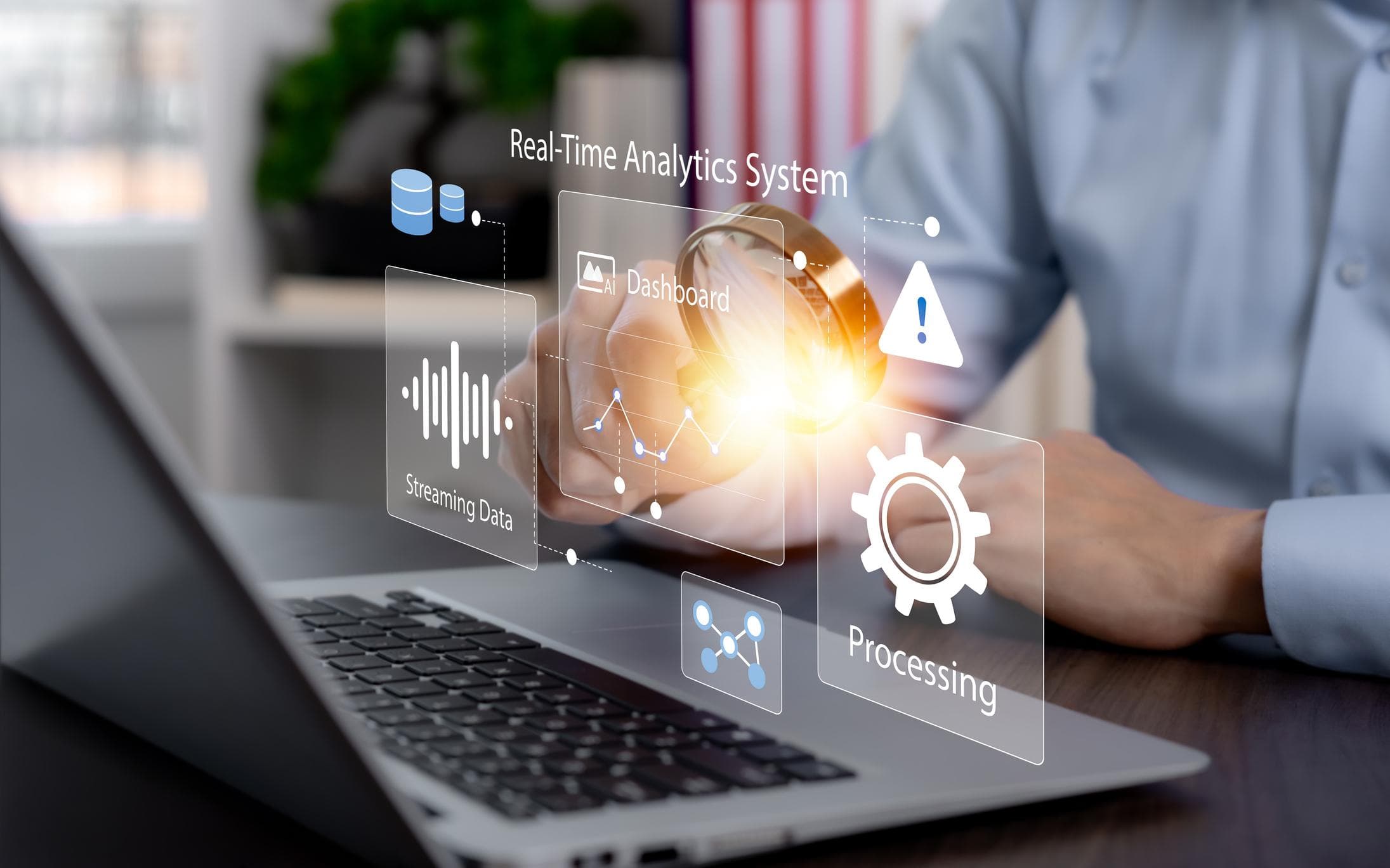
A retail chain's category manager discovers on Friday afternoon that a competitor dropped prices on a key product category on Tuesday morning. The information arrived through the weekly sales report, which aggregated store-level data with a four-day lag. In the three days between the competitor's price change and the category manager's awareness of it, the chain lost an estimated 12% of category revenue to the competitor. The category manager had the right data. She had a dashboard. She had a business intelligence system that cost the organisation seven figures to implement. What she did not have was the information at the speed that the competitive environment required. This is the fundamental failure of traditional business intelligence: it was designed for a business environment where competitive dynamics moved at the speed of weekly reporting cycles, monthly board packs, and quarterly strategy reviews. That environment no longer exists in most industries. Real-time analytics is not a better version of traditional BI. It is an architectural response to a competitive environment that has changed the speed at which decisions must be made and the cost of making them late.
The Speed Gap: Why Traditional BI Is Structurally Insufficient
Traditional business intelligence architecture was built on a batch processing model: data is extracted from operational systems at defined intervals, transformed and loaded into a data warehouse, and made available for reporting through a query layer. The latency in this architecture from event to report is measured in hours or days. For the business environment of the 1990s and 2000s, this was adequate: competitor price changes happened quarterly, customer behaviour shifted over months, and supply chain disruptions unfolded over weeks. The decision cycles that BI was designed to support monthly business reviews, quarterly planning, annual budget setting matched the data latency of the architecture. The business environment of the 2020s operates at a different speed. E-commerce pricing changes in minutes. Social media sentiment shifts in hours. Supply chain disruptions propagate in days. Customer churn signals emerge and can be acted on within 24 to 48 hours of appearing. The organisations that can detect and respond to these signals at the speed they occur have a structural competitive advantage over organisations that are still waiting for Monday's dashboard.The speed gap is not just about competitive response time. It is about the quality of decisions made with stale data. A logistics operation making routing decisions with yesterday's traffic and weather data is making suboptimal decisions that cost fuel, time, and customer satisfaction. A financial institution making credit decisions with monthly-updated risk models is missing behavioural signals that emerge and are predictive within days. A customer service team operating from last week's product feedback data is responding to complaints about issues that may have already been resolved or escalating issues that have already become crises. Real-time analytics does not just make decisions faster. It makes them better, because they are made with data that describes the current state of the world rather than the state of the world as it was when the last batch ran.
The Four Architectural Shifts from Traditional BI to Real-Time Analytics
Shift 1: From batch processing to stream processing
Traditional BI is built on batch ETL Extract, Transform, Load processes that move data from operational systems to analytical systems at scheduled intervals. Real-time analytics is built on stream processing architectures that process data continuously as it is generated, making it available for analysis within seconds or milliseconds of the originating event. Technologies like Apache Kafka, Apache Flink, and cloud-native streaming services from AWS, Google, and Azure enable enterprises to build stream processing pipelines that replace batch ETL for latency-sensitive analytical use cases. The architectural transition is not about replacing the data warehouse batch processing remains appropriate for historical analysis, complex transformations, and workloads where latency is not a constraint. It is about adding a streaming layer that handles the use cases where real-time data access creates material business value.
Shift 2: From centralised data warehouses to distributed data architectures
The centralised data warehouse model all enterprise data flows to a single repository where all analysis is performed creates latency, governance complexity, and bottlenecks that are incompatible with real-time analytics requirements. Modern real-time analytics architectures are increasingly distributed: operational databases with built-in analytical query capability, data lakehouses that combine the flexibility of data lakes with the query performance of warehouses, and domain-specific data products managed by the teams closest to the data. The data mesh architecture where data ownership and analytical responsibility are distributed to domain teams rather than centralised in a single data engineering function is the most advanced expression of this distributed model, enabling the speed and agility that real-time analytics requires.
Shift 3: From scheduled reports to event-driven alerting
Traditional BI delivers information through scheduled reports that recipients review at their discretion. Real-time analytics delivers information through event-driven alerts that reach decision-makers at the moment the information is actionable. The shift from pull-based reporting to push-based alerting changes who needs to engage with analytics tools: instead of requiring every decision-maker to develop proficiency with BI dashboards, real-time alerting surfaces relevant information directly to the right person in the right context a store manager's mobile device alerts when a product falls below reorder threshold, a sales representative's CRM updates in real time when a key account shows engagement signals, a supply chain manager receives an alert when a supplier's shipment tracking shows a delay that will breach a delivery commitment.
Shift 4: From descriptive analytics to predictive and prescriptive intelligence
Traditional BI is primarily descriptive: it tells you what happened. Real-time analytics platforms increasingly integrate machine learning models that move from description to prediction not just what is happening now, but what is likely to happen next and what action will produce the best outcome. Real-time churn prediction models that identify customers showing disengagement signals and trigger retention interventions before the customer churns, dynamic pricing models that adjust prices in real time based on demand signals and competitor pricing, and predictive maintenance models that identify equipment failure signatures hours before failure occurs are all examples of the prescriptive intelligence layer that distinguishes real-time analytics platforms from traditional BI.
The Real-Time Analytics Readiness Diagnostic
- What is the current data latency in your highest-stakes business decisions time from event to decision-maker awareness and what is the competitive or operational cost of that latency?
- Have you identified the specific decision domains where real-time data access would change the quality or speed of decisions materially pricing, inventory, customer intervention, risk management and prioritised them for real-time capability investment?
- Do you have a stream processing infrastructure or a plan to build one that can handle the data volumes and latency requirements of your highest-priority real-time use cases?
- Are your analytical capabilities integrated into operational workflows through event-driven alerting, or are they delivered through scheduled reports that require users to proactively seek out information?
- Have you assessed the organisational change requirements of real-time analytics adoption the decision authority, process redesign, and skill development required for teams to act on real-time information rather than waiting for periodic review cycles?
Related articles
View all → Operational Intelligence
Why Enterprise Leaders Must Adopt AI-Driven Operational Intelligence
Operational intelligence the real-time, comprehensive understanding of what is happening across an enterprise and why has always been the foundation of effective leadership. AI is making a quality of operational intelligence available to enterprise leaders that was previously impossible to achieve, and the leaders who adopt it are making fundamentally better decisions than those who do not.
 Execution Speed
Why Enterprise Execution Speed Will Define Market Leadership in the AI Era
In the AI era, the fastest-executing enterprise wins. Not the best-strategised, not the most well-resourced the fastest. Execution speed is becoming the primary competitive variable, and the organisations that have built AI-powered execution infrastructure are setting a pace their competitors cannot match.
 Coordination
AI-Powered Enterprise Coordination for Cross-Functional Business Teams
Cross-functional coordination is one of the highest-cost, highest-friction activities in enterprise management. AI-powered coordination systems are reducing this friction dramatically and the teams that adopt them are moving faster, with fewer misalignments and less coordination overhead.