Why Retention Is the New Acquisition in D2C
In a saturated market with rising CAC and compressed margins, the most profitable growth available to most D2C brands is not acquiring more new customers it is extracting more value from the customers they already have. Retention is not a customer service function. It is the primary growth strategy of the most financially healthy brands in 2026.
Aditya Sharma
Author
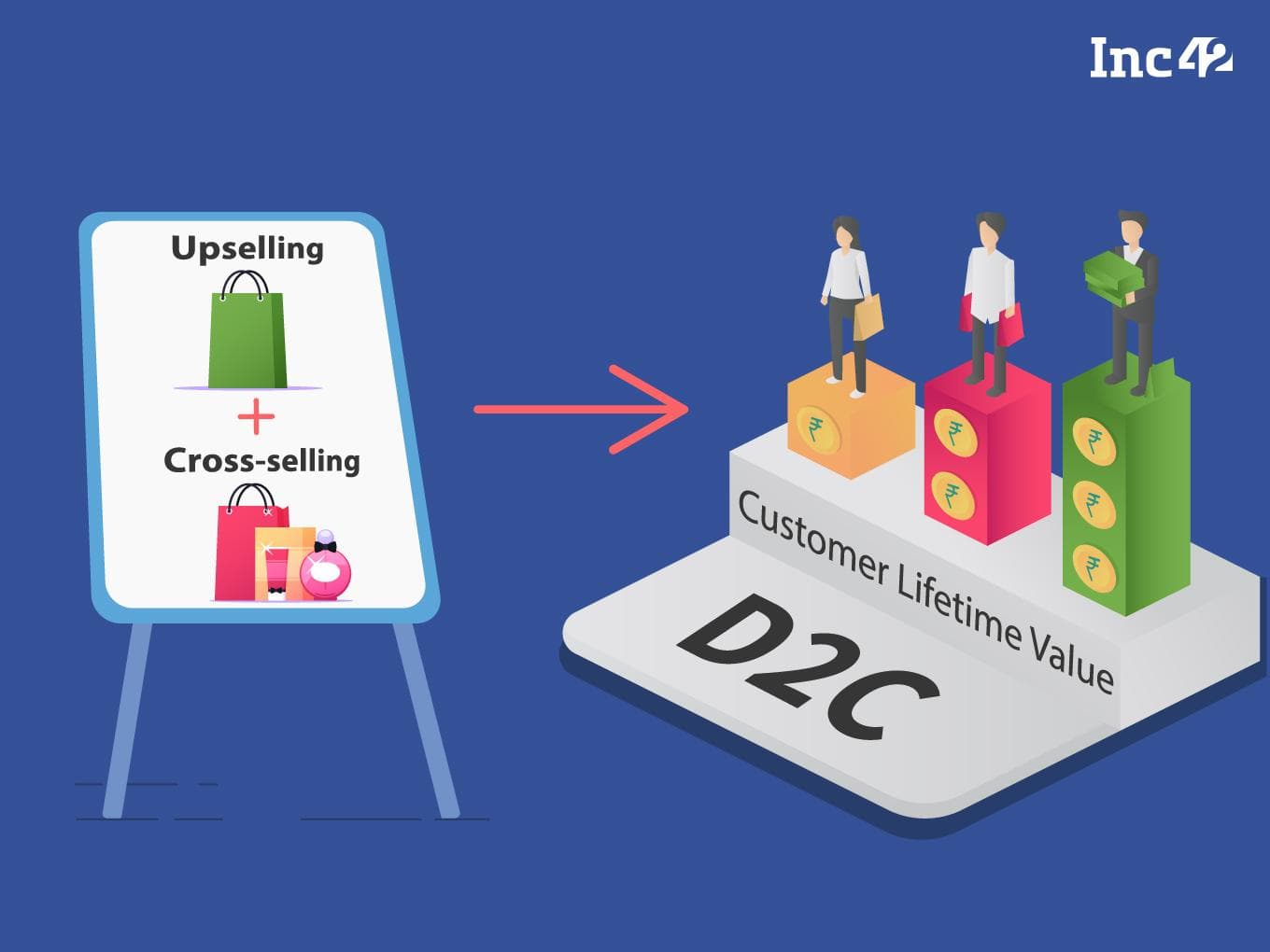
The brand's revenue grew 34% year-on-year. New customer acquisition grew 12% year-on-year. The gap the 22 percentage points of revenue growth that did not come from new customer acquisition came from existing customer retention and expansion: higher repeat purchase frequency, increased average order value from existing customers, and cross-sell into new SKUs from the existing customer base. The CAC on the new customers acquired was ₹1,140. The marginal cost of generating the retention-driven revenue growth was approximately ₹180 per incremental purchase the cost of the email, WhatsApp, and loyalty programme infrastructure that drove the repurchase. The retention-driven revenue was not only more profitable than the acquisition-driven revenue. It was growing faster. The brand that had been building its retention infrastructure for three years was discovering, in year four, that retention had become a faster and more profitable growth engine than acquisition. This is the retention compounding effect and it is the most underinvested growth lever in the D2C ecosystem.
The Economics of Retention vs Acquisition
The economic case for retention over acquisition is straightforward at the unit level and counterintuitive in how strongly it favours retention at scale. Acquiring a new customer costs the full CAC in performance marketing, platform fees, and the agency or internal resources that manage the acquisition function. Retaining an existing customer generating a repurchase from someone who has already bought costs a fraction of the CAC: the cost of the retention touchpoint (email, push notification, WhatsApp message, loyalty reward), which is typically 5 to 15% of the original acquisition cost for a well-designed retention programme.The LTV implication compounds this advantage. A customer who repurchases generates incremental contribution margin on every subsequent purchase without requiring the fixed acquisition cost that the first purchase absorbed. A brand with a 50% ninety-day retention rate and an average of 2.8 repurchases per retained customer per year is generating 1.4 repurchases per acquired customer annually contribution margin that the acquisition investment is effectively subsidising but that requires negligible incremental marketing cost to generate. The brand with a 20% ninety-day retention rate is generating 0.56 repurchases per acquired customer annually from the same acquisition investment. The difference in LTV and therefore in the return on the original CAC is dramatic, and it compounds with every growth cycle.
Why Most D2C Brands Under-Invest in Retention
Despite the economic case, most D2C brands systematically under-invest in retention relative to acquisition. The reasons are structural and psychological. The structural reason is attribution: performance marketing acquisition is immediately attributable spend ₹1 lakh on Meta Ads, generate ₹3.8 lakh in tracked revenue, the ROI is calculable and visible on the same day. Retention investment building a loyalty programme, improving post-purchase email sequences, creating a WhatsApp community generates revenue that is attributed to organic, direct, or returning-customer traffic with long lag times and no direct attribution line to the specific retention investment. The investment looks less efficient than acquisition in the short-term attribution window, even when it generates superior returns over the relevant time horizon.The psychological reason is that acquisition feels like growth and retention feels like maintenance. New customer numbers going up is a story the founder tells investors, the team celebrates, and the market acknowledges. Cohort retention rate improving from 22% to 34% over twelve months generates the same revenue impact as a significant acceleration in new customer acquisition but it is a less intuitive story that requires more sophisticated financial modelling to tell compellingly. The founders who build their intuition for retention economics early who treat cohort retention as a primary growth metric with the same rigour they apply to new customer volume are the ones whose businesses generate the compounding LTV advantage that makes acquisition economics increasingly favourable over time.
Building Retention as a Growth System
Retention as a growth system requires a set of specific operational capabilities that most D2C brands have not yet fully built. The first is a post-purchase experience architecture: the sequence of communications, product experience moments, and service interactions that occur between the first purchase and the first repurchase opportunity. This architecture should be designed to maximise the probability of the second purchase which, research across D2C cohorts consistently shows, is the most decisive factor in determining long-term customer retention. A customer who makes a second purchase has a dramatically higher probability of making a third than a customer who has made only one purchase.The second capability is a segmented retention programme: the recognition that different customer segments require different retention approaches. The high-frequency buyer benefits from a subscription model that formalises their purchase cadence with a discount incentive. The occasional buyer benefits from personalised reorder reminders timed to their observed purchase cycle. The at-risk customer who has not purchased in ninety days benefits from a win-back campaign with a meaningful first-return incentive. Treating all customers with the same retention programme treats very different retention situations with a one-size-fits-all solution and the result is a retention programme that is less effective than the investment in it justifies. The brands that build segmented retention systems, and that measure the retention programme's performance at the segment level rather than the aggregate level, are the ones for whom retention becomes the primary growth engine that its economics make possible.

Tier-2 & Tier-3 India: The Real Battlefield for the Next 5 Years
Related articles
View all → AI
AIThe Future of AI-Powered Digital Marketplaces
Digital marketplaces are evolving from transactional platforms into intelligent commerce ecosystems. AI is reshaping how buyers discover products, how sellers manage operations, and how platforms create value for everyone in the ecosystem and the pace of this transformation is accelerating.
 Customer Support
How AI Can Transform Enterprise Customer Support Systems
Customer support is one of the highest-cost, highest-impact functions in a growing enterprise. AI is transforming it from a cost centre with linear scaling constraints into an intelligent service layer that delivers better customer outcomes at a fraction of the traditional cost per interaction.
 Logistics
The Future of Smart Logistics and Autonomous Delivery Systems
Autonomous vehicles, drone delivery, AI-powered routing, and real-time supply chain visibility are moving from pilot projects to operational infrastructure. The logistics industry is undergoing its most significant transformation since containerisation and the businesses that adapt earliest will define the next era of commerce.