Why Scaling Ads Is the Worst Growth Strategy Today
For a decade, 'scale your ads' was the D2C growth answer. More budget in, more revenue out. In 2026, that equation has broken down. CAC has increased sharply across every major platform, LTV assumptions have not held, and the brands that chased growth through ad spend are discovering that they have built expensive customer acquisition machines with deteriorating returns.
Prince Kumar
Author
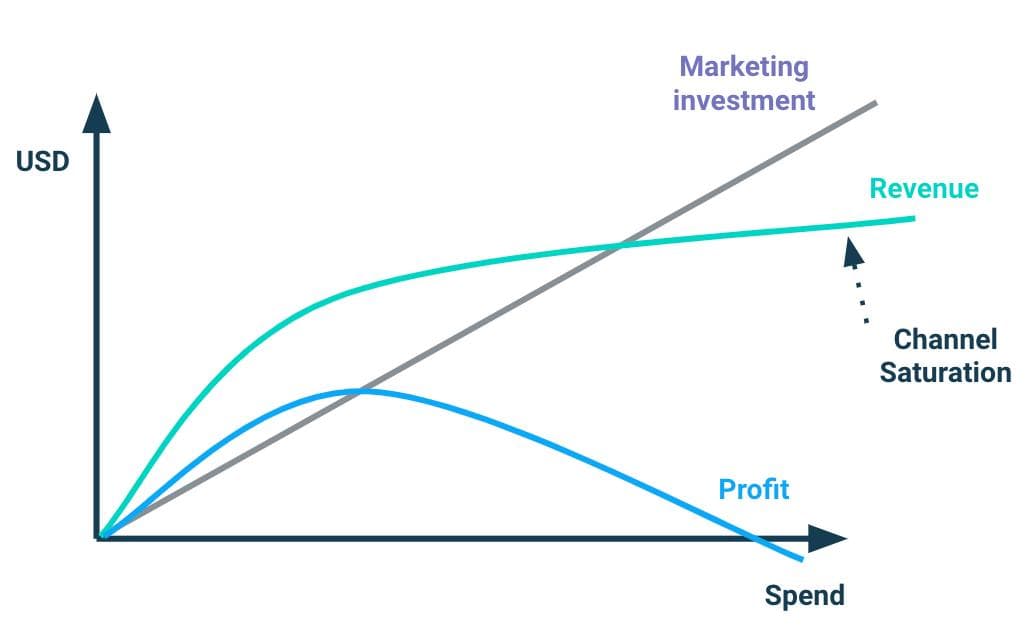
The brand's monthly ad spend went from ₹8 lakh to ₹32 lakh over six months. Revenue went from ₹38 lakh to ₹95 lakh. The founders celebrated the growth. The CFO built a model. The model showed that at ₹8 lakh monthly spend, the blended CAC was ₹680 and the 90-day LTV was ₹1,840 a 2.7x ratio that was profitable. At ₹32 lakh monthly spend, the blended CAC was ₹1,420 and the 90-day LTV was ₹1,790 a 1.26x ratio that was not. Revenue had grown 150%. The unit economics had inverted. The business was acquiring customers faster than it ever had and losing money on each one. This is not an edge case. It is the dominant financial reality of D2C brands that have pursued ad scaling as their primary growth strategy in a market where CAC has risen sharply and LTV assumptions built in 2021 have not survived contact with actual cohort retention data.
The CAC Crisis: What the Numbers Actually Show
Customer acquisition costs across Meta, Google, and marketplace advertising in India have increased by 150 to 300% since 2020, depending on the category. The increase is structural, not cyclical it reflects the maturation of digital advertising markets, the increase in competition within D2C categories as more brands enter and compete for the same audience, and the decline of the third-party cookie-based targeting that made performance advertising highly efficient in its early years.The brands that built their growth models in 2019 or 2020 with CAC assumptions from that period are now running businesses where the actual cost of acquiring a customer is two to three times what the model assumed while LTV has not scaled proportionally, because repeat purchase rates have not improved at the rate that the original cohort models projected. The gap between assumed and actual unit economics is the financial reality underneath the revenue growth numbers that D2C founders present at fundraising events.
Why Ad Scaling Breaks at the Margin
The fundamental problem with ad scaling as a growth strategy is that it is subject to diminishing marginal returns in a way that most other growth levers are not. The first rupee spent on advertising in a category reaches the consumer most likely to buy the high-intent, high-LTV customer who was already looking for the product. Each additional rupee spent reaches consumers who are progressively less predisposed to purchase, requiring more ad exposure to convert, and who, once acquired, have lower repeat purchase rates than the first cohort.This is not a hypothesis. It is the cohort data that every brand with more than eighteen months of performance marketing history can see in their analytics. The first 500 customers acquired through paid advertising in any category have higher retention, higher LTV, and higher referral rates than the next 5,000. Scaling ad spend to acquire the next 5,000 customers faster is acquiring a less valuable cohort at a higher cost a combination that destroys unit economics at scale.
What Works Instead: Building Non-Paid Discovery
The brands that are growing profitably in 2026 are not the ones that found a way to make ad scaling work at higher budgets. They are the ones that reduced their dependence on paid discovery by investing in channels and mechanisms that create organic and earned discovery at a lower marginal cost. This includes retail and quick commerce presence that creates discovery at the point of purchase without requiring an ad impression. It includes community building WhatsApp groups, loyalty programmes, referral incentives that converts single purchasers into brand advocates who generate word-of-mouth acquisition with no incremental ad spend. It includes content and SEO that, while increasingly disrupted by AI search, still generates some organic traffic for high-intent queries. And it includes the product quality and post-purchase experience investments that drive the repeat purchase rates and review generation that reduce CAC over time by building the brand authority that makes paid advertising more efficient when it is used.The shift is not from paid to free. It is from paid as the primary growth engine to paid as one component of a growth model that includes multiple lower-CAC discovery mechanisms. The brands that make this shift before their unit economics are visibly broken will have the operational runway to build those mechanisms well. The brands that make it after the unit economics are already inverted will not.
Related articles
View all → AI
AIThe Future of AI-Powered Digital Marketplaces
Digital marketplaces are evolving from transactional platforms into intelligent commerce ecosystems. AI is reshaping how buyers discover products, how sellers manage operations, and how platforms create value for everyone in the ecosystem and the pace of this transformation is accelerating.
 Customer Support
How AI Can Transform Enterprise Customer Support Systems
Customer support is one of the highest-cost, highest-impact functions in a growing enterprise. AI is transforming it from a cost centre with linear scaling constraints into an intelligent service layer that delivers better customer outcomes at a fraction of the traditional cost per interaction.
 Logistics
The Future of Smart Logistics and Autonomous Delivery Systems
Autonomous vehicles, drone delivery, AI-powered routing, and real-time supply chain visibility are moving from pilot projects to operational infrastructure. The logistics industry is undergoing its most significant transformation since containerisation and the businesses that adapt earliest will define the next era of commerce.