Why Tier-2 & Tier-3 Cities Will Drive the Next Wave of Growth
The D2C growth story of the last decade was written in Mumbai, Delhi, Bengaluru, and Hyderabad. The next chapter is being written in Patna, Indore, Surat, Coimbatore, and Nagpur cities where smartphone penetration is catching up fast, purchasing power is rising, and the supply of quality consumer products has historically lagged demand significantly. The brands that understand this shift and build for it now will have a structural head start on the largest consumer growth opportunity in India over the next five years.
Aditya Sharma
Author
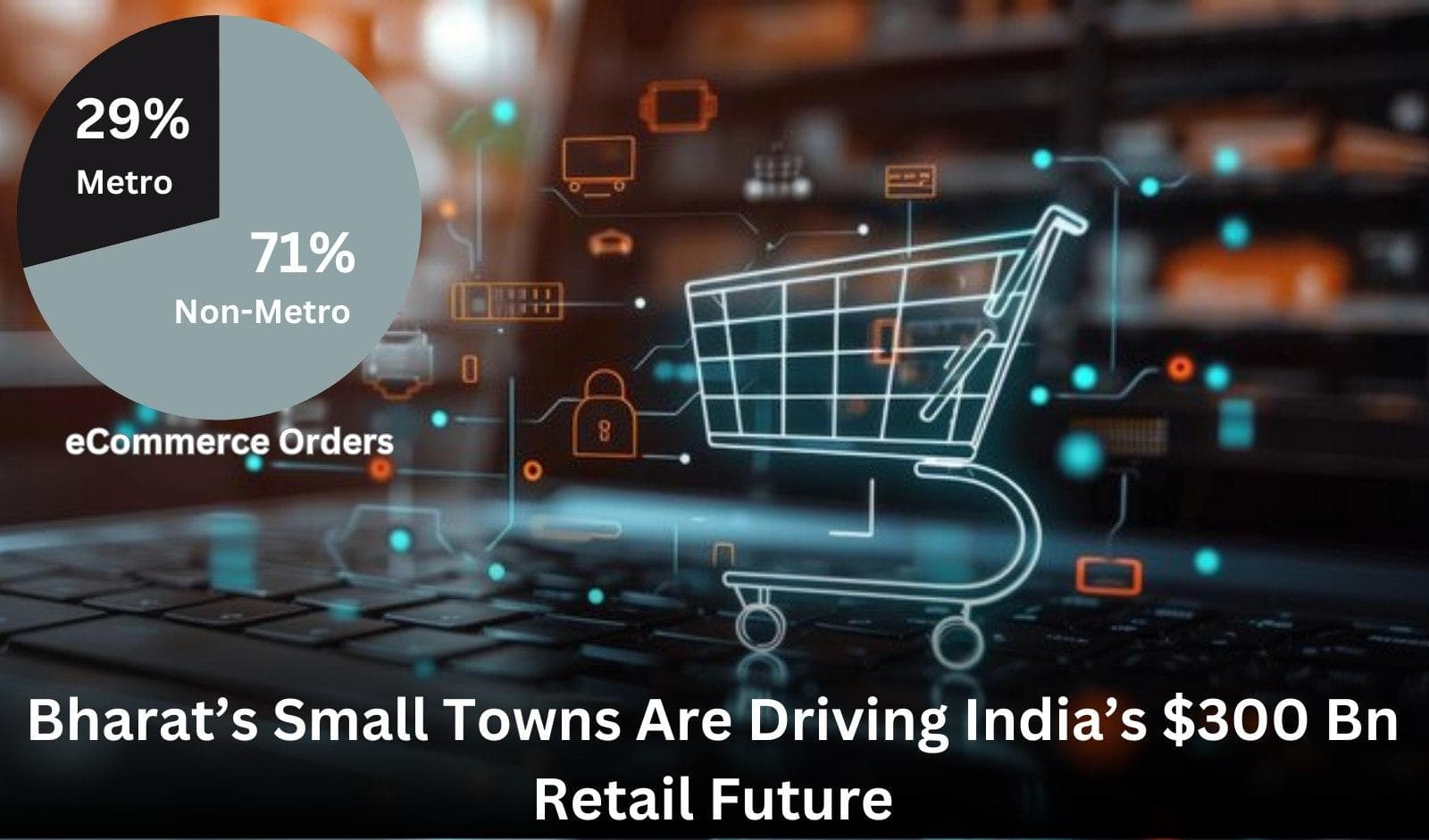
A supplements brand doing ₹1.1 crore monthly revenue in January 2025 observed that 34% of its orders were coming from cities outside the top eight metros and that the cohort retention rate for customers acquired from Tier-2 and Tier-3 cities was 11 percentage points higher than the retention rate for metro customers. The founder had assumed that the non-metro customer was a secondary segment a spillover from the primary metro target, acquired at lower CAC but treated as lower priority for marketing investment and fulfilment quality. The retention data suggested the opposite: the non-metro customer was more loyal, less price-sensitive to the brand's premium positioning (because the supply of comparable quality alternatives in their local market was lower), and more likely to become a high-frequency repeat purchaser. The assumption that Tier-2 and Tier-3 cities were a secondary opportunity was wrong and it had caused the brand to underinvest in a segment that its own data identified as its highest-quality customer cohort. This misreading of the India growth map is widespread across D2C brands, and it represents a significant strategic opportunity for the brands that correct it early.
The Structural Drivers of Non-Metro Growth
The growth of D2C consumer demand in Tier-2 and Tier-3 Indian cities is driven by five structural forces that are operating simultaneously. The first is smartphone and internet penetration: the share of the Indian population with reliable smartphone internet access has expanded dramatically into non-metro geographies over the last five years, creating the digital access infrastructure that e-commerce and D2C require. UPI penetration the payment infrastructure that enables frictionless digital purchases has reached over 85% adoption in cities with populations above 500,000, including hundreds of Tier-2 and Tier-3 cities.The second force is rising purchasing power: per capita income in Tier-2 and Tier-3 cities has grown at a faster rate than in metros over the last decade, driven by the growth of manufacturing, IT services, and the broader formalisation of the Indian economy. The consumer in Nagpur or Coimbatore in 2026 has meaningfully more discretionary income than their counterpart a decade ago and a growing aspiration for product quality that local general trade retail does not serve. The third force is supply gap: in most consumer categories, the supply of branded, quality-assured products available through local retail in Tier-2 and Tier-3 cities is significantly lower than in metros. The consumer who wants a premium skincare product or a high-quality supplement in Patna cannot find it in a local pharmacy creating a demand that e-commerce and D2C are uniquely positioned to serve.
Why Most D2C Brands Are Under-Indexed on Non-Metro Markets
Despite the structural opportunity, most D2C brands are systematically under-indexed on Tier-2 and Tier-3 markets and the under-indexing is driven by a set of assumptions that the data does not support. The first false assumption is that the non-metro consumer is primarily price-sensitive and therefore unsuitable for premium D2C positioning. Cohort data from brands that have analysed their non-metro customer base consistently shows that the premium segment of the non-metro consumer market the professional with disposable income who wants quality products that are unavailable locally has strong willingness to pay at premium price points and high brand loyalty once acquired.The second false assumption is that fulfilment economics to non-metro geographies are prohibitive. While last-mile logistics costs to Tier-3 cities are higher than metro fulfilment costs, the higher CAC efficiency of non-metro acquisition (less competitive digital advertising markets) and the higher retention rates typically observed in non-metro cohorts often produce better lifetime unit economics for non-metro customers than for metro customers with equivalent AOV, despite the higher fulfilment cost. The third false assumption is that the non-metro consumer will not be a digital-first buyer. Meesho's growth to become India's largest e-commerce platform by order volume built almost entirely on Tier-2, Tier-3, and rural customers is the most decisive disproof of this assumption available.
Building for Non-Metro Growth: What It Requires
Building a D2C business that captures the non-metro growth opportunity requires specific adaptations to the standard D2C playbook. The first is vernacular marketing: the non-metro consumer is significantly more likely to engage with content and advertising in their regional language than in English. Brands that invest in vernacular content product descriptions, advertising creative, customer support for the major regional languages (Hindi, Tamil, Telugu, Marathi, Bengali, Gujarati) will access a consumer segment that English-only brands are structurally excluded from.The second adaptation is packaging and sizing: the non-metro first-time buyer is often more willing to trial a product at a lower price point a smaller pack size or a starter kit before committing to the full-size premium product. Brands that offer a non-metro-accessible entry price point alongside their primary premium SKU acquire customers who trial, convert to premium repurchase at higher frequency, and at lower CAC than the equivalent metro customer. The third adaptation is fulfilment reliability: the non-metro consumer's experience of e-commerce delivery reliability has historically been worse than the metro consumer's more delays, more misrouted shipments, more returns due to address issues. A brand that demonstrates consistent, reliable fulfilment to non-metro addresses builds a differentiated reputation in markets where the bar has historically been lower and the loyalty that reliable service generates in an under-served market is disproportionately strong relative to the investment required to deliver it.
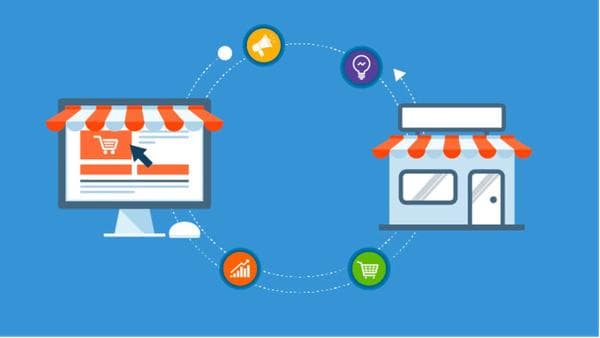
Offline + Online: The New Growth Formula
Related articles
View all → Growth
The Future of Enterprise Growth Through AI Innovation
AI is not just improving the efficiency of existing growth strategies it is enabling entirely new growth models. The enterprises that understand how to use AI as a growth driver, not just a cost reducer, are accessing markets, customer segments, and revenue streams that were previously out of reach.
 Scalability
AI-Powered Systems for Enterprise Scalability and Resilience
The ability to scale without proportional cost increases and to absorb shocks without operational failure is what separates enterprises that grow sustainably from those that grow into crisis. AI-powered systems are the infrastructure through which scalability and resilience are built.
 AI
AIThe Future of AI-Powered Digital Marketplaces
Digital marketplaces are evolving from transactional platforms into intelligent commerce ecosystems. AI is reshaping how buyers discover products, how sellers manage operations, and how platforms create value for everyone in the ecosystem and the pace of this transformation is accelerating.