Why Visibility Across Warehouses Changes Everything
Operating multiple warehouses or fulfilment nodes without real-time visibility across all of them is the operational equivalent of flying blind. Inventory is misallocated. Stockouts occur at one node while overstock accumulates at another. Fulfilment decisions are made on stale data. The brands that build real-time multi-node visibility transform a source of operational chaos into a source of competitive advantage.
Manthan Sharma
Author
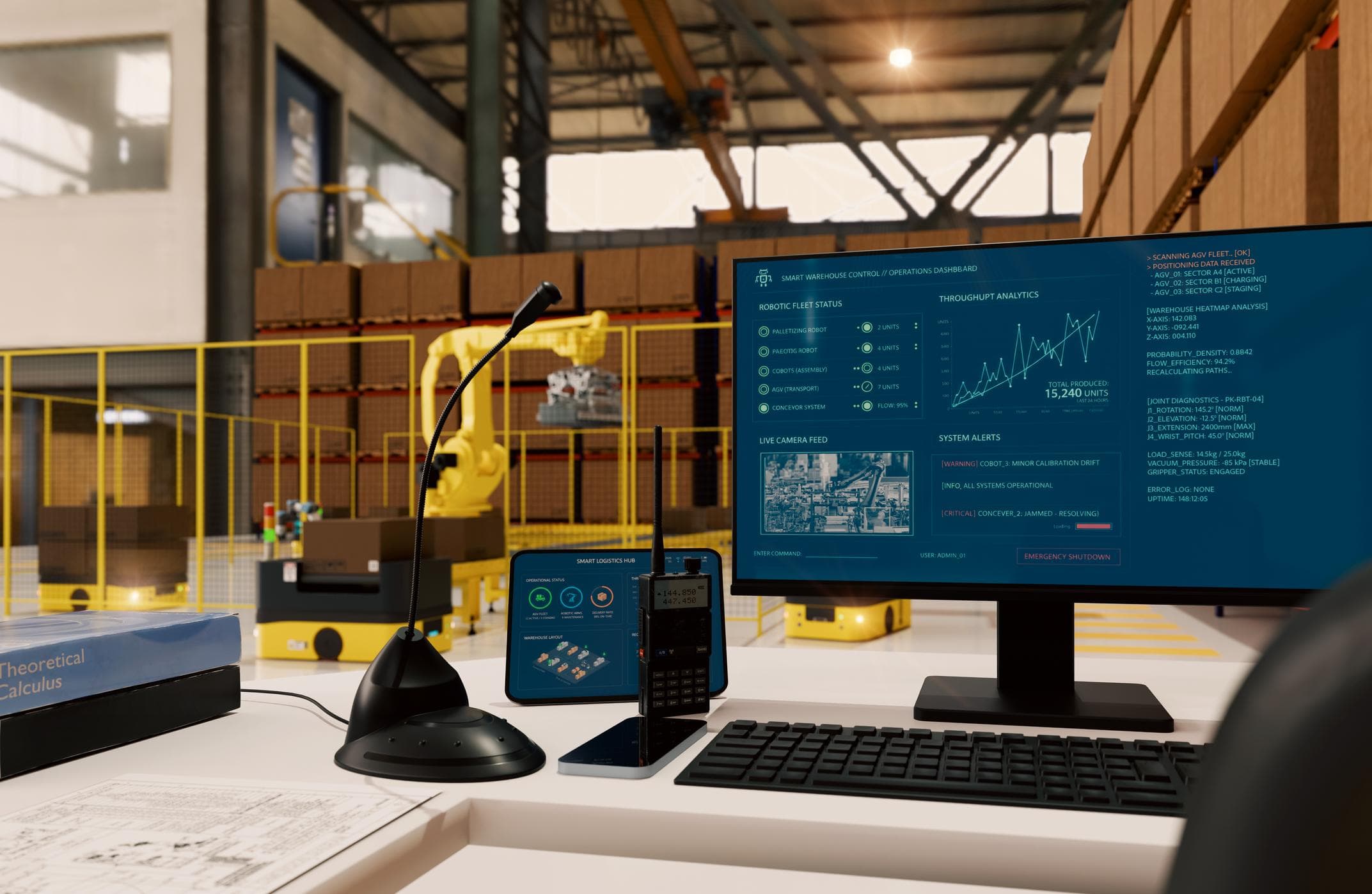
The customer support ticket arrived on a Tuesday afternoon: the customer had ordered a product that was showing 'In Stock' on the website and received a shipping confirmation, but three days later received a message that the order could not be fulfilled and would be cancelled. The operations team investigated. The product was in stock at the brand's Mumbai warehouse. The order had been allocated to the Delhi warehouse, which had been out of stock for four days. The inventory management system had not updated the Delhi stock position in real time. The website showed aggregate stock across all nodes rather than stock at the fulfilling node. The customer received a cancellation for an order on a product that was sitting in three hundred units in a warehouse eight hundred kilometres away. This is the operational consequence of multi-node warehousing without real-time visibility and for brands operating across more than one fulfilment node, it is not an edge case. It is a predictable, recurring failure that occurs every time inventory data is stale, allocation logic is misconfigured, or stock positions are not visible across all nodes simultaneously.
The Multi-Node Visibility Problem
The move from single-warehouse to multi-warehouse operations driven by the need to position inventory closer to consumer demand for faster delivery, or by the requirements of quick commerce dark store networks introduces a set of inventory management challenges that single-node operations do not face. At a single node, inventory visibility is straightforward: what is in the warehouse is available to fulfil. At multiple nodes, inventory visibility requires knowing not only how much total inventory exists but where each unit is located, how that location compares to the demand that needs to be fulfilled from it, and how inventory should be reallocated across nodes when distribution is suboptimal.Without real-time visibility across all nodes, the inventory management system is making allocation decisions based on information that may be hours or days old. Stockouts occur at high-demand nodes while inventory accumulates at low-demand nodes. Fulfilment promises made based on aggregate stock positions fail when the order is allocated to a node that is actually out of stock. Marketing campaigns drive demand for products that appear to be in stock but whose available inventory at the relevant fulfilment nodes is insufficient to service the demand generated.
What Real-Time Visibility Enables
Real-time visibility across all warehousing nodes enables four specific operational capabilities that are impossible without it. The first is demand-responsive allocation: the ability to direct new inventory to the nodes experiencing the highest demand velocity rather than distributing according to a static allocation formula. This reduces stockout risk at high-velocity nodes while reducing overstock accumulation at low-velocity ones improving both availability and working capital efficiency simultaneously.The second capability is accurate customer-facing availability: the ability to show consumers the accurate in-stock status at the fulfilment node that will serve their order, rather than the aggregate stock position that may not reflect the availability at the relevant node. This prevents the order confirmation and subsequent cancellation cycle that is among the most damaging post-purchase experiences a brand can deliver. The third capability is inter-node transfer optimisation: the ability to identify imbalanced inventory positions across nodes and execute transfers before the imbalance creates stockouts or expired inventory. The fourth is real-time contribution margin management: the ability to track the fulfilment cost of each order at the node level, enabling identification of nodes where fulfilment cost per order is above the acceptable threshold and operational interventions to address the cause.
Building Warehouse Visibility: Technology and Process
Real-time warehouse visibility is not primarily a technology problem it is a data model and process problem. The technology to aggregate inventory positions across multiple nodes in real time is widely available, from warehouse management system integrations to 3PL portal APIs to purpose-built inventory intelligence platforms. What most multi-node operations lack is not the technology but the data model the definition of what constitutes the inventory record of truth, how often it is updated, what events trigger an update, and which system is the authoritative source for each category of inventory data.The process component is equally important: the receiving process at each node must update the inventory record in real time (not at the end of the day), the pick and pack process must decrement inventory in the system at the moment of picking (not at shipment), and the returns intake process must update the inventory record when a return is received and inspected (not when it is processed at month end). Each of these process requirements is achievable with modest technology investment and clear operating procedures but all of them must be in place simultaneously for the visibility to be genuinely real-time. The brands that have built this visibility and that use it to drive the four operational capabilities described above have transformed what was a source of operational chaos into a source of the kind of fulfilment reliability and working capital efficiency that compounds into market share over time.

Related articles
View all → Autonomous Coordination
The Rise of Autonomous Enterprise Coordination Platforms
Enterprise coordination the alignment of people, processes, information, and resources across organisational boundaries has always been expensive, slow, and error-prone when managed through human intermediaries alone. Autonomous coordination platforms powered by AI are replacing the coordination overhead of large organisations with intelligent systems that synchronise the enterprise continuously and without manual intervention.
 AI Agents
How AI Agents Are Transforming Enterprise Workflow Intelligence
AI agents autonomous systems that perceive their environment, reason about objectives, and take action across enterprise workflows are moving from research concept to operational reality. The enterprises deploying AI agents at scale are discovering that workflow intelligence is not just about automation it is about creating organisational capability that compounds with every cycle.
 Enterprise Management
The Future of Enterprise Management Through AI Execution Layers
Enterprise management is being restructured by AI execution layers intelligent systems that sit between strategic direction and operational action, translating intent into coordinated execution at a speed and consistency that human management hierarchies cannot match. The enterprises that deploy these layers effectively are redefining what management means and what managers do.