Your Legacy Systems Are the Real AI Bottleneck
Gartner predicts 40% of agentic AI projects will fail by 2027 because legacy systems cannot support modern AI execution demands. The model is not the problem. The infrastructure it has to work with is. Here is what the bottleneck actually looks like and the specific approaches that resolve it.
Manroze
Author
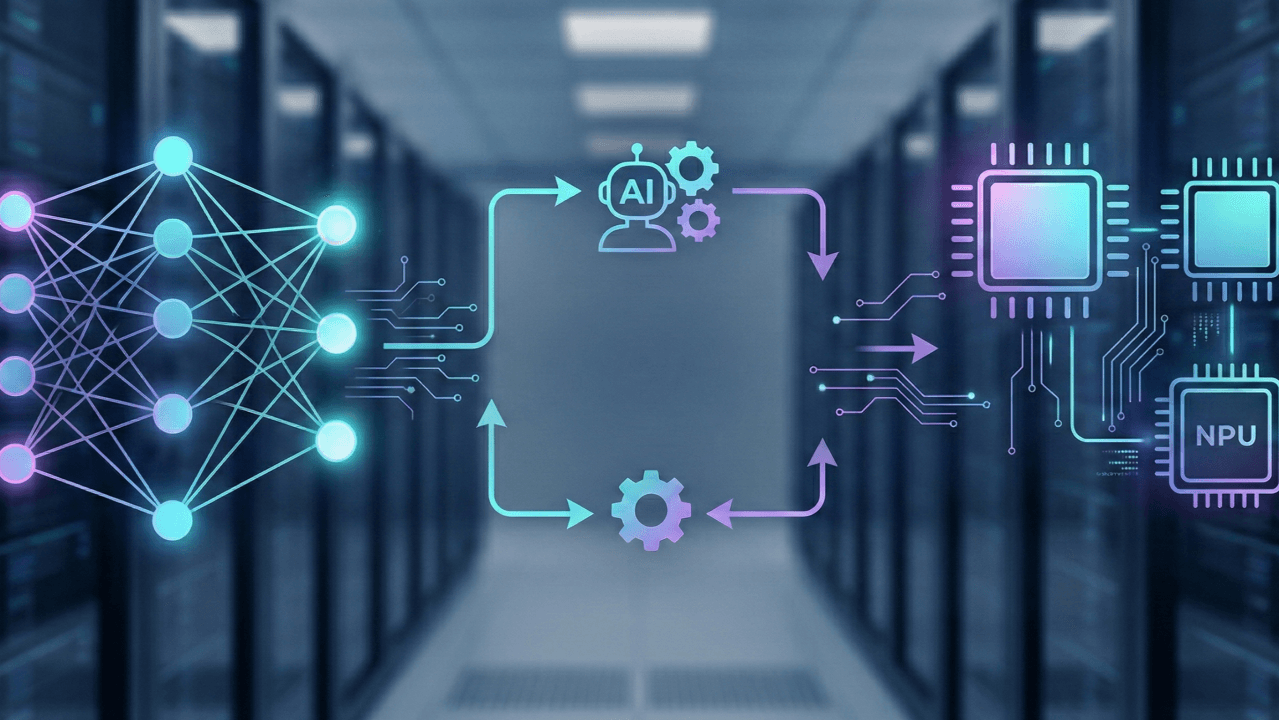
Every enterprise AI investment conversation eventually arrives at the same awkward moment: someone in the room points out that the AI system the organisation just approved budget for will need to connect to the ERP that was implemented in 2007, the warehouse management system that runs on an on-premises server with no public API, and the customer database that lives in a format three generations removed from anything modern. At this point, one of two things happens. Either the room acknowledges that the integration work is the critical path and budgets for it appropriately or the integration problem is deferred, the budget focuses on the AI platform, and the deployment fails twelve weeks later when the agent cannot access the data it needs to function. Gartner does not predict that 40% of agentic AI projects will fail because the AI models are bad. They predict it because legacy systems cannot support modern AI execution demands. This is the problem that determines whether enterprise AI works in practice.
Why Legacy Systems Break Agent Architectures
AI agents need three capabilities from the systems they connect to: the ability to read current, structured data reliably and at low latency; the ability to write actions back to those systems when the agent's reasoning produces an output that requires a real-world change; and the ability to receive events or signals from those systems when something changes that the agent should respond to. Modern, API-first systems support all three through well-documented REST APIs with authentication, webhooks for event notification, and write permissions that are granular enough to give agents the access they need without giving them access to everything.Legacy systems the 2007 ERP, the on-premises WMS, the custom CRM built before API-first design became standard typically support none of these cleanly. They were built for human users interacting through a UI, or for batch data exchange through scheduled file transfers, or for direct database connections that bypass the application layer entirely. An agent trying to query a legacy system for current inventory data may find that the only access mechanism is a daily CSV export that arrives at 6am and is stale for the remaining twenty-three hours. An agent trying to write a purchase order back to a legacy ERP may find that the write API requires a sequence of five interdependent API calls in a specific order with session state maintained between them a pattern that breaks under the concurrent execution model that agent orchestration systems use.
The Four Legacy Integration Patterns That Work
Read-only adapter with scheduled extraction
For legacy systems that cannot support real-time API queries, a read-only adapter extracts structured data on a configurable schedule every 15 minutes, every hour, every day depending on how frequently the data changes and how stale is acceptable for the specific use case. The extracted data is normalised, indexed, and written to a modern data store that the agent queries directly. This pattern adds latency the agent's view of the legacy system is as current as the last extraction but it is implementable for virtually any legacy system that produces any form of data export, and it does not require modifying the legacy system itself. The implementation risk is low. The accuracy risk is the staleness which needs to be explicitly acknowledged and managed in the agent's reasoning logic.
Change data capture (CDC)
For legacy systems running on relational databases, Change Data Capture extracts changes from the database transaction log rather than querying the application layer. CDC tools (Debezium is the most widely used open-source option) connect directly to the database and produce a real-time stream of every insert, update, and delete without requiring any modification to the application or its APIs. This pattern provides near-real-time data freshness without requiring the legacy application to support a modern API. The implementation complexity is moderate and requires database administrator access, but it is the most reliable path to real-time data from legacy database-backed systems.
MCP adapter for legacy application interfaces
The Model Context Protocol (MCP) the emerging standard for agent-to-tool communication that Workato committed to with eight production-ready enterprise servers in February 2026 can be implemented as an adapter layer that wraps a legacy application's existing interface (whether that interface is a web UI, a legacy SOAP API, or a file-based integration) and exposes it to agents through a standardised MCP interface. This approach requires custom development effort proportional to the complexity of the legacy interface, but it produces an integration that is maintainable as a standard component rather than a one-off custom connection.
Human-in-the-loop for write operations on legacy systems
For legacy systems where automated writes are technically difficult or compliance-restricted, the agent generates the write action as a structured, human-executable instruction rather than executing it directly. The agent produces the purchase order, formats it to the legacy ERP's requirements, and queues it for human execution in the legacy system with a notification to the relevant person and a one-click completion confirmation that the agent monitors. This hybrid approach captures the agent's intelligence value (the decision about what to order, when, and in what quantity) while using human hands for the legacy system write operation. It is less efficient than full automation but significantly more efficient than a purely human process.
The Data Quality Layer That Cannot Be Skipped
Legacy system integration produces data. It does not clean data. An adapter that extracts data from a legacy WMS with inconsistent SKU naming, duplicate inventory records, and stale location mappings produces a fast, reliable feed of inconsistent, duplicated, and stale data. The agent receives this data and reasons from it, producing outputs that reflect the quality of what it received. This is why data quality remediation must precede or accompany integration work, not follow it.The specific data quality issues that most frequently break agent accuracy in legacy-integrated systems: entity identifier inconsistency (the same real-world entity having different IDs in different systems, preventing reliable joins), field-level type inconsistency (the same field containing strings in some records and integers in others, causing parsing failures), null values in fields the agent's reasoning depends on, and referential integrity gaps (records that reference entities that no longer exist in the connected system). These issues do not require a full enterprise data quality programme to address. They require targeted remediation of the specific fields and relationships that the first agent's logic will use a two-to-four-week sprint before deployment that is reliably less expensive than debugging incorrect agent outputs in production.
The Honest Timeline and Cost
Legacy integration work takes longer and costs more than vendor proposals estimate. The gap is almost always significant typically two to four times the vendor's integration estimate for organisations with legacy-heavy stacks. The vendor's estimate reflects the effort to connect the AI platform to modern, API-first demo systems. The actual effort reflects the work to connect the AI platform to the specific legacy systems the organisation runs, including the undocumented quirks, authentication mechanisms, and data quality issues that are only discovered during the actual integration work.The honest framing for enterprise AI investment planning: budget for integration work as a first-class cost, not as an afterthought. For any organisation with legacy systems (which is most organisations), the integration budget should be at least equal to the AI platform licence cost, and the integration timeline should be the critical path of the deployment plan. Treating integration as a minor configuration task that can be completed during onboarding is the decision that causes most enterprise AI projects to stall between pilot success and production deployment.

Related articles
View all → Super Manager AGI
How Super Manager AGI Enables Autonomous Business Execution at Scale
The concept of a Super Manager AGI an artificial general intelligence system capable of managing complex business operations autonomously, across functions and geographies, at a scale and quality that human management cannot approach is moving from theoretical possibility to operational reality. Understanding what it enables and what it requires is the most important strategic question facing enterprise leaders today.
 AI Coordination
Why AI Coordination Engines Will Replace Traditional Workflow Tools
Traditional workflow tools automate processes that have been explicitly defined. AI coordination engines understand objectives, orchestrate the work required to achieve them, and adapt as conditions change. The difference is not incremental it is the difference between a tool that does what it is told and a system that understands what needs to be done.
 Enterprise AI
The Enterprise Operating Model After the Rise of Autonomous AI
The enterprise operating model that was built for human coordination hierarchies, approval chains, monthly reviews, and manual handoffs is being structurally disrupted by autonomous AI systems that act, coordinate, and close loops without waiting for the next scheduled meeting. The organisations that redesign their operating model around AI execution will define the next decade of enterprise performance.