AI is Not Replacing Jobs People Using AI Are
It is not the machine taking your job. It is the person next to you who learned how to use the machine in a weekend. This is the most important career reality of 2026 and most people are still not acting on it.
Prince Kumar
Author

Every few months, a new wave of headlines announces that AI is coming for another profession lawyers, designers, writers, coders, analysts. The framing is almost always the same: AI as an autonomous force replacing human workers the way machines replaced factory workers in the Industrial Revolution. This framing is wrong not because AI is not changing the job market, because it is, dramatically but because it misidentifies the agent of displacement. In 2026, the people losing jobs to AI are not being replaced by software running autonomously. They are being replaced by other people who learned how to use that software and can now do the same work in a fraction of the time. The competitive threat is not the tool. It is the person wielding it.
The Real Displacement Mechanism
Consider what happened in graphic design between 2022 and 2025. Midjourney, Adobe Firefly, and DALL-E did not eliminate the need for visual communication. They eliminated the need for three junior designers when one senior designer with AI tools could produce the same volume and variety of assets. The junior designers did not lose their jobs to a machine. They lost them to a creative director who learned to prompt AI in an afternoon and stopped needing a team to execute their vision. The competitive threat was a person with a new skill, not a software subscription.The same dynamic is playing out in copywriting, in basic coding, in data analysis, in customer support, in video production, and in dozens of other knowledge work categories. In each case, the pattern is the same: AI tools dramatically increase the output of people who learn to use them, which reduces the number of people required to produce a given volume of work, which creates displacement not from autonomous AI, but from the productivity differential between AI-enabled workers and those without the skill.LinkedIn's 2026 data makes this concrete: AI-related job postings are up 340% since 2024 while traditional roles in the same fields have declined 15%. The market is not eliminating these functions. It is repricing them rewarding the people who can multiply their output with AI and reducing demand for those who cannot.
The Sectors Where This Is Already Decided
Content and copywriting
A freelance writer using Claude or ChatGPT can produce first drafts five to ten times faster than one writing from scratch. Content agencies have reduced their junior writer headcount by 30 to 50% over the past two years not because clients need less content, but because each remaining writer produces more. The writers who kept their jobs and increased their rates are the ones who learned to use AI as a research assistant, first-draft generator, and editing partner. The ones who resisted are competing for a shrinking pool of clients who either cannot afford AI-enabled competitors or do not yet trust them.
Entry-level coding
GitHub Copilot is generating nearly half of the keystrokes in enterprise codebases. Big-tech new-graduate hiring is down 55% since 2019. Thirty-seven percent of engineering managers say they would rather use AI than hire a new graduate for standard implementation tasks. The engineers who are thriving are the ones who repositioned themselves as AI orchestrators directing and evaluating AI-generated code rather than writing every line manually. The ones struggling are those whose primary value was implementing well-specified requirements in standard frameworks, which is exactly what AI now does faster and cheaper.
Data analysis
A business analyst who can write precise prompts to extract, clean, and visualise data using AI tools can produce analyses in hours that previously required days. Companies are not running fewer analyses they are running more, with fewer analysts. The analysts who have survived and advanced are the ones who learned to ask AI the right questions and critically evaluate the answers. The ones displaced are those whose value was in the mechanical execution of the analysis process rather than in the business judgment that determines what to analyse and how to interpret what comes back.
Why 'AI Will Create New Jobs' Is Not a Complete Answer
The standard reassurance about AI and employment is that every major technology transition created more jobs than it destroyed the Industrial Revolution, the PC era, the internet. This is historically accurate and economically sound as a long-run projection. It is insufficient as advice for someone navigating the transition right now. Yes, AI will create new categories of work that do not exist today. Yes, demand for AI-literate workers is already growing at 340% per year. None of this helps the 38-year-old data analyst whose role was eliminated in November and who is now competing for a job market where the skills required have changed faster than any retraining programme anticipated.The median time for a displaced tech worker to find re-employment has increased from 3.2 months in 2024 to 4.7 months in early 2026. The re-employment time is growing because the skills being demanded are different from the skills being displaced, and the gap is widening faster than workers are crossing it. The long-run job creation narrative is true. It does not make the short-run displacement less real for the individuals experiencing it.
What the Right Response Actually Looks Like
- Learn the AI tools that are most relevant to your specific field now, not when you feel the competitive pressure by the time the pressure is visible, the gap is already significant
- Reframe your role around the judgment, context, and domain expertise that AI cannot provide these are your defensible competitive advantages in an AI-augmented market
- Stop competing on execution speed for tasks that AI can execute you will lose this competition; compete instead on quality of direction, critical evaluation, and the contextual judgment that makes AI outputs actually useful
- Build a portfolio of AI-assisted work that demonstrates what you can produce with these tools employers and clients hire demonstrated capability, not certifications
- Treat the transition as permanent, not temporary the workers who are thriving in this environment are the ones who accepted that the job market has structurally changed, not the ones waiting for it to revert
The Honest Summary
AI is a tool. Tools do not take jobs. People who use tools more effectively than people who do not those people take jobs. This has been true since the first person picked up a stone and the person next to them did not. The scale and speed of the current transition is genuinely unprecedented. The fundamental mechanism is not.The question every working professional should be asking in 2026 is not 'will AI take my job?' It is 'is the person I am competing with for this job, this client, or this promotion using AI more effectively than I am?' If the honest answer to that question is yes, the window for changing it is narrowing.
I Used AI for 7 Days Here's What Happened
Related articles
View all → Autonomous Coordination
The Rise of Autonomous Enterprise Coordination Platforms
Enterprise coordination the alignment of people, processes, information, and resources across organisational boundaries has always been expensive, slow, and error-prone when managed through human intermediaries alone. Autonomous coordination platforms powered by AI are replacing the coordination overhead of large organisations with intelligent systems that synchronise the enterprise continuously and without manual intervention.
 AI Agents
How AI Agents Are Transforming Enterprise Workflow Intelligence
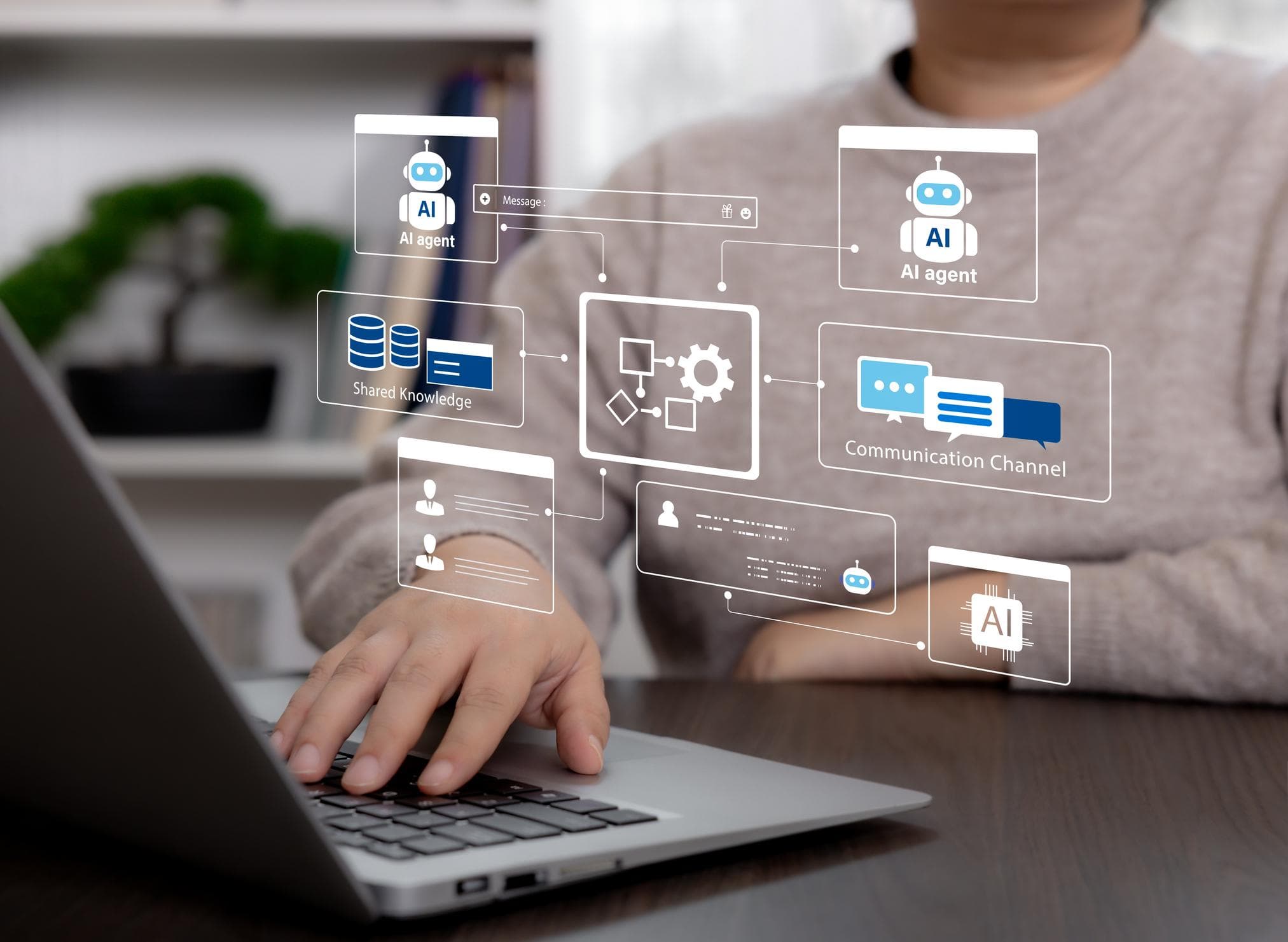
AI agents autonomous systems that perceive their environment, reason about objectives, and take action across enterprise workflows are moving from research concept to operational reality. The enterprises deploying AI agents at scale are discovering that workflow intelligence is not just about automation it is about creating organisational capability that compounds with every cycle.
 AI-Native Infrastructure
Why Global Enterprises Need AI-Native Operational Infrastructure
The operational infrastructure that global enterprises built in the pre-AI era was designed for a different competitive environment. Enterprises that try to layer AI on top of legacy operational infrastructure will capture a fraction of AI's potential. The ones that rebuild their operational foundations as AI-native will gain structural advantages their competitors cannot close.