AI-Native Management Systems for the Next Generation of Enterprises
The management systems of the current enterprise era were designed for human decision-making at human speed. The next generation of enterprises is being built on AI-native management systems operational infrastructure where AI is not a tool that humans use but the intelligence layer through which the enterprise manages itself.
Nirmal Nambiar
Author

The management systems that most large enterprises operate on today the ERP platforms, the planning tools, the reporting frameworks, the approval workflows, and the governance structures were designed for a world where humans made all decisions and technology provided the tools to execute and record those decisions. This human-centric design assumption is the fundamental architectural constraint that limits what AI can deliver when it is deployed within these systems. AI tools that are added to human-centric management systems improve specific processes and reduce specific costs but they cannot deliver the compound, system-wide performance improvement that AI-native management architecture enables. AI-native management systems are built on a different design assumption: that AI is the primary management intelligence layer and that human judgment is the strategic input that directs and governs the AI system rather than the operational mechanism that the system supports. This inversion of the human-technology relationship in management creates a qualitatively different management capability one that operates at the speed of AI, learns from every management cycle, and scales with organisational complexity rather than being constrained by it. The enterprises that build or transition to AI-native management systems are not just improving their current management model they are building the management infrastructure of the next decade of enterprise competition.
The Architectural Difference Between AI-Enhanced and AI-Native Management
The distinction between AI-enhanced and AI-native management systems is architectural rather than technological. AI-enhanced management takes an existing management system designed for human decision-making, human information processing, and human coordination and adds AI capabilities as performance improvements to specific components. The AI layer improves the speed of reporting, the accuracy of forecasting, or the consistency of a specific decision type but it operates within a management architecture whose fundamental design constraints remain unchanged. The management process is still human-directed; the AI is a better tool within that process.AI-native management inverts this relationship. The management process is AI-directed within boundaries set by human leadership; the human is the strategic director and governance authority rather than the operational manager. Data flows to AI systems in real time; AI systems make operational decisions within defined parameters; humans set objectives, define governance boundaries, review AI performance, and handle the exceptional situations that fall outside AI authority. The management system is designed from the ground up for this operating model not a legacy human-centric system with AI tools attached, but a system whose architecture assumes that AI will handle operational management and that humans will provide the strategic direction and judgment that AI cannot replicate. The performance difference between these two architectures is not incremental; it is the difference between a management system that is improved by AI and a management system that is fundamentally more capable because of AI.
Four Design Principles of AI-Native Management Systems
Principle 1: Objectives and boundaries as the primary human input
In an AI-native management system, the primary human management input is the definition of objectives and the governance boundaries within which the AI system can operate autonomously. Human leaders set the strategic direction the performance targets, the resource constraints, the risk tolerances, and the values and priorities that should govern operational decisions and the AI system manages the operational execution required to achieve those objectives within those boundaries. This requires a fundamentally different kind of management communication: not instructions about how to do things but clarity about what outcomes are required and what constraints apply. Enterprises that develop this objective-and-boundary management discipline create the foundation for AI-native management effectiveness; those that continue to manage through operational instruction will not realise the full potential of AI-native architecture.
Principle 2: Continuous learning as a core management system function
AI-native management systems treat continuous learning as a core operational function rather than a periodic improvement initiative. Every management cycle every decision made, every outcome produced, every deviation from plan and its resolution generates data that the system uses to improve its management models. The AI system becomes more capable with every operational cycle, developing an institutional management intelligence that captures the enterprise's accumulated operating experience more completely than any human management team could retain and apply. This continuous learning capability is the compounding advantage of AI-native management: the system's management quality improves automatically over time, producing an improving performance trajectory that static management systems cannot replicate.
Principle 3: Exception-based human engagement
In an AI-native management system, human management engagement is structured around exceptions the situations that fall outside the AI system's defined authority, that involve novel conditions the system has not encountered before, or that require the contextual judgment, ethical reasoning, or relationship management that human leaders provide. This exception-based engagement model maximises the value of human management attention by focusing it on the decisions where human judgment is genuinely superior to AI judgment, while allowing the AI system to manage the high-volume, well-defined operational decisions that consume the majority of management bandwidth in traditional systems. The discipline of maintaining exception-based engagement resisting the temptation to involve human management in decisions the AI system can make reliably is one of the most important organisational capabilities that AI-native management requires.
Principle 4: Transparent AI governance and accountability
AI-native management systems require governance infrastructure that ensures the AI management layer is operating as intended, within defined boundaries, and in alignment with the enterprise's values and strategic objectives. This governance infrastructure includes performance monitoring that tracks AI management quality against defined benchmarks, audit trails that provide complete accountability for AI management decisions, human review mechanisms that identify AI behaviour that is technically correct but strategically or ethically misaligned, and model update processes that incorporate human judgment into AI system evolution. The governance of AI-native management is not a bureaucratic overlay it is the mechanism through which human strategic leadership maintains meaningful control of an organisation that is operationally managed by AI systems.
AI-Native Management System Readiness Diagnostic
- How clearly can your leadership team articulate the objectives and governance boundaries that would direct an AI management system the performance targets, risk tolerances, value constraints, and authority limits that would define the system's operational mandate? The clarity of this articulation is the prerequisite for AI-native management design, and the difficulty of producing it is often the first governance challenge that AI-native management transition reveals.
- What proportion of your current management activity is operational direction and coordination telling people and systems what to do and monitoring compliance versus strategic direction and governance setting objectives, defining boundaries, and evaluating outcomes? The former is the AI-native management opportunity; the latter is the human management function that AI-native architecture amplifies rather than replaces.
- Do you have the data infrastructure required to support AI-native management real-time operational data flows, integrated system connectivity, and the analytical infrastructure that AI management systems require to make reliable operational decisions? Without this data foundation, AI-native management architecture cannot deliver its potential performance.
- What institutional management knowledge has your organisation accumulated the rules of thumb, the priority frameworks, the risk judgments, and the operational heuristics that your best managers apply and how much of this knowledge is documented in a form that could be encoded in AI management system parameters? The gap between accumulated management knowledge and encoded AI system parameters is the primary initial performance gap in AI-native management transitions.
- How does your board and executive leadership team currently think about the accountability implications of AI-native management the questions of who is responsible when AI management decisions produce poor outcomes, and how human oversight is maintained when AI systems are making the majority of operational decisions? These governance questions must be resolved before AI-native management architecture can be deployed responsibly at scale.
- What would your enterprise's management cost structure look like if AI systems were handling 70 percent of the operational management functions currently performed by human managers and what would that cost structure change enable in terms of strategic investment and competitive positioning? The answer to this question is the strategic case for AI-native management transition.
Related articles
View all →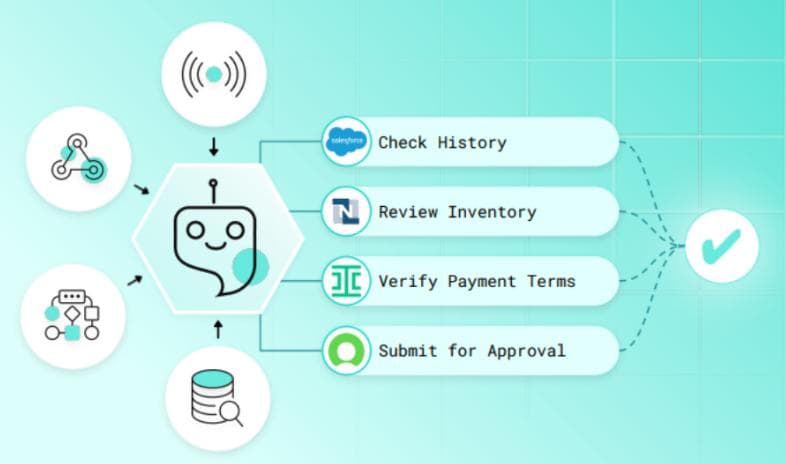 AI Execution
Why AI Execution Systems Will Define the Future of Enterprise Operations
The next frontier of enterprise competitive advantage is not strategy it is execution. AI execution systems that translate strategic intent into coordinated operational action, faster and more reliably than any human-managed process, are becoming the defining infrastructure of enterprise performance in every sector.
 Autonomous Coordination
The Rise of Autonomous Enterprise Coordination Platforms
Enterprise coordination the alignment of people, processes, information, and resources across organisational boundaries has always been expensive, slow, and error-prone when managed through human intermediaries alone. Autonomous coordination platforms powered by AI are replacing the coordination overhead of large organisations with intelligent systems that synchronise the enterprise continuously and without manual intervention.
 AI Agents
How AI Agents Are Transforming Enterprise Workflow Intelligence
AI agents autonomous systems that perceive their environment, reason about objectives, and take action across enterprise workflows are moving from research concept to operational reality. The enterprises deploying AI agents at scale are discovering that workflow intelligence is not just about automation it is about creating organisational capability that compounds with every cycle.