Designing a Business Like a System, Not a Startup
Most startups are built reactively the next hire, the next campaign, the next product decision made in response to the most recent problem. Businesses that scale are designed proactively as interconnected systems with defined inputs, outputs, feedback loops, and constraints. The difference between a startup that stalls at ₹1 crore monthly revenue and one that reaches ₹10 crore is rarely product or market. It is architecture.
Manroze
Author

There is a specific moment that almost every D2C founder recognises the moment when the business stops responding predictably to their decisions. They increase ad spend and revenue does not move proportionally. They add a new SKU and operations slow down instead of speeding up. They hire a new sales head and the channel revenue actually dips for three months before recovering. The business, which once felt like a machine they understood, has become a system they are reacting to rather than designing. This transition is not a sign that the founder has made mistakes. It is a sign that the business has grown beyond the scale at which individual decisions have predictable local effects and that what the business needs now is not better individual decisions but a better system architecture that makes good outcomes the default result of the system's operation rather than the product of heroic individual effort.
The Difference Between a Startup and a System
A startup is an organisation designed to find product-market fit under conditions of extreme uncertainty. Its defining characteristics are speed, flexibility, and the concentration of decision-making authority in a small number of people who can hold the full context of the business in their heads simultaneously. These characteristics are advantages in the early stage they allow rapid iteration, fast pivots, and the kind of intense founder-driven execution that turns an insight into a product and a product into early revenue.A system is an organisation designed to produce consistent, predictable outcomes at scale through the coordinated operation of defined processes, clear roles, reliable data flows, and feedback mechanisms that detect and correct deviations from desired performance. The characteristics of a system process documentation, defined accountability, measurement infrastructure, deliberate feedback loops are not advantages in the early stage. They are overhead that slows down the iteration speed that early-stage survival requires. The transition problem is that the characteristics that make a startup successful are the precise characteristics that prevent it from becoming a system and without the deliberate decision to make that transition, the business stalls at the scale where individual heroics can no longer compensate for architectural absence.
The Components of a Business System
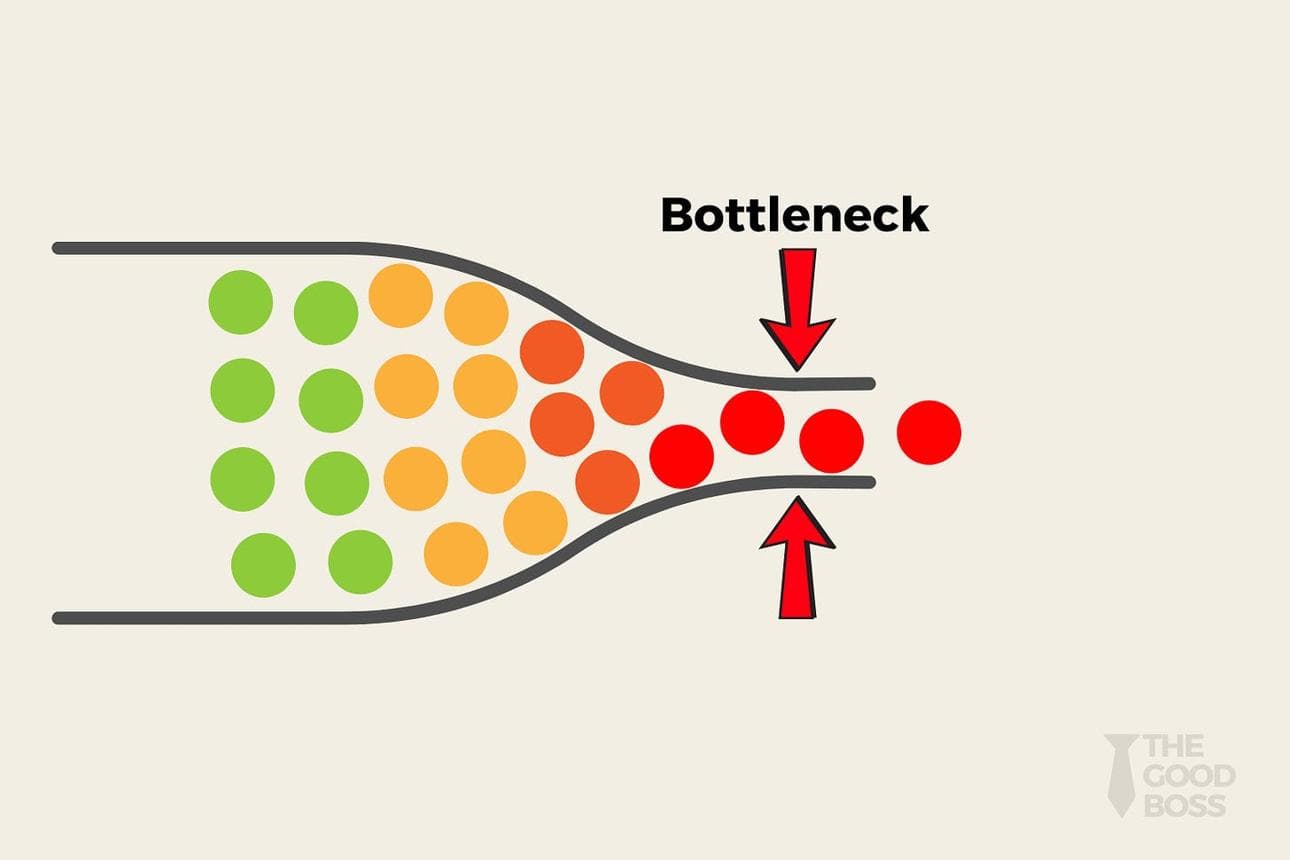
A business designed as a system has five identifiable architectural components. The first is a defined value creation mechanism a clear, documented description of how the business converts inputs (capital, raw materials, customer attention) into outputs (products, revenue, customer value) that is understood by everyone in the organisation. The second is a measurement infrastructure a set of leading and lagging metrics that provide early signals of system performance and deviation, organised at the level of each major business function and aggregated into a coherent view of overall business health.The third is a feedback and correction mechanism the process by which performance deviations identified by the measurement infrastructure are routed to the right decision-maker, translated into specific corrective actions, and tracked through to resolution. The fourth is a constraint management process the ongoing identification and active management of the system's binding constraints, the points at which the system's capacity to produce its desired outputs is most limited. The fifth is a documented operating rhythm the cadence of reviews, decisions, and communications that keeps the system coordinated and aligned without requiring constant founder intervention. Most D2C businesses have fragments of these components. Very few have all five operating coherently together.
How to Begin Designing Your Business as a System
The starting point for business system design is not an organisational restructuring or a technology investment. It is a mapping exercise: drawing the full flow of the business from customer acquisition through product delivery, payment collection, and repeat purchase identifying at each step the inputs required, the outputs produced, the measurement currently in place, and the person or team accountable for performance at that step. This map almost always reveals the same set of structural gaps: steps in the flow where no one has defined accountability, steps where performance is not measured, and steps where deviations from expected performance have no defined correction mechanism.Once the map is drawn and the gaps are identified, the system design work is the sequential closure of each gap defining accountability, establishing measurement, creating correction mechanisms starting with the gaps in the steps that most constrain the business's ability to grow. This is not a one-time project. It is the ongoing work of operating a business as a system rather than as a collection of individuals doing their best in response to the most recent problem. The founders who do this work early before the business is large enough that the absence of system architecture is visible in stalled revenue build the architectural foundation that allows the business to scale without the heroic interventions that eventually exhaust even the most capable founders.
Related articles
View all → AI-Native Infrastructure
Why Global Enterprises Need AI-Native Operational Infrastructure
The operational infrastructure that global enterprises built in the pre-AI era was designed for a different competitive environment. Enterprises that try to layer AI on top of legacy operational infrastructure will capture a fraction of AI's potential. The ones that rebuild their operational foundations as AI-native will gain structural advantages their competitors cannot close.
 Strategic Execution
AI-Powered Enterprise Execution for Faster Strategic Outcomes
Strategic advantage in the current era is not determined by the quality of strategy alone it is determined by the speed at which strategy is executed. AI-powered enterprise execution systems are compressing the time from strategic decision to operational outcome in ways that are redefining competitive dynamics across every sector.
 Execution Speed
Why Enterprise Execution Speed Will Define Market Leadership in the AI Era
In the AI era, the fastest-executing enterprise wins. Not the best-strategised, not the most well-resourced the fastest. Execution speed is becoming the primary competitive variable, and the organisations that have built AI-powered execution infrastructure are setting a pace their competitors cannot match.