The Future of PMOs in an AI-Native Organization
Project Management Offices (PMOs) have traditionally focused on governance, standardization, and resource coordination across project portfolios. In AI-native organizations, PMOs are evolving from human-coordinated project management to AI-orchestrated delivery where autonomous agents handle task assignment, progress monitoring, resource optimization, and stakeholder communication. The PMO role shifts from coordinating project execution to defining objectives, establishing governance boundaries for autonomous execution, and handling exceptions that require strategic judgment. The transformation is not elimination of PMO functionit is elevation from operational coordination to strategic orchestration.
Nirmal Nambiar
Author

A Traditional PMO: 12 project managers coordinate 40 concurrent projects, spend 70% of time on status updates, resource allocation, schedule coordination. AI-native PMO: 4 strategic orchestrators define objectives and governance for AI agents that handle task assignment, progress monitoring, blocker detection, resource optimization. Human PMOs focus on strategic project portfolio decisions, stakeholder relationship management, and exceptions requiring judgment. The fundamental shift from recommendation to execution, from insights to autonomous operations, represents the transformation defining enterprise AI in 2026. The enterprises capturing value are those deploying execution capabilitynot those with the most sophisticated analysis.
The Strategic Imperative: Why This Transformation Matters Now
The transition described represents a fundamental shift in how enterprises operate and compete. Organizations that understand this shift and act decisively will gain structural advantages that competitors cannot easily replicate. The economic case is compelling: 70% reduction in coordination overhead, 40-50% improvement in project velocity, PMO roles shift from coordination to strategy demonstrate that this is not incremental improvement but transformative change in operational capability.The enterprises succeeding with this transformation share consistent patterns: they treat AI execution as strategic infrastructure rather than departmental technology, they establish governance frameworks enabling autonomous operation within risk boundaries, and they measure success through operational outcomes rather than technology deployment metrics. The competitive dynamics are clear: organizations deploying execution-capable AI systems operate with structural cost and speed advantages over those maintaining human-coordinated operations.
Implementation Realities: Building Capability While Managing Risk
Successful implementation requires balancing autonomous execution capability with governance controls that satisfy risk, compliance, and operational requirements. The technical architecture must support both execution authority and audit transparency. Organizations report that governance frameworksnot technical capabilityare the primary constraint on deployment velocity. Only 21% of enterprises have mature governance for autonomous agents according to Deloitte research.The implementation path follows consistent patterns: start with clearly bounded workflows where autonomous execution delivers measurable value, establish explicit authority boundaries and escalation criteria, deploy monitoring infrastructure that provides visibility into autonomous decisions, measure impact through operational metrics and business outcomes, and expand systematically as performance demonstrates reliable execution. Organizations attempting to deploy broadly without proven governance encounter failures that set back transformation timelines.
The Competitive Landscape: Windows of Advantage Are Narrowing
The opportunity described in the future of pmos in an ai-native organization represents a time-limited competitive advantage. As AI execution capabilities mature and become more accessible, the differentiation shifts from having the capability to executing at scale with operational excellence. Early movers gain advantages that compound: operational efficiency improvements fund additional AI investments, organizational learning about autonomous operations creates execution expertise that competitors must develop, and market positioning as execution leaders rather than automation followers attracts talent and partnerships.The strategic question facing enterprises is not whether to pursue this transformation but how quickly to execute and at what scale. Organizations waiting for technology to mature further or for clearer best practices risk falling behind competitors who are building execution capability now. The market data indicates rapid adoption: 40% of enterprise applications will feature AI agents by 2026, and organizations achieving significant ROI share characteristics of execution-first rather than recommendation-first deployment. The window for first-mover advantage is measured in quarters, not years.
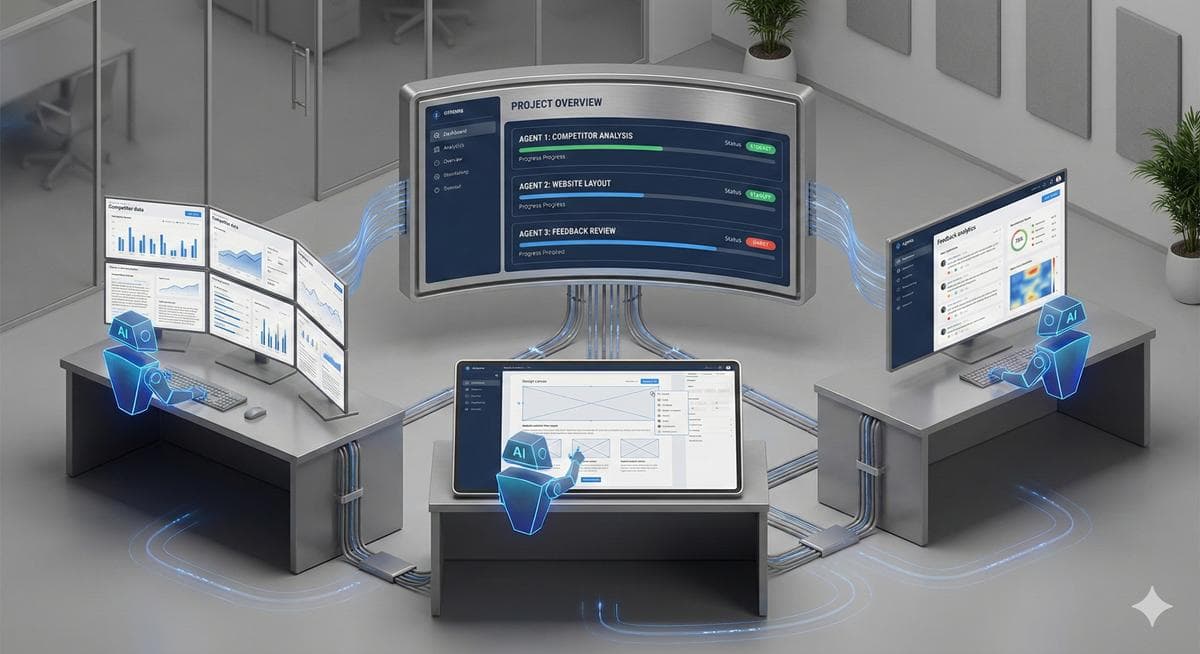
How AI Agents Can Execute Strategy, Not Just Recommend It
Related articles
View all →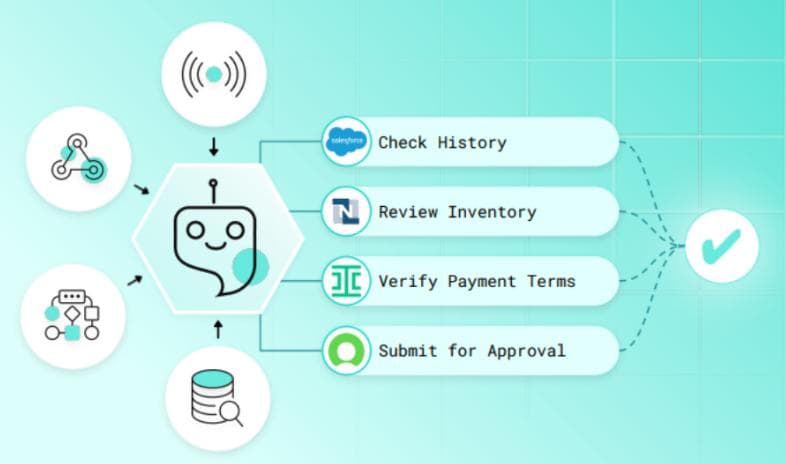 AI Execution
Why AI Execution Systems Will Define the Future of Enterprise Operations
The next frontier of enterprise competitive advantage is not strategy it is execution. AI execution systems that translate strategic intent into coordinated operational action, faster and more reliably than any human-managed process, are becoming the defining infrastructure of enterprise performance in every sector.
 Autonomous Coordination
The Rise of Autonomous Enterprise Coordination Platforms
Enterprise coordination the alignment of people, processes, information, and resources across organisational boundaries has always been expensive, slow, and error-prone when managed through human intermediaries alone. Autonomous coordination platforms powered by AI are replacing the coordination overhead of large organisations with intelligent systems that synchronise the enterprise continuously and without manual intervention.
 AI Agents
How AI Agents Are Transforming Enterprise Workflow Intelligence
AI agents autonomous systems that perceive their environment, reason about objectives, and take action across enterprise workflows are moving from research concept to operational reality. The enterprises deploying AI agents at scale are discovering that workflow intelligence is not just about automation it is about creating organisational capability that compounds with every cycle.