How AI Can Transform Enterprise Customer Support Systems
Customer support is one of the highest-cost, highest-impact functions in a growing enterprise. AI is transforming it from a cost centre with linear scaling constraints into an intelligent service layer that delivers better customer outcomes at a fraction of the traditional cost per interaction.
Manroze
Author

The economics of customer support have always been challenging for growing enterprises. More customers mean more support interactions. More support interactions mean more agents. More agents mean higher operational costs costs that scale linearly with customer volume and that, unlike marketing spend, do not generate revenue directly. The result is a function that consumes an increasing share of operational budget as the business grows, with limited ability to differentiate the customer experience and significant exposure to quality inconsistency at scale. AI is changing these economics in ways that affect every dimension of the support function: the cost per interaction, the speed of resolution, the consistency of quality across interactions, and the ability to use support interactions as a source of product and business intelligence. For D2C and FMCG brands where customer retention is directly correlated with support experience quality, the AI transformation of customer support is not a cost reduction initiative. It is a customer lifetime value improvement initiative with cost structure benefits as a secondary outcome.
The AI Transformation of Customer Support: Three Layers
The AI transformation of customer support operates across three layers with distinct impact profiles. The first layer is self-service automation: AI-powered systems that resolve routine customer queries order status, return initiation, product information, account management without human agent involvement. Well-designed self-service AI resolves 50 to 70 percent of incoming support volume automatically, with resolution quality that meets or exceeds what human agents achieve for the same query types. The economics are significant: the cost per interaction for AI-resolved queries is typically 80 to 90 percent lower than the cost of human agent resolution.The second layer is agent augmentation: AI systems that enhance the effectiveness of human agents handling complex interactions. Real-time access to customer history and context without manual system navigation. AI-generated response suggestions that agents can use or modify. Automated after-call work call summaries, CRM updates, follow-up task creation that frees agent time for customer interaction. Agent augmentation typically improves first-contact resolution rates by 15 to 25 percent while reducing average handle time by 20 to 30 percent, producing significant capacity gains within the existing agent team. The third layer is support intelligence: using the data generated by customer support interactions to surface product quality issues, experience friction points, and unmet customer needs that inform product development, marketing, and operations decisions.
Implementing AI Customer Support Transformation
The Right Sequencing for AI Support Adoption
The most common mistake in AI customer support implementation is starting with the most complex use cases full autonomous resolution of complex queries rather than building credibility with high-volume, routine query types where the accuracy requirement is clear and the risk of poor resolution is manageable. The recommended sequencing starts with self-service automation for the five to ten highest-volume, most straightforward query types. This delivers immediate cost reduction and builds organisational confidence in AI resolution quality before tackling more complex interactions. Agent augmentation is then layered in surface AI tools to agents handling queries that the self-service layer cannot resolve, measuring the impact on resolution quality and handle time. Full automation of complex query types and proactive support intelligence come last, built on the data and confidence established in the earlier stages.
The Customer Experience Design Imperative
The enterprise that implements AI customer support poorly deploying chatbots that cannot resolve common queries, forcing customers through scripted flows that do not match their actual needs, or making it difficult to reach a human agent when the AI cannot help creates a worse customer experience than a well-run human support operation. AI customer support transformation is not a technology deployment. It is a customer experience design exercise that uses AI as the delivery mechanism. The design starts with the customer what queries they have, what information they need to resolve them, what experience of resolution feels satisfactory and works backward to the AI system design. The technology serves the experience design, not the other way around.
AI Customer Support Transformation Questions
- What are the ten highest-volume query types your support function handles and what percentage of each could be resolved accurately and satisfactorily by a well-designed self-service AI system?
- What is your current cost per support interaction across channels and what would a 50 percent reduction in that cost enable for your customer experience investment or margin structure?
- What is your current first-contact resolution rate and what AI augmentation tools would most directly improve it for the query types currently requiring multiple interactions?
- Are you using the data generated by customer support interactions to surface product quality issues and experience friction points and how is this information currently flowing to product and operations teams?
- What is the customer experience impact of a poor AI support interaction for your brand and how does this inform your design requirements for AI support quality thresholds?

Related articles
View all →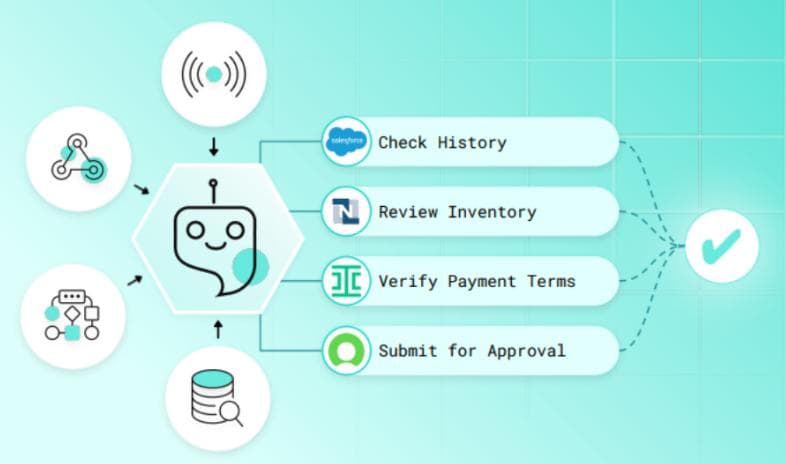 AI Execution
Why AI Execution Systems Will Define the Future of Enterprise Operations
The next frontier of enterprise competitive advantage is not strategy it is execution. AI execution systems that translate strategic intent into coordinated operational action, faster and more reliably than any human-managed process, are becoming the defining infrastructure of enterprise performance in every sector.
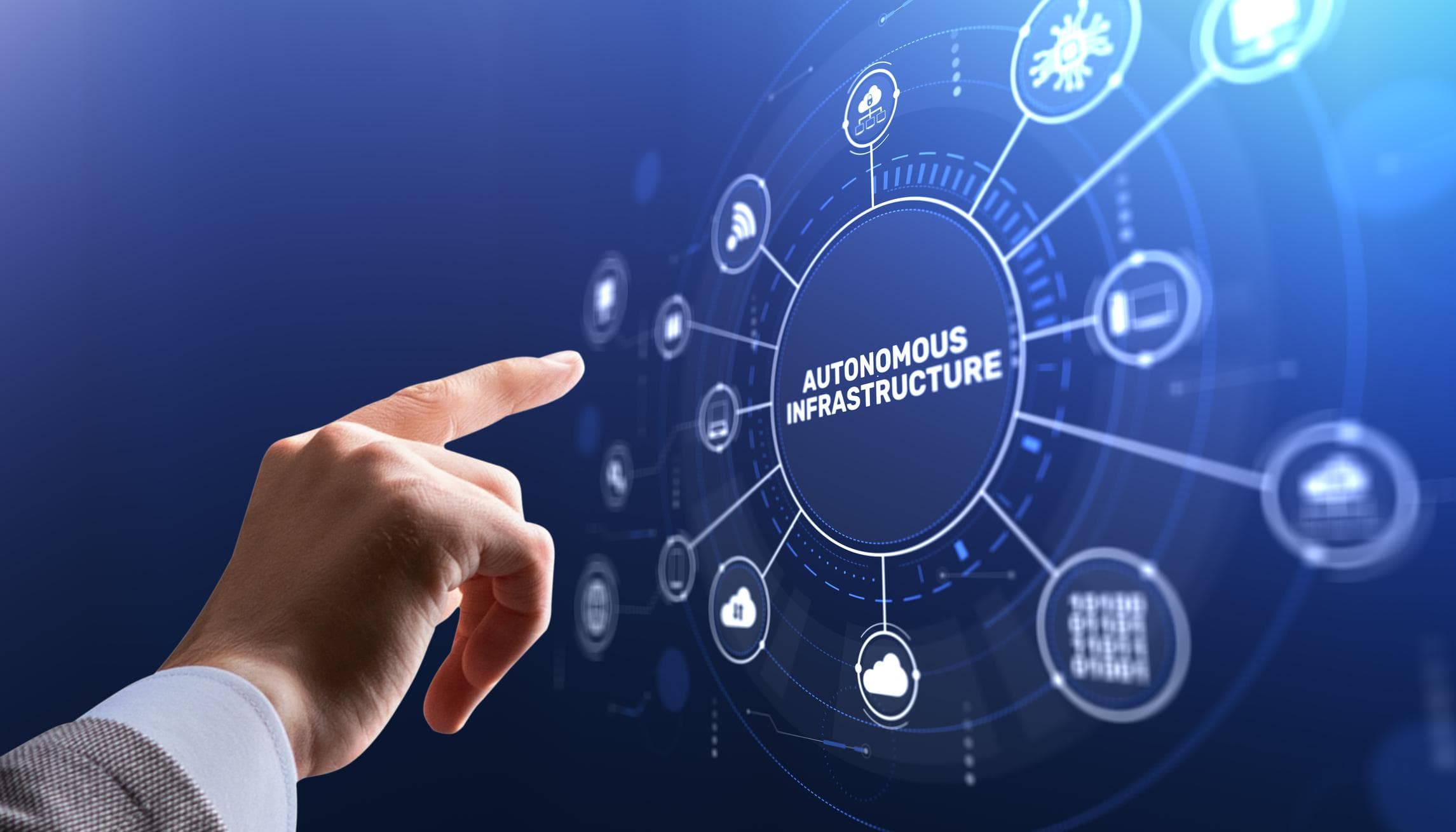 Autonomous Coordination
The Rise of Autonomous Enterprise Coordination Platforms
Enterprise coordination the alignment of people, processes, information, and resources across organisational boundaries has always been expensive, slow, and error-prone when managed through human intermediaries alone. Autonomous coordination platforms powered by AI are replacing the coordination overhead of large organisations with intelligent systems that synchronise the enterprise continuously and without manual intervention.
 AI Agents
How AI Agents Are Transforming Enterprise Workflow Intelligence
AI agents autonomous systems that perceive their environment, reason about objectives, and take action across enterprise workflows are moving from research concept to operational reality. The enterprises deploying AI agents at scale are discovering that workflow intelligence is not just about automation it is about creating organisational capability that compounds with every cycle.