How AI Workflow Intelligence Improves Enterprise Efficiency and Alignment
Enterprise workflows are the operational fabric of large organisations the processes through which strategy becomes action and inputs become outputs. AI workflow intelligence is transforming this fabric from a static, manually managed system into a dynamic, self-improving operational infrastructure that delivers both higher efficiency and stronger alignment between what the enterprise intends and what it actually does.
Aditya Sharma
Author

The gap between strategic intent and operational reality is one of the most persistent and expensive problems in enterprise management. Leaders set direction, communicate priorities, and allocate resources and the organisation executes something that resembles the direction, partially reflects the priorities, and uses the resources in ways that are not always aligned with the intentions behind the allocation. This misalignment is not a failure of individual effort or organisational commitment it is a structural consequence of the complexity of translating strategic intent into coordinated operational action through workflows that are manually managed, inconsistently executed, and insufficiently monitored. AI workflow intelligence addresses this problem at its structural root. By providing comprehensive visibility into how workflows are actually executing, identifying deviations from intended process in real time, optimising workflow design based on performance data, and coordinating workflow execution across organisational boundaries autonomously, AI workflow intelligence systems close the gap between strategic intent and operational reality in ways that manual workflow management cannot approach. The enterprises that deploy AI workflow intelligence as a core operational capability will achieve both higher efficiency doing more with the same resources and stronger alignment ensuring that operational activity reflects strategic intent with a consistency that human-managed workflows cannot deliver.
Why Enterprise Workflows Underperform Without AI Intelligence
Enterprise workflows underperform for reasons that are structural rather than motivational. The first reason is opacity: most enterprise workflows are not comprehensively monitored, meaning that deviations from intended process skipped steps, inconsistent execution, bottlenecks that slow throughput, and handoff failures that lose information between stages go undetected until they produce visible performance problems. By the time the performance problem is visible, the workflow failure that caused it has been occurring for days, weeks, or months. The second reason is rigidity: manually designed workflows are static specifications that reflect the process design decisions made at the time of their creation. As operational conditions change new customer requirements, new regulatory constraints, new technology capabilities the workflow specification becomes increasingly misaligned with optimal practice, but the cost and friction of workflow redesign means that the misalignment persists far longer than it should.The third reason is isolation: enterprise workflows are typically designed and managed within functional boundaries, without visibility into or coordination with the upstream and downstream workflows they interact with. The result is local optimisation each workflow is as efficient as possible within its functional scope that produces global suboptimisation because the interfaces between workflows are poorly managed. AI workflow intelligence solves all three problems: it provides comprehensive real-time visibility into workflow execution, it learns optimal workflow designs from performance data and updates workflow configurations dynamically, and it coordinates workflow execution across functional boundaries to optimise for enterprise-level outcomes rather than local functional metrics.
Four Capabilities of AI Workflow Intelligence That Drive Efficiency and Alignment
Capability 1: Comprehensive workflow execution visibility
AI workflow intelligence systems monitor every instance of every workflow in real time tracking task completion, identifying bottlenecks, detecting deviations from intended process, and measuring performance against defined objectives continuously rather than in periodic audits. This comprehensive visibility gives operational managers the current-state picture of workflow performance they need to identify and correct problems before they accumulate into significant performance failures. The monitoring coverage that AI systems provide every workflow instance, every step, every participant is categorically greater than what human monitoring processes can achieve, and the speed of problem identification is correspondingly faster.
Capability 2: Intelligent deviation detection and correction
AI workflow intelligence systems distinguish between deviations that are within acceptable operational variance and those that indicate a genuine process failure or optimisation opportunity. When a deviation requiring correction is identified, the system routes an alert to the appropriate human decision-maker with the relevant context and correction options or, for deviations within the system's defined authority, implements a correction autonomously. This intelligent deviation response prevents the accumulation of small workflow failures into large performance problems the pattern that human monitoring processes, operating at lower coverage and lower frequency, consistently fail to prevent.
Capability 3: Data-driven workflow optimisation
AI workflow intelligence systems analyse performance data across thousands of workflow instances to identify the process designs, resource allocations, and sequencing approaches that consistently produce the best outcomes. These insights are used to continuously improve workflow configurations adjusting task sequences, updating decision criteria, reallocating work between participants, and eliminating steps that add cost without adding value. The result is a workflow infrastructure that improves continuously based on operational experience rather than remaining static between scheduled redesign exercises. The compounding efficiency improvement from continuous data-driven optimisation is one of the most significant long-term value drivers of AI workflow intelligence deployment.
Capability 4: Cross-functional workflow coordination and alignment
The alignment dimension of AI workflow intelligence is delivered primarily through cross-functional coordination: the system maintains a real-time model of how workflows across different functions interact, identifies misalignments between functional workflow outputs and downstream requirements, and coordinates adjustments that keep the overall enterprise workflow system operating in alignment with strategic objectives. When a supply chain workflow deviation creates a downstream customer service problem, the AI system identifies the connection, alerts the relevant managers in both functions, and coordinates the response rather than allowing each function to manage its workflow in isolation while the cross-functional impact accumulates unaddressed.
AI Workflow Intelligence Deployment Diagnostic
- What percentage of your enterprise's operational workflows are comprehensively monitored in real time with visibility into every instance, every step, and every performance metric? The gap between this percentage and 100% is the workflow visibility gap that AI intelligence systems close.
- How quickly does your organisation currently identify a significant workflow deviation a bottleneck, a process failure, or a cross-functional misalignment and what is the average time from identification to correction? Both the identification latency and the correction latency are AI workflow intelligence improvement opportunities.
- When did your highest-volume operational workflows last undergo a data-driven redesign based on performance analysis? If the answer is more than 12 months ago, the workflow designs are operating on outdated performance assumptions that continuous AI optimisation would improve.
- What proportion of your enterprise's strategic priorities are reflected in the performance metrics that govern your operational workflows? The gap between strategic priorities and workflow metrics is a direct measure of the alignment problem that AI workflow intelligence is designed to close.
- Do you have visibility into how workflow performance in one function affects operational outcomes in the functions that depend on its outputs? Without cross-functional workflow visibility, local optimisation that produces global suboptimisation will persist regardless of individual function performance quality.
- What is the total cost of workflow inefficiency in your enterprise in rework, delay, coordination overhead, and misaligned resource utilisation and how does this cost compare to the investment required to deploy AI workflow intelligence at scale? This comparison is the financial justification for AI workflow intelligence deployment and the urgency framing for the investment decision.
Related articles
View all →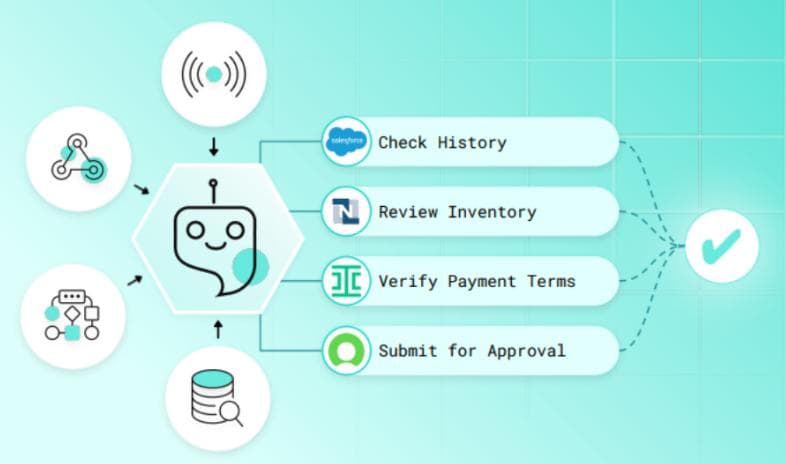 AI Execution
Why AI Execution Systems Will Define the Future of Enterprise Operations
The next frontier of enterprise competitive advantage is not strategy it is execution. AI execution systems that translate strategic intent into coordinated operational action, faster and more reliably than any human-managed process, are becoming the defining infrastructure of enterprise performance in every sector.
 Autonomous Coordination
The Rise of Autonomous Enterprise Coordination Platforms
Enterprise coordination the alignment of people, processes, information, and resources across organisational boundaries has always been expensive, slow, and error-prone when managed through human intermediaries alone. Autonomous coordination platforms powered by AI are replacing the coordination overhead of large organisations with intelligent systems that synchronise the enterprise continuously and without manual intervention.
 AI Agents
How AI Agents Are Transforming Enterprise Workflow Intelligence
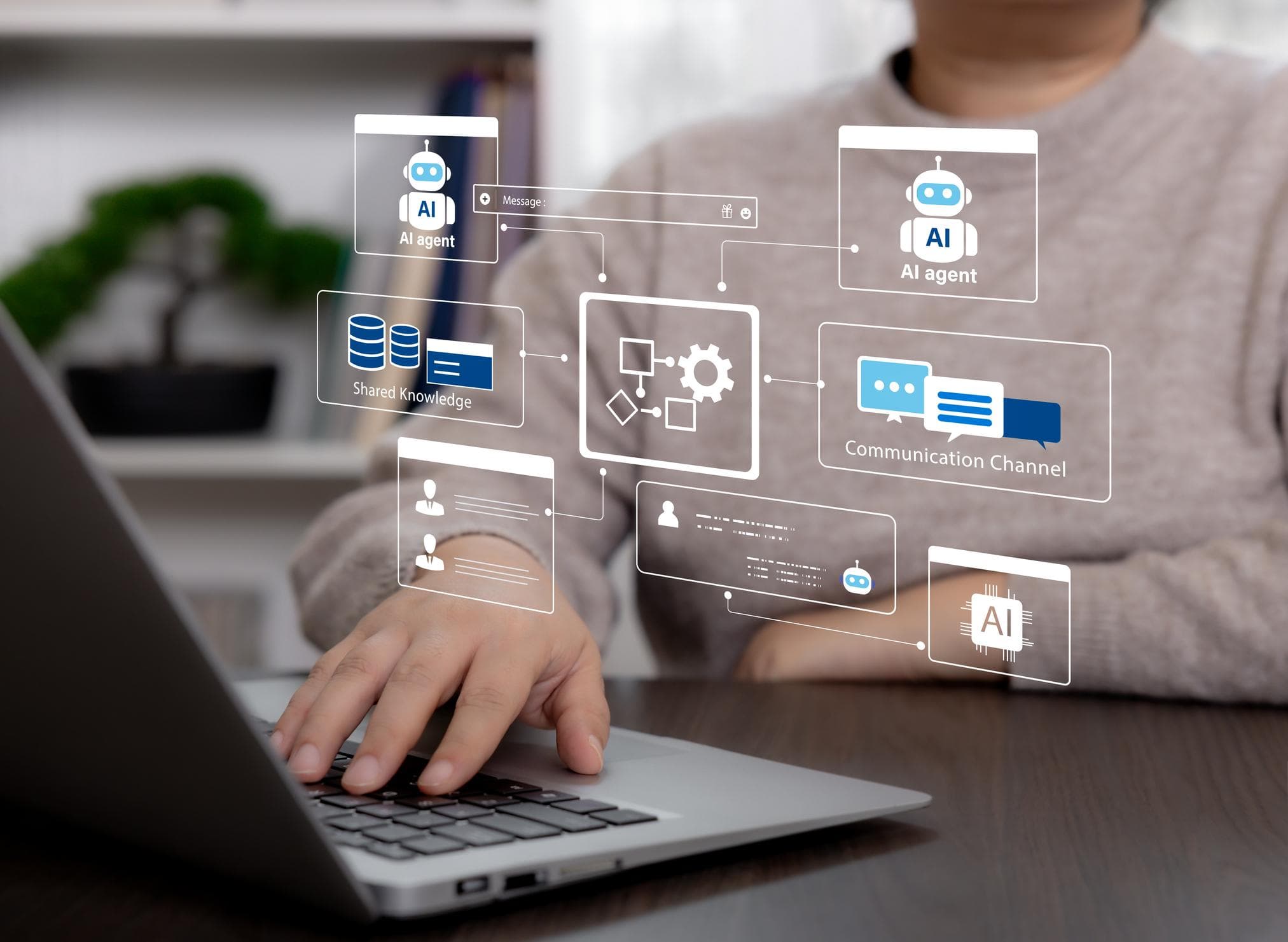
AI agents autonomous systems that perceive their environment, reason about objectives, and take action across enterprise workflows are moving from research concept to operational reality. The enterprises deploying AI agents at scale are discovering that workflow intelligence is not just about automation it is about creating organisational capability that compounds with every cycle.