How Autonomous AI Systems Can Eliminate Enterprise Execution Delays
Execution delays cost enterprises billions annually in lost revenue, missed opportunities, and competitive disadvantage. Autonomous AI systems that identify delay causes in real time, reroute blocked workflows, accelerate approvals, and maintain execution momentum without requiring human intervention are eliminating these delays at their source.
Aditya Sharma
Author

The financial cost of enterprise execution delays is significant, persistent, and almost entirely preventable. A product launch delayed by six weeks because an approval process stalled at a management layer represents lost revenue that cannot be recovered. A supply chain response delayed by five days because a supplier change required procurement approval through a process not designed for urgency represents margin loss and customer impact that compounds. A strategic initiative delayed by three months because cross-functional coordination failures created sequential bottlenecks represents competitive positioning loss that may not be recoverable before the market moves. These delays are not caused by insufficient effort, inadequate planning, or lack of organisational capability they are caused by specific, identifiable bottlenecks in the processes that connect decisions to actions: approval chains that are too long for the urgency of the decisions they govern, information handoffs that fail and require rework, resource conflicts that stall execution while management attention is sought, and escalation processes that route urgent issues to decision-makers through channels that are too slow for the pace of the operational environment. Autonomous AI systems that identify these bottlenecks in real time, reroute blocked workflows through alternative paths, escalate urgent decisions through accelerated channels, and maintain execution momentum without requiring human intervention at every friction point are eliminating execution delays at their structural sources producing execution speed improvements that management efficiency programmes and process improvement initiatives cannot approach.
The Anatomy of Enterprise Execution Delay
Enterprise execution delays have a consistent anatomy that repeats across organisations, industries, and initiative types. The delay rarely originates from a single large failure it accumulates through a sequence of small delays, each individually manageable but collectively significant. An approval that takes three days instead of one because the approver's inbox is full. A data dependency that delays a workstream by two days because the upstream team did not know the downstream team needed the data by Tuesday. A resource conflict that stalls a critical workstream for a week because the two teams competing for the resource are not communicating about their respective priorities. A scope question that creates a five-day wait because the escalation channel to get an answer runs through a management layer that has a weekly rhythm. Each of these delays is small; their accumulation produces the execution failures that appear as programme overruns, missed market windows, and competitive disadvantage.The common characteristic of all these delay sources is their origin in coordination failures breakdowns in the information flow, decision routing, and resource coordination mechanisms that keep execution moving. Autonomous AI systems address execution delays at this coordination layer: monitoring execution progress continuously to identify the early signals of developing delays, rerouting information flows when standard channels are blocked, accelerating decisions through appropriate channels when urgency is detected, and resolving resource conflicts before they stall execution. The result is an execution environment where the small coordination failures that accumulate into significant delays are identified and resolved before they compound and the overall execution speed improvement reflects the elimination of accumulated coordination friction rather than any improvement in the core work itself.
Four Autonomous AI Capabilities That Eliminate Execution Delays
Capability 1: Real-time delay detection and early warning
Autonomous AI execution systems monitor the progress of every task, workstream, and dependency in the execution plan continuously identifying the early signals of developing delays before they become visible in missed milestones. A task that is progressing more slowly than its historical rate, a dependency that has not been confirmed by its due date, a resource whose utilisation pattern suggests it will not be available as planned each of these signals a developing delay that early intervention can prevent. The AI system routes early warning alerts to the appropriate human decision-makers with the context and options required for rapid response ensuring that potential delays are addressed when prevention is still possible rather than after the delay has already accumulated into a material programme impact.
Capability 2: Intelligent approval acceleration
Approval processes are one of the most consistent sources of execution delay in large enterprises not because approvals are unnecessary but because the routing and prioritisation of approval requests through human management attention is inefficient. Autonomous AI systems that classify approval requests by urgency and risk, route them to the appropriate approver through the fastest available channel, provide approvers with the pre-assessed context that enables rapid review, and escalate unresponded approvals through alternative channels when response time exceeds defined thresholds eliminate the approval latency that stalls execution without compromising the governance quality that approval processes are designed to provide. Approval cycle times that average three to five days in human-managed approval processes are compressed to hours in AI-managed approval acceleration systems.
Capability 3: Autonomous resource conflict resolution
Resource conflicts situations where two or more workstreams are competing for the same resource and at least one must wait are a primary source of execution delay in multi-workstream programmes. Human resolution of resource conflicts requires the competing workstreams to escalate their needs, a management authority to assess the relative priority, and a resolution decision to be communicated and implemented a process that typically takes days. Autonomous AI systems that monitor resource demand across all concurrent workstreams simultaneously identify resource conflicts before they stall execution, apply defined priority frameworks to determine the appropriate resolution, implement resource reallocation within their defined authority, and escalate only the conflicts that fall outside their authority parameters. The response time reduction from days to minutes eliminates the execution stalls that resource conflicts generate in human-managed environments.
Capability 4: Dynamic execution path optimisation
When an execution path is blocked a dependency is delayed, a resource is unavailable, an approval is stalled autonomous AI systems do not wait for the block to clear. They evaluate alternative execution paths, identify whether any alternative path can maintain execution progress while the primary path is blocked, and reroute execution through the best available alternative without requiring human direction of the rerouting decision. This dynamic path optimisation is the execution equivalent of GPS rerouting: the system maintains progress toward the objective by continuously evaluating and adjusting the path, rather than stopping when the planned route becomes unavailable. For complex multi-workstream programmes, dynamic path optimisation can maintain execution progress through conditions that would stall traditional programme management approaches significantly reducing the frequency and duration of programme delays.
Execution Delay Elimination Diagnostic
- What are the most common sources of execution delay in your enterprise's operational and strategic programmes and what proportion of total programme delay is attributable to coordination failures versus genuine complexity that requires additional time to resolve? The coordination failure proportion is the autonomous AI elimination opportunity.
- What is the average approval cycle time for routine operational decisions in your enterprise and what proportion of this time is elapsed waiting rather than active review and decision? The waiting proportion is the AI approval acceleration opportunity.
- How many resource conflicts per month create execution stalls in your highest-priority programmes and what is the average duration of the stall between the conflict arising and its resolution? Both the frequency and the duration are inputs to the resource conflict elimination value calculation.
- Do you have real-time visibility into the execution progress of all active programmes and initiatives with early warning when progress patterns suggest that a delay is developing? Without early warning capability, delay prevention is impossible and delay management is always reactive.
- What is the total annual cost of execution delays in your enterprise in lost revenue from missed market windows, in wasted resource investment in programmes that overrun their budgets, and in competitive positioning loss from initiatives that reach the market later than planned? This total cost is the upper bound of the value that autonomous AI delay elimination can deliver.
- How does the execution speed of your most important strategic initiatives compare to the execution speed of your most capable competitors and what is the competitive consequence of the gap? The competitive framing of execution speed is often more compelling than the internal efficiency framing for justifying autonomous AI execution system investment.
Related articles
View all →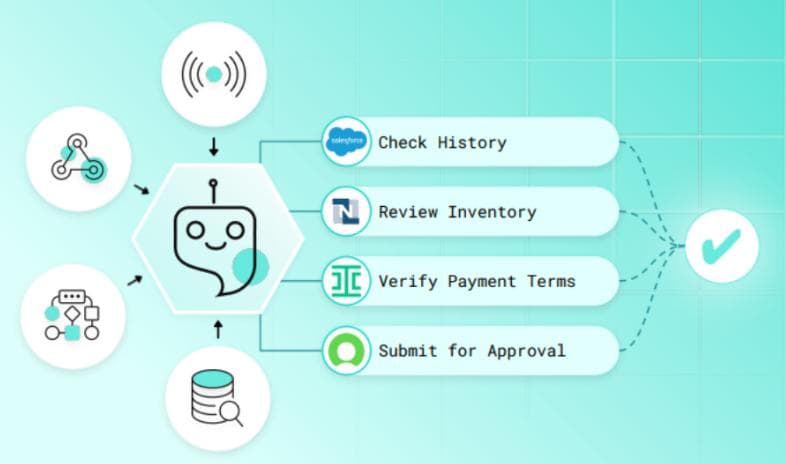 AI Execution
Why AI Execution Systems Will Define the Future of Enterprise Operations
The next frontier of enterprise competitive advantage is not strategy it is execution. AI execution systems that translate strategic intent into coordinated operational action, faster and more reliably than any human-managed process, are becoming the defining infrastructure of enterprise performance in every sector.
 Autonomous Coordination
The Rise of Autonomous Enterprise Coordination Platforms
Enterprise coordination the alignment of people, processes, information, and resources across organisational boundaries has always been expensive, slow, and error-prone when managed through human intermediaries alone. Autonomous coordination platforms powered by AI are replacing the coordination overhead of large organisations with intelligent systems that synchronise the enterprise continuously and without manual intervention.
 AI Agents
How AI Agents Are Transforming Enterprise Workflow Intelligence
AI agents autonomous systems that perceive their environment, reason about objectives, and take action across enterprise workflows are moving from research concept to operational reality. The enterprises deploying AI agents at scale are discovering that workflow intelligence is not just about automation it is about creating organisational capability that compounds with every cycle.