How Digital Platforms Are Changing Enterprise Revenue Models
The shift from product and service revenue to platform-based, recurring, and ecosystem revenue models is one of the most significant structural changes in enterprise business strategy. The companies that understand this shift and act on it will define the next decade of enterprise value creation.
Manthan Sharma
Author
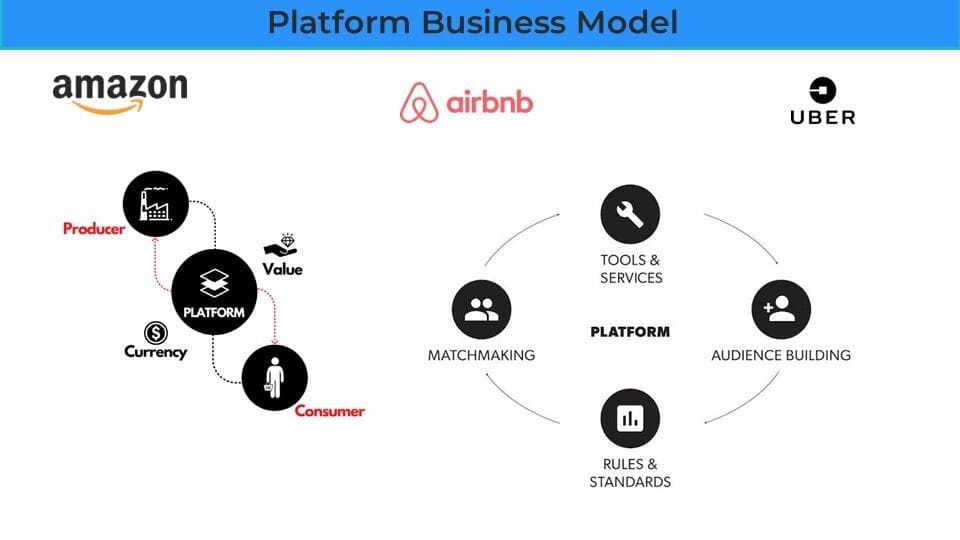
The most valuable companies in the world are platforms not because platforms are a technology choice, but because the platform model produces revenue characteristics that traditional product and service businesses cannot match: recurring revenue, network effects, low marginal cost of scale, and the ability to monetise an ecosystem rather than just a product. Enterprise leaders across every sector are asking the same question: how do we build platform dynamics into our business model before a platform competitor builds them into ours? Understanding how digital platforms change revenue models and what the transition from product to platform looks like in practice is one of the most important strategic questions of the current decade.
Why Platform Revenue Models Are Structurally Superior
Traditional product and service revenue is transactional each sale requires a customer decision, a sales effort, and a delivery event. Revenue is linear with the number of transactions. Platform revenue benefits from network effects each additional participant makes the platform more valuable for all other participants, which attracts more participants, which increases value further. Revenue grows faster than the cost of serving it because the platform infrastructure serves an increasing number of transactions without proportional cost increase.The financial result of platform dynamics is visible in the metrics that investors and enterprise leaders track: higher customer lifetime value, lower customer acquisition cost as the network effect reduces the need for paid acquisition, higher gross margins as marginal transaction costs approach zero, and more predictable revenue as switching costs increase with platform depth.
Four Revenue Model Transformations Enabled by Digital Platforms
Transformation 1: From one-time to recurring revenue
The most immediate revenue model change enabled by digital platforms is the shift from transactional to subscription or recurring revenue. Enterprises that successfully make this transition improve revenue predictability, reduce sales cycle length for renewals, and build a compounding revenue base that grows with the customer relationship rather than requiring re-acquisition.
Transformation 2: From product to ecosystem monetisation
Platform models enable enterprises to monetise not just their own products but the ecosystem of partners, developers, and complementary services that build on top of their platform. This ecosystem revenue through marketplace commissions, API access fees, partner programme revenue, and data monetisation represents incremental revenue that traditional product businesses cannot access.
Transformation 3: From fixed to usage-based pricing
Digital platforms enable consumption-based pricing models that align customer cost with value received reducing the barrier to adoption while capturing more revenue from high-value customers. For enterprise software and services, usage-based pricing is increasingly the model that wins competitive evaluations against fixed-fee alternatives.
Transformation 4: From regional to global scale
Digital platforms scale globally without the proportional cost increase of physical expansion. An enterprise that builds its revenue model on a digital platform can serve customers in new geographies at near-zero marginal cost expanding total addressable market without the capital expenditure and operational complexity of traditional international expansion.
Platform Revenue Model Diagnostic Questions
- What percentage of your revenue is recurring versus transactional? Below 30% recurring indicates significant exposure to revenue volatility and customer re-acquisition cost.
- Do you have a mechanism for third-party partners or developers to build on top of your core offering and generate revenue for both parties? Without this, you are leaving ecosystem value on the table.
- What is your net revenue retention rate the revenue retained from existing customers including expansion minus churn? Below 100% means you are losing ground with your existing customer base every year.
- Can you serve a new geographic market with your current digital infrastructure without significant capital investment? If not, your platform scalability is constraining your addressable market.
- How much of your current product road map is driven by platform capabilities versus standalone product features? The balance between these signals how committed your organisation is to a platform strategy.

Related articles
View all →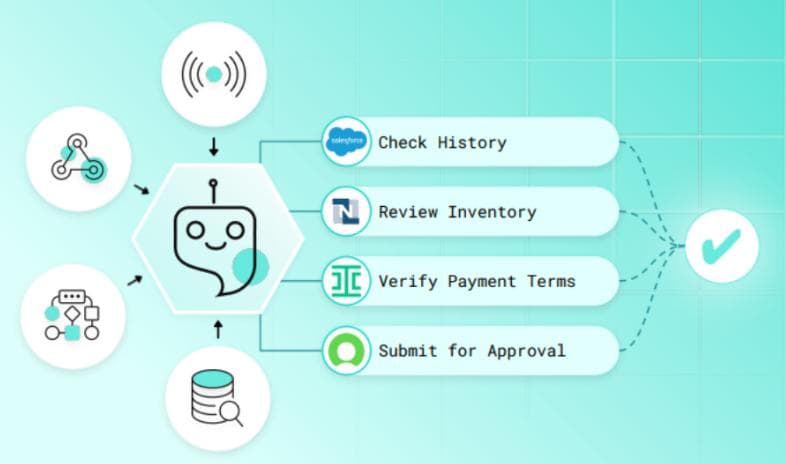 AI Execution
Why AI Execution Systems Will Define the Future of Enterprise Operations
The next frontier of enterprise competitive advantage is not strategy it is execution. AI execution systems that translate strategic intent into coordinated operational action, faster and more reliably than any human-managed process, are becoming the defining infrastructure of enterprise performance in every sector.
 AI Agents
Why AI Agents Will Become Strategic Partners for Enterprise Leaders
The AI agent that flags an anomaly is a tool. The AI agent that investigates the anomaly, assesses its strategic implications, identifies the available responses, and presents a structured recommendation with evidence that is a strategic partner. The transition from AI-as-tool to AI-as-strategic-partner is already beginning in the most advanced enterprise deployments.
 Enterprise Transformation
The Rise of AI-Powered Enterprise Transformation Offices
The traditional enterprise transformation office a programme management function staffed by project managers and consultants overseeing digital change initiatives is being restructured around AI execution capability. The AI-powered transformation office does not just manage change programmes; it autonomously executes the operational changes those programmes design, compressing transformation timelines and improving execution consistency.