How Intelligent Workflow Networks Will Power the Next Generation of Enterprises
The enterprise of 2030 will not be coordinated through management hierarchies and scheduled meetings. It will be coordinated through intelligent workflow networks self-adjusting systems of AI agents that route work, information, and decisions to the correct destination at the correct time, without human intermediation at every node.
Manthan Sharma
Author

A workflow, in its most basic form, is the path that work takes from initiation to completion the sequence of tasks, decisions, handoffs, and approvals that converts a business requirement into a business outcome. Enterprise workflows are the connective tissue of the organisation: they are what makes it possible for a customer's order to become a shipped product, for a supplier's invoice to become a payment, for a hiring need to become an employed person, for a strategic decision to become an operational change. The quality of the enterprise's workflows their speed, their reliability, their ability to handle exceptions without breaking, their visibility is a direct determinant of the enterprise's operational performance. The most sophisticated ERP, the most talented team, and the most well-conceived strategy all produce their outcomes through workflows. Intelligent workflow networks are the next generation of workflow infrastructure not workflows that are executed by humans and tracked by software, but workflows that are managed by AI agents that route work, make routine decisions, handle standard exceptions, and surface non-standard exceptions to the appropriate human, all in real time.
What Makes a Workflow Network 'Intelligent'
The distinction between a traditional workflow management system and an intelligent workflow network is the presence of decision-making capability at the workflow nodes. A traditional workflow management system routes work according to predefined rules: if A completes, route to B; if B approves, route to C; if B rejects, route back to A with feedback. The routing logic is static it was configured when the workflow was designed and does not adapt to the context of specific workflow instances. An intelligent workflow network makes routing decisions dynamically based on the context of each specific workflow instance: the invoice whose amount exceeds a threshold routes to a different approval level than the standard invoice; the customer escalation whose sentiment analysis indicates high churn risk routes to a senior service manager rather than the standard queue; the purchase order whose supplier is flagged for a recent performance issue routes with an automated performance alert attached.The intelligence in intelligent workflow networks comes from three sources: rule-based decision logic (if this specific condition is met, route this way), pattern-based decision logic (this instance resembles a historical pattern that produced outcome X, route accordingly), and AI-generated decision logic (the AI agent evaluates the specific context of this instance and makes a routing decision that is not fully captured by predefined rules). Together, these three sources produce a workflow network that handles the 85 to 90% of routine workflow instances correctly and automatically, surfaces the 10 to 15% of non-routine instances to the appropriate human, and continuously improves its routing quality as it accumulates experience with workflow outcomes.
The Three Network Architectures in an Intelligent Workflow System
Architecture 1: Sequential execution networks
Sequential execution networks handle workflows where each step must be completed before the next can begin the purchase order that must be approved before the goods can be ordered, the quality inspection that must pass before the batch can be released, the legal review that must be completed before the contract can be signed. In an intelligent sequential network, the AI agent monitors each step, confirms completion, routes to the next step, and flags delays against the workflow's SLA timeline. When a step is delayed, the AI escalates with context: not just 'invoice approval is pending' but 'invoice approval has been pending for 3 days, the payment due date is in 2 days, and late payment will trigger a penalty under contract clause 8.4. Immediate approval or explanation is required.'
Architecture 2: Parallel execution networks
Parallel execution networks handle workflows where multiple workstreams can proceed simultaneously, converging at a defined integration point. The new product launch that requires simultaneous progress on product development, regulatory compliance, marketing preparation, and supply chain readiness is managed by a parallel execution network where the AI agent monitors each workstream independently, tracks the critical path to the launch date, and identifies when any workstream is at risk of missing the integration milestone. The intelligence in the parallel network is the continuous critical path recalculation that accounts for each workstream's current progress and the dependencies between them.
Architecture 3: Adaptive response networks
Adaptive response networks handle workflows that respond to external events the supply chain disruption, the regulatory change, the competitive development where the appropriate response cannot be fully defined in advance because it depends on the specific characteristics of the event. The adaptive response network has a library of response templates that the AI agent selects, adapts, and initiates based on the event's characteristics. The supply chain disruption response workflow that activates automatically, assesses the affected product lines, identifies alternative suppliers, models the financial impact of each response path, and routes a structured recommendation to the executive team within hours of the disruption signal is an adaptive response network in action.
The Business Case for Intelligent Workflow Networks
The quantified business case for intelligent workflow networks has three components. Cycle time reduction: the benchmark research on AI-enabled workflow automation consistently shows 40 to 70% reduction in end-to-end cycle time for workflows that involve significant human-to-human handoffs. A procurement workflow that currently averages 14 days from requisition to PO completion can be reduced to 4 to 6 days through intelligent workflow automation not by removing the necessary approvals, but by eliminating the queuing time, the information-gathering time, and the coordination overhead that inflates the 4-day necessary work into a 14-day actual cycle. Cost reduction: intelligent workflow networks reduce the labour cost of workflow management the hours spent routing, tracking, following up, and managing exceptions by 50 to 70% for the workflows they manage. Error rate reduction: AI-executed workflows have error rates that are typically 80 to 90% lower than equivalent human-executed workflows for routine, rule-applicable decisions the invoice that is processed without the wrong code, the PO that is generated without the wrong quantity, the compliance document that is filed without the missing field.
Why Operational Intelligence Will Become the Foundation of Enterprise Growth
Related articles
View all → Autonomous Coordination
The Rise of Autonomous Enterprise Coordination Platforms
Enterprise coordination the alignment of people, processes, information, and resources across organisational boundaries has always been expensive, slow, and error-prone when managed through human intermediaries alone. Autonomous coordination platforms powered by AI are replacing the coordination overhead of large organisations with intelligent systems that synchronise the enterprise continuously and without manual intervention.
 AI Agents
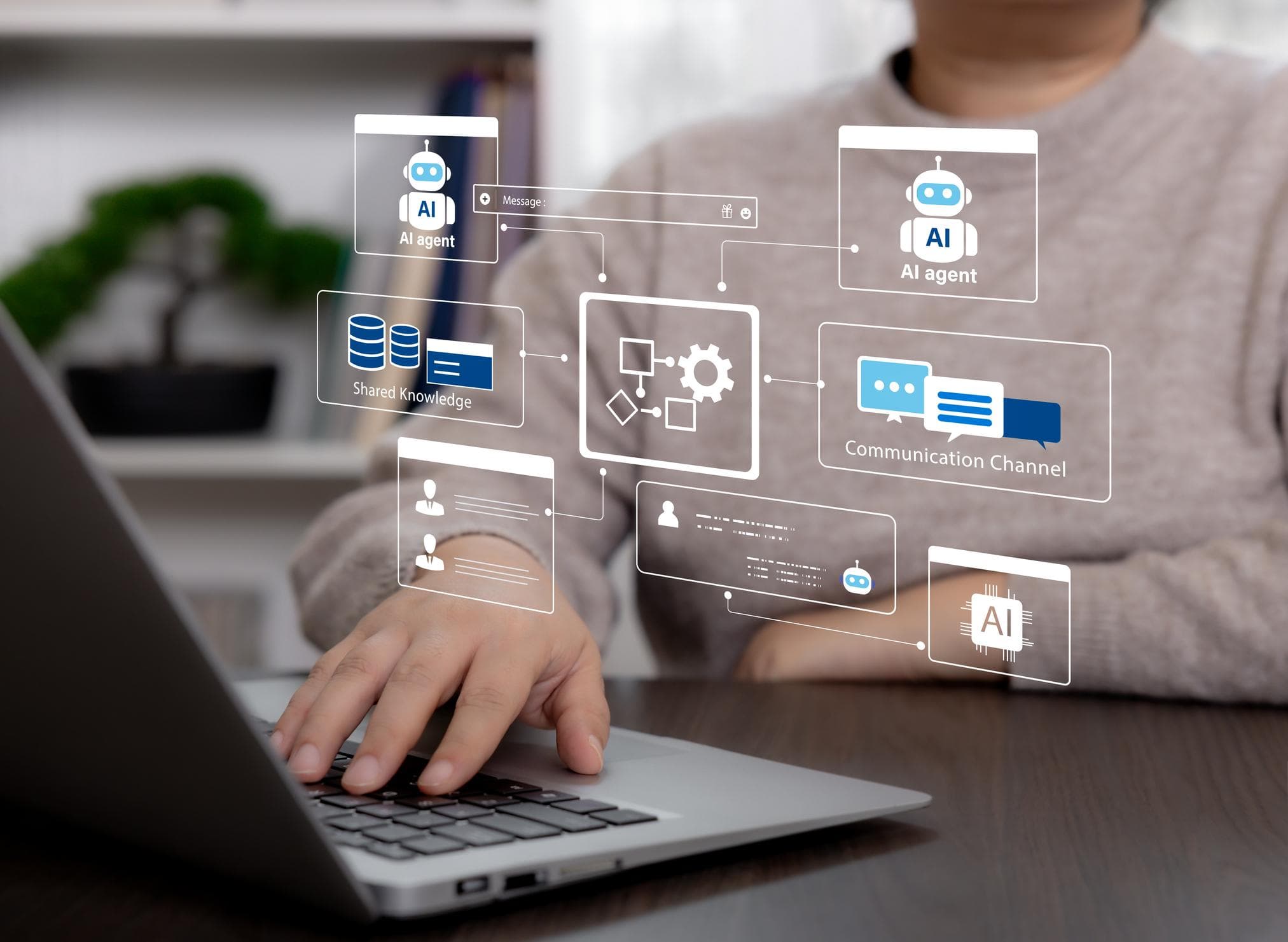
How AI Agents Are Transforming Enterprise Workflow Intelligence
AI agents autonomous systems that perceive their environment, reason about objectives, and take action across enterprise workflows are moving from research concept to operational reality. The enterprises deploying AI agents at scale are discovering that workflow intelligence is not just about automation it is about creating organisational capability that compounds with every cycle.
 Super Manager AGI
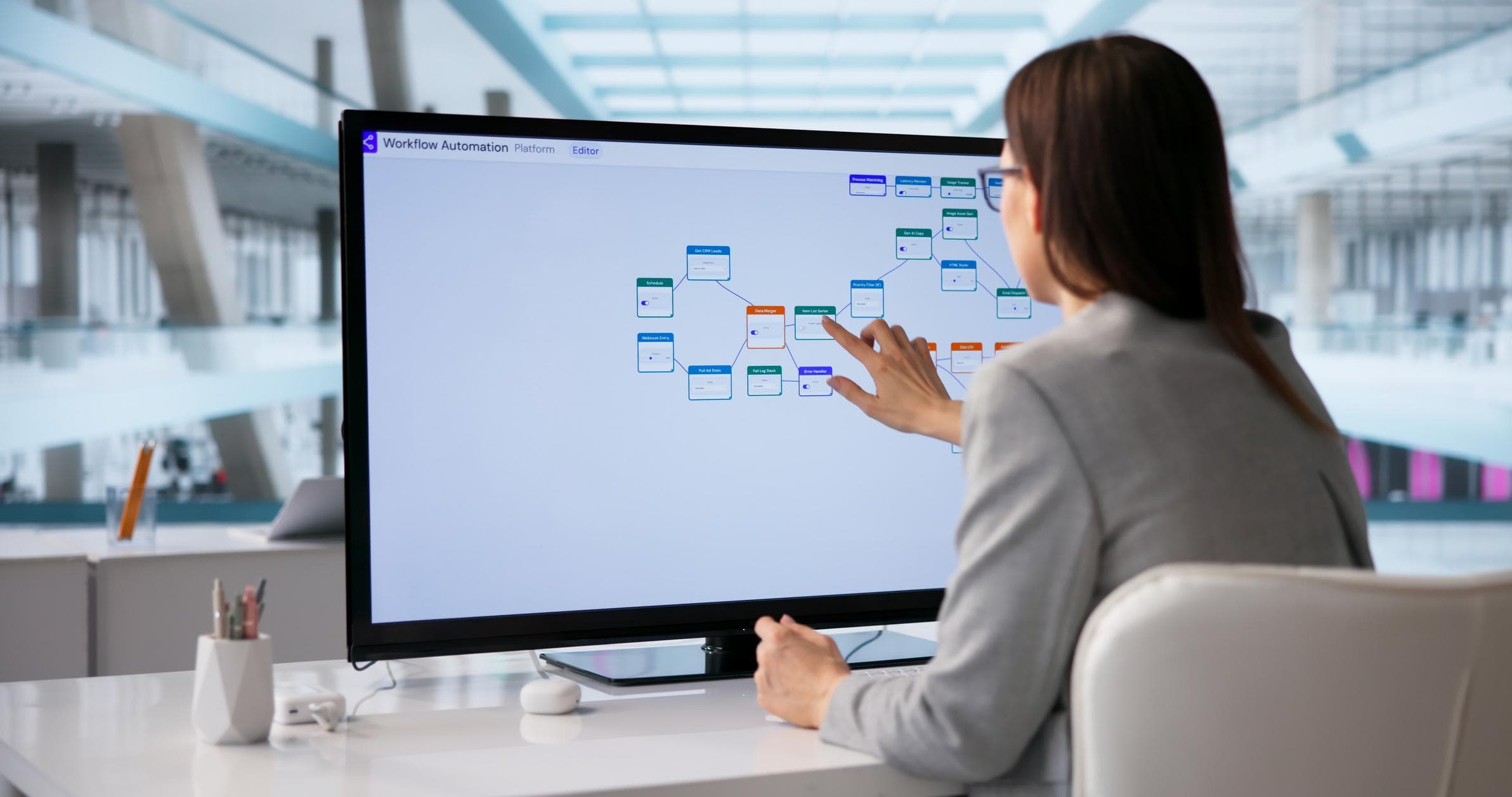
How Super Manager AGI Enables Autonomous Business Execution at Scale
The concept of a Super Manager AGI an artificial general intelligence system capable of managing complex business operations autonomously, across functions and geographies, at a scale and quality that human management cannot approach is moving from theoretical possibility to operational reality. Understanding what it enables and what it requires is the most important strategic question facing enterprise leaders today.