How Super Manager AGI Enables Autonomous Business Execution at Scale
The concept of a Super Manager AGI an artificial general intelligence system capable of managing complex business operations autonomously, across functions and geographies, at a scale and quality that human management cannot approach is moving from theoretical possibility to operational reality. Understanding what it enables and what it requires is the most important strategic question facing enterprise leaders today.
Manthan Sharma
Author

The Super Manager AGI is not a single system but an integrated network of AI agents operating under a unified intelligence framework each specialised in specific operational domains, collectively capable of managing the full complexity of enterprise operations with a level of consistency, speed, and analytical depth that human management hierarchies cannot replicate. The concept represents the convergence of several AI capabilities that are individually mature and collectively transformative: large language models that can reason about complex business situations, agentic systems that can take action across enterprise tools and workflows, machine learning models that can optimise decisions across large operational data sets, and coordination frameworks that allow multiple AI agents to collaborate on complex multi-step objectives without human orchestration of each interaction. The enterprises that are beginning to deploy Super Manager AGI capabilities even in their current, incomplete forms are discovering that autonomous business execution at scale is not a distant future concept. It is an operational reality that is redefining what enterprises can accomplish with a given level of human talent and management investment.
What Super Manager AGI Actually Means for Enterprise Operations
The term Super Manager AGI describes an AI system with the management capabilities that would, in a human manager, be considered exceptional: the ability to maintain simultaneous awareness of multiple operational domains, to identify connections and interdependencies across those domains that domain-specific managers would miss, to decompose complex strategic objectives into coordinated operational plans, to monitor execution progress across the full scope of the plan, and to make the continuous stream of operational adjustments that keep complex execution on track. What makes the AI version of these capabilities transformative rather than merely useful is scale: a human super manager can apply these capabilities to the scope of work that one person can manage. The AI Super Manager applies them simultaneously across every operational domain in the enterprise, at every level of granularity, continuously, and without the cognitive limitations that constrain human management performance.The practical implications of this scale difference are profound. An enterprise with Super Manager AGI capabilities can manage operational complexity that would require a significantly larger human management team to handle with equivalent quality not by working the human team harder but by having the AI system handle the coordination, monitoring, and routine adjustment functions that consume management bandwidth, freeing human managers for the judgment, relationship, and strategic work that AI cannot yet perform at comparable quality. The economic implication is a management leverage ratio the operational output per unit of management investment that is structurally higher in enterprises with Super Manager AGI capabilities than in those relying on traditional human management models.
Four Operational Domains Where Super Manager AGI Is Creating Autonomous Execution
Domain 1: Autonomous strategic planning and resource allocation
Super Manager AGI systems can process the full breadth of internal operational data, external market intelligence, and competitive signals to generate strategic plans that are more comprehensive, more analytically grounded, and more dynamically updated than human-produced plans at comparable speed. The AI system does not replace human strategic judgment the objectives, values, and risk appetite that define the strategic framework must be set by human leaders but it handles the analytical work of translating strategic direction into detailed operational plans with resource allocations, timelines, and contingency provisions that reflect the full complexity of the enterprise's operational environment. Human strategic leaders review, adjust, and approve; the AI system executes and monitors.
Domain 2: Autonomous cross-functional execution management
The domain where Super Manager AGI delivers the most immediate operational value is cross-functional execution management the coordination of complex initiatives that span multiple functions, geographies, and stakeholder groups. The AI system maintains a real-time model of the initiative's status across all workstreams simultaneously, identifies interdependencies and risks that human programme managers would miss in the complexity of the full programme, routes escalations and decisions to the appropriate human decision-makers with the relevant context, and maintains the complete programme record that governance and accountability requirements demand. Programme management quality and efficiency in enterprises deploying Super Manager AGI capabilities is substantially higher than in those relying on human programme management teams at comparable scale.
Domain 3: Autonomous operational optimisation
Super Manager AGI systems continuously optimise operational performance across the enterprise adjusting pricing, inventory levels, staffing allocation, supplier selection, logistics routing, and dozens of other operational variables simultaneously in response to real-time data. This continuous optimisation is not possible for human operational managers because the cognitive load of simultaneously optimising multiple interdependent variables across the full scope of enterprise operations exceeds human processing capacity. The AI system's ability to optimise across this full complexity in real time produces operational performance in cost efficiency, service quality, and resource utilisation that incrementally optimised human management cannot match.
Domain 4: Autonomous risk management and compliance monitoring
Super Manager AGI systems monitor the enterprise's risk and compliance posture continuously across all operational domains, regulatory jurisdictions, and risk categories identifying emerging risks, flagging compliance deviations, and initiating mitigation actions within defined authority parameters without waiting for periodic risk reviews. The coverage and consistency of AI-managed risk and compliance monitoring is categorically superior to human-managed alternatives: the AI system misses nothing because it is tired, distracted, or operating with an incomplete picture of the risk environment. For global enterprises operating across multiple regulatory frameworks, this continuous, comprehensive monitoring capability is a compliance quality and operational risk management advantage that has direct financial and regulatory value.
Super Manager AGI Deployment Diagnostic
- What is the current management leverage ratio in your enterprise the operational output managed per unit of management cost and how does it compare to what AI-augmented management models could deliver with the same management investment? This ratio is the economic case for Super Manager AGI deployment.
- Which of your current management functions are primarily coordination, monitoring, and routine adjustment functions versus genuine judgment and leadership functions? The former are the Super Manager AGI deployment opportunities; the latter are the human management capabilities that AGI augments rather than replaces.
- Do you have the data infrastructure required to provide a Super Manager AGI system with the comprehensive, real-time operational picture it needs to manage effectively across all functions, geographies, and operational levels? Without this data foundation, AI management systems will make decisions with incomplete information.
- What governance framework would your enterprise need to deploy autonomous business execution systems at scale defining authority boundaries, escalation protocols, performance monitoring requirements, and human oversight mechanisms? The governance design is as important as the technology design for Super Manager AGI deployment.
- What are the specific operational domains in your enterprise where autonomous execution would deliver the greatest value and what are the current constraints preventing AI from managing those domains with greater autonomy today? The gap between current AI deployment and autonomous execution potential is the investment and design agenda.
- How is your enterprise preparing its human management team for a world where AI systems handle the coordination and monitoring functions that currently constitute a significant proportion of management work? The human management transformation agenda is as critical as the AI deployment agenda for successful Super Manager AGI integration.

Why AI Coordination Engines Will Replace Traditional Workflow Tools
Related articles
View all →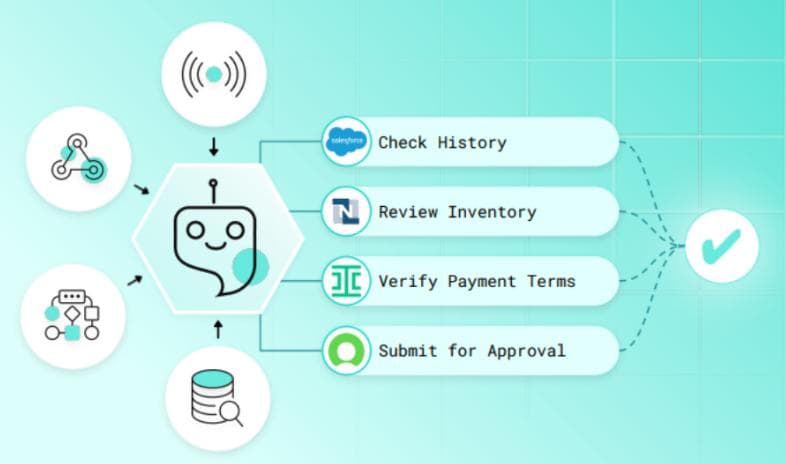 AI Execution
Why AI Execution Systems Will Define the Future of Enterprise Operations
The next frontier of enterprise competitive advantage is not strategy it is execution. AI execution systems that translate strategic intent into coordinated operational action, faster and more reliably than any human-managed process, are becoming the defining infrastructure of enterprise performance in every sector.
 Autonomous Coordination
The Rise of Autonomous Enterprise Coordination Platforms
Enterprise coordination the alignment of people, processes, information, and resources across organisational boundaries has always been expensive, slow, and error-prone when managed through human intermediaries alone. Autonomous coordination platforms powered by AI are replacing the coordination overhead of large organisations with intelligent systems that synchronise the enterprise continuously and without manual intervention.
 AI Agents
How AI Agents Are Transforming Enterprise Workflow Intelligence
AI agents autonomous systems that perceive their environment, reason about objectives, and take action across enterprise workflows are moving from research concept to operational reality. The enterprises deploying AI agents at scale are discovering that workflow intelligence is not just about automation it is about creating organisational capability that compounds with every cycle.