Why AI Coordination Engines Will Replace Traditional Workflow Tools
Traditional workflow tools automate processes that have been explicitly defined. AI coordination engines understand objectives, orchestrate the work required to achieve them, and adapt as conditions change. The difference is not incremental it is the difference between a tool that does what it is told and a system that understands what needs to be done.
Prince Kumar
Author
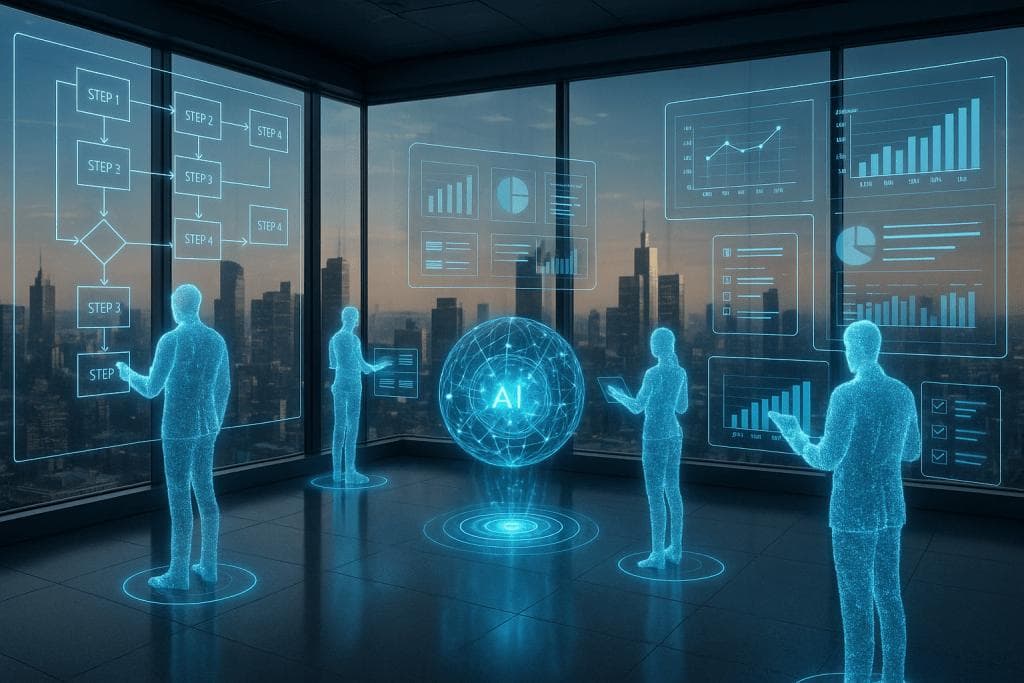
Enterprise workflow tools have been a staple of operational management for two decades from early BPM platforms through the process automation and RPA wave to the modern no-code workflow builders that allow business users to automate defined processes without engineering support. These tools have delivered real value: they have reduced manual effort in well-defined processes, improved consistency, and created audit trails that support governance requirements. But they share a fundamental limitation that has constrained their impact: they can only automate what has been explicitly defined. The processes that require adaptation, exception handling, multi-step reasoning, and the integration of information from unpredictable sources are the processes that workflow tools cannot address and these are precisely the processes where the greatest operational value exists. AI coordination engines are replacing traditional workflow tools not by doing the same thing better but by addressing a fundamentally different and more valuable class of operational challenge: not automating predefined processes but orchestrating the work required to achieve objectives in complex, variable environments.
Why Traditional Workflow Tools Have Hit Their Value Ceiling
The value ceiling of traditional workflow tools is defined by the same characteristic that makes them easy to deploy: they work within explicitly defined boundaries. A workflow tool executes the process it has been given, handles the cases it has been programmed for, and fails or requires human intervention when inputs or conditions fall outside its defined scope. In stable, well-defined processes with predictable inputs, this is sufficient. In the dynamic, variable processes that characterise high-value enterprise work, it is not.The evidence of this ceiling is visible in the workflow tool deployments of most large enterprises: high adoption for transactional, rule-based processes; low adoption for the complex, judgment-intensive workflows where operational leverage is highest. The gap between the processes that workflow tools can automate and the processes that would benefit most from automation is not a gap that can be closed by making workflow tools easier to configure it is a gap that requires a different approach to automation entirely. AI coordination engines close this gap by replacing explicit process definition with objective-based orchestration: the system understands what outcome is required, reasons about the work required to achieve it, and coordinates the people, systems, and information needed to produce it.
Four Ways AI Coordination Engines Outperform Traditional Workflow Tools
Advantage 1: Objective-based orchestration versus process-based execution
Traditional workflow tools execute processes. AI coordination engines pursue objectives. This distinction is operationally significant: when conditions change mid-execution a required input is unavailable, a downstream system is unresponsive, a new constraint emerges a workflow tool stalls or fails. An AI coordination engine reasons about the changed conditions, identifies alternative paths to the objective, adjusts its coordination plan, and continues execution without human intervention. This resilience in the face of variability is the primary operational advantage of AI coordination engines in complex enterprise workflows the same variability that causes workflow tools to require constant maintenance and exception handling is handled autonomously by the coordination engine.
Advantage 2: Natural language specification versus explicit process mapping
Deploying a traditional workflow tool requires explicit process mapping defining every step, decision point, branch condition, and exception handler in the process before automation can begin. This mapping effort is expensive, requires specialised skills, and produces automation that is fragile when the underlying process changes. AI coordination engines can be instructed in natural language the system understands the objective described in business terms and determines the appropriate coordination approach without requiring explicit process specification. This dramatically reduces deployment time, allows business users to define coordination objectives without technical expertise, and produces automation that adapts to process changes without requiring manual reconfiguration.
Advantage 3: Cross-system intelligence versus single-system automation
Traditional workflow tools operate within the boundaries of the systems they have been integrated with, executing predefined actions in a defined sequence. AI coordination engines operate across the full enterprise system landscape reasoning about which systems contain relevant information, what actions are available in each system, and how to coordinate actions across multiple systems to achieve the coordination objective. This cross-system intelligence allows AI coordination engines to orchestrate workflows that span the enterprise's full technology stack without requiring explicit integration configuration for every possible system combination a capability that scales with the complexity of the enterprise rather than becoming harder to manage as complexity grows.
Advantage 4: Continuous learning and improvement
Traditional workflow tools do not improve with use they execute the same process in the same way until a human reconfigures them. AI coordination engines learn from every execution cycle, identifying more efficient coordination paths, better exception handling approaches, and more effective resource utilisation patterns. This continuous learning means that the coordination quality and efficiency of an AI engine improves over time as it accumulates operational experience producing an improvement trajectory that static workflow automation cannot approach. For enterprises with complex, high-volume coordination requirements, this learning advantage compounds into a significant operational performance differential over time.
AI Coordination Engine Deployment Diagnostic
- What proportion of your current workflow automation deployments are operating at full efficiency versus requiring frequent human intervention for exception handling, process changes, or failure recovery? The intervention rate is the direct measure of your current workflow tools' value ceiling.
- Which high-value operational processes in your enterprise have not been automated because their variability and complexity exceed what traditional workflow tools can handle? These processes are the primary AI coordination engine deployment opportunity.
- How much engineering and operational time is currently consumed by maintaining, updating, and exception-handling your existing workflow automation deployments? This maintenance overhead is a cost of the explicit process definition model that AI coordination engines eliminate.
- Do you have staff with the process mapping and workflow configuration expertise required to deploy and maintain traditional workflow tools at scale and is this expertise a constraint on your automation deployment rate? If so, the natural language specification capability of AI coordination engines is a direct deployment acceleration opportunity.
- What is the business case for automating the complex, judgment-intensive workflows that your current tools cannot address in time saved, error rate reduction, and management overhead reduction? This case is the financial justification for AI coordination engine investment.
- How are your most technologically advanced competitors using AI coordination capabilities in their operations and what operational advantages are they building as a result? The competitive intelligence on coordination engine adoption is the urgency framing for your own deployment strategy.

Related articles
View all →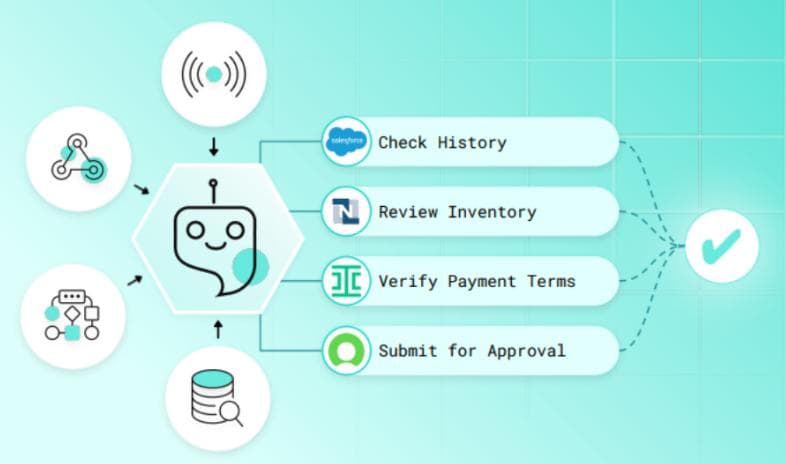 AI Execution
Why AI Execution Systems Will Define the Future of Enterprise Operations
The next frontier of enterprise competitive advantage is not strategy it is execution. AI execution systems that translate strategic intent into coordinated operational action, faster and more reliably than any human-managed process, are becoming the defining infrastructure of enterprise performance in every sector.
 Autonomous Coordination
The Rise of Autonomous Enterprise Coordination Platforms
Enterprise coordination the alignment of people, processes, information, and resources across organisational boundaries has always been expensive, slow, and error-prone when managed through human intermediaries alone. Autonomous coordination platforms powered by AI are replacing the coordination overhead of large organisations with intelligent systems that synchronise the enterprise continuously and without manual intervention.
 AI Agents
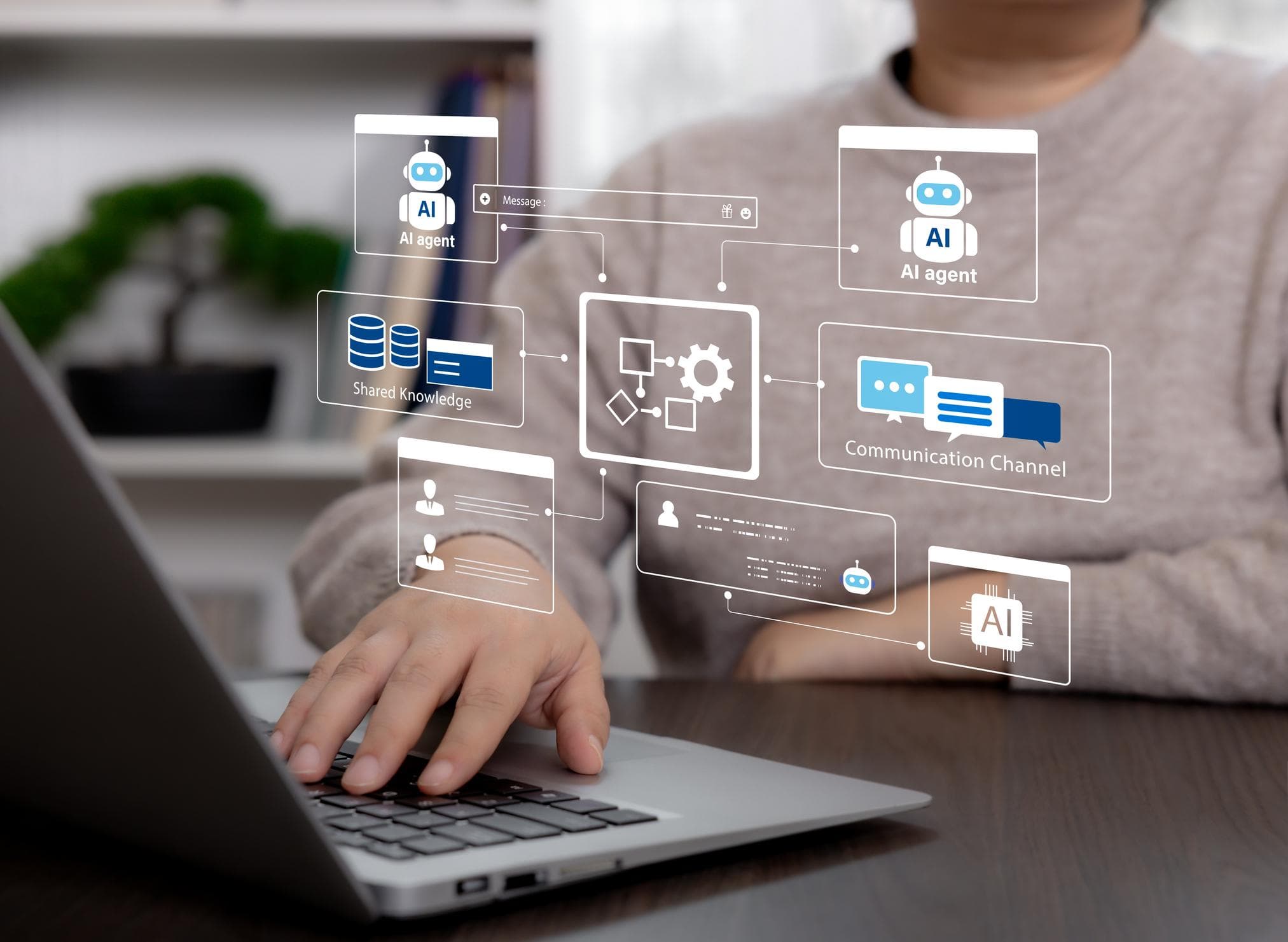
How AI Agents Are Transforming Enterprise Workflow Intelligence
AI agents autonomous systems that perceive their environment, reason about objectives, and take action across enterprise workflows are moving from research concept to operational reality. The enterprises deploying AI agents at scale are discovering that workflow intelligence is not just about automation it is about creating organisational capability that compounds with every cycle.