The Rise of Autonomous Digital Departments
Autonomous departments operate with minimal human oversight: AI agents handle routine operations, humans focus exceptions.
Aditya Sharma
Author

Customer service department: 8 human specialists + autonomous agents handling 92% of inquiries.
Strategic Context and Competitive Implications
The Rise of Autonomous Digital Departments represents transformation creating structural competitive advantages. Organizations achieving this operate with 40-70% efficiency gains, 10-20x decision velocity, and cost structures enabling continuous innovation.Implementation window narrowing as technologies mature and playbooks emerge. Organizations committing in 2026-2027 capture first-mover advantages. Delay means permanent disadvantage.Strategic choice: lead transformation now or follow from disadvantaged position.
Implementation Framework and Success Factors
Implementation challenges are organizational not technical. Proven approach: high-impact workflows, governance first, change management, sustained commitment through 18-36 month transformation.Critical success factors: executive sponsorship, adequate governance investment, framework accountability models, systematic expansion, clear outcome metrics.Organizations treating as operational transformation succeed. Those treating as technology deployment fail despite greater investment.
Performance Transformation and Market Impact
Organizations implementing the rise of autonomous digital departments achieve 2-5x throughput increases, 40-60% quality improvements, decision latency compressed 10-20x. Advantages compound through self-reinforcing cycles.By 2030 clear market differentiation: winners with permanent advantages vs laggards facing intensifying pressure across share, talent, customers, and capabilities.Strategic imperative: commit to transformation in 2026-2027 or accept permanent competitive disadvantage against enterprises establishing capabilities earlier.

AI Employees vs Human Employees: How Work Distribution Will Change
Related articles
View all →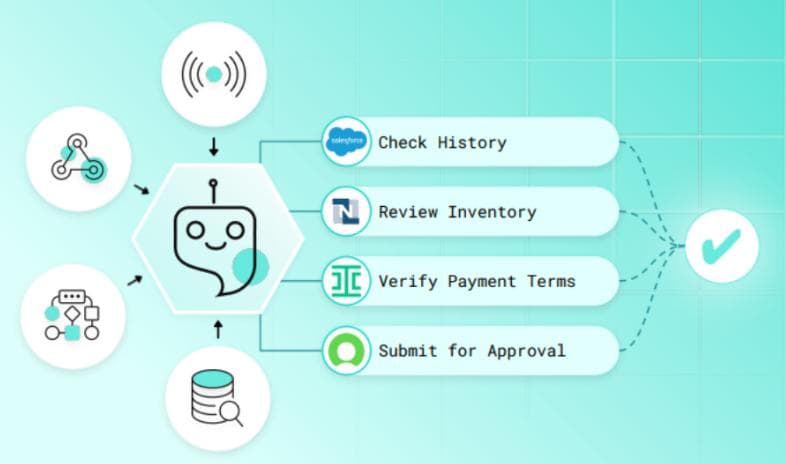 AI Execution
Why AI Execution Systems Will Define the Future of Enterprise Operations
The next frontier of enterprise competitive advantage is not strategy it is execution. AI execution systems that translate strategic intent into coordinated operational action, faster and more reliably than any human-managed process, are becoming the defining infrastructure of enterprise performance in every sector.
 AI Agents
How AI Agents Can Streamline Complex Enterprise Operations at Scale
The complexity of large-scale enterprise operations has always created a ceiling on how much any organisation can manage effectively. AI agents are raising that ceiling handling the coordination, monitoring, and execution tasks that previously limited operational scale.
 Autonomy
The Shift from Enterprise Automation to Enterprise Autonomy
Automation executes predefined logic. Autonomy pursues objectives. The shift from enterprise automation to enterprise autonomy is not incremental it is a fundamental change in what technology can do for organisations, and the enterprises that understand this distinction are building for a different future.