Supply Chain as a Competitive Advantage
Supply chain used to be the back office necessary, unglamorous, and managed to minimise cost. In 2026, for the brands that have invested in it deliberately, supply chain is the front office the operational capability that enables faster delivery, better availability, higher margins, and more resilient growth than any marketing strategy can produce alone.
Aditya Sharma
Author
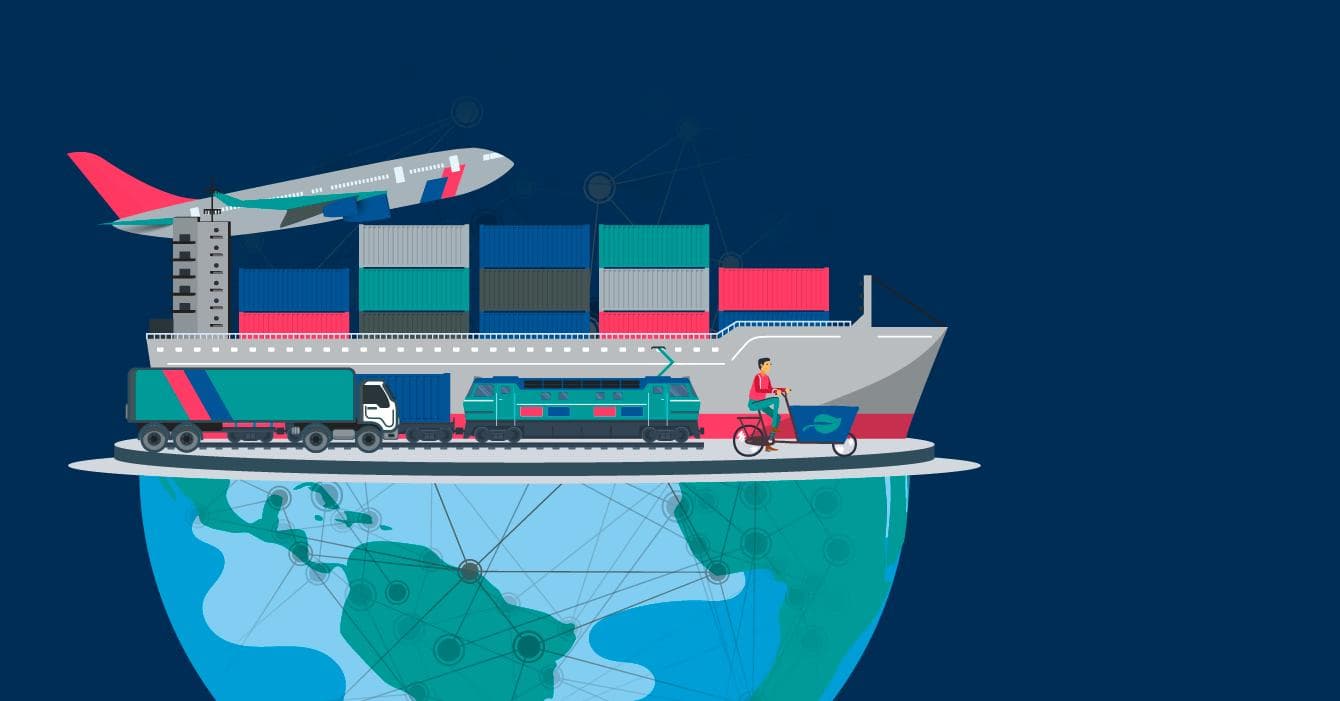
Two brands compete in the same supplements category with products of comparable quality at comparable price points. Brand A's supply chain is managed reactively inventory is ordered when stock falls below a threshold, shipped by the cheapest available carrier, and received at a single warehouse that serves all channels. Stockout rates run at 12% across the SKU range. Fulfilment lead time averages 3.8 days. Returns are processed manually over four to seven business days. Brand B has invested systematically in supply chain over eighteen months: a demand forecasting model that anticipates reorder points thirty days in advance, a multi-node warehouse network that positions inventory within one-day delivery range of 70% of its target consumer base, and an automated returns processing system that credits the customer within twenty-four hours and routes the return to the appropriate disposition within forty-eight. Stockout rate is 1.8%. Fulfilment lead time averages 1.4 days. Post-purchase NPS is 34 points higher than Brand A. Brand B's marketing spend per acquired customer is 22% lower than Brand A's, because its fulfilment and post-purchase reputation generates the organic review volume and repeat purchase rates that reduce dependence on paid acquisition. The supply chain advantage has become a marketing advantage, a financial advantage, and a customer experience advantage simultaneously.
How Supply Chain Creates Customer Experience Differentiation
The consumer's experience of a brand is not defined solely by the product and the marketing it is defined by the end-to-end journey from order placement to product use. In this journey, the supply chain is responsible for the delivery speed, the packaging integrity at arrival, the accuracy of the order (correct SKU, correct quantity, correct variant), and the returns experience if the product is not satisfactory. Each of these supply chain touchpoints is a moment at which the brand either reinforces or degrades the consumer's relationship with it.A brand that delivers consistently faster than the consumer expected, with packaging that communicates quality, and resolves returns with frictionless speed creates the kind of post-purchase experience that generates five-star reviews, repeat purchases, and personal recommendations the three most valuable and lowest-cost marketing outputs available to a consumer brand. The supply chain investment that enables this experience is not a cost. It is a marketing investment with a measurable return in reduced CAC, higher LTV, and compounding review volume.
Supply Chain Efficiency as a Margin Driver
Beyond customer experience, supply chain efficiency is a direct driver of gross margin and for brands competing in categories where gross margin is the primary constraint on growth investment, supply chain improvements are often the highest-ROI lever available. The three most significant supply chain margin levers are procurement efficiency (buying ingredients and packaging at lower cost per unit through better demand forecasting, higher volume consolidation, and stronger supplier relationships), fulfilment cost efficiency (reducing the cost per order fulfilled through better warehouse layout, higher pick accuracy, lower packaging material waste, and carrier rate negotiations based on volume), and returns rate reduction (lowering the proportion of orders that result in returns through better quality control, more accurate product descriptions, and packaging that prevents transit damage).A brand that improves procurement costs by 8%, reduces fulfilment cost per order by ₹18, and reduces returns rate from 6% to 3% each achievable through deliberate supply chain investment improves gross margin by 6 to 10 percentage points without changing the product, the marketing, or the price. That margin improvement, at ₹1 crore monthly revenue, represents ₹6 to ₹10 lakh of additional monthly contribution capital that can be reinvested in growth without additional fundraising.
Building Supply Chain as a Strategic Capability
The transformation of supply chain from a cost centre to a competitive advantage requires a deliberate shift in how supply chain investment decisions are made and evaluated. In the cost centre model, supply chain investments are evaluated against a cost reduction target the investment is justified if it reduces the cost per order fulfilled. In the competitive advantage model, supply chain investments are evaluated against a combined return that includes cost reduction, customer experience improvement, and revenue impact the additional revenue generated by higher availability, faster delivery, and better post-purchase experience that the supply chain improvement enables.The practical starting point is identifying the two or three supply chain performance dimensions where the brand is most below the best-in-category standard typically stockout rate, fulfilment lead time, or returns processing speed and treating the improvement of those dimensions as a strategic investment rather than an operational cost. The brands that are building supply chain as a competitive advantage are not doing it by optimising one metric at a time. They are building the data visibility, the supplier relationships, and the operational processes that allow them to improve across all dimensions simultaneously creating a compounding operational advantage that is, ultimately, more defensible than any product feature or marketing campaign.
Related articles
View all → Autonomous Coordination
The Rise of Autonomous Enterprise Coordination Platforms
Enterprise coordination the alignment of people, processes, information, and resources across organisational boundaries has always been expensive, slow, and error-prone when managed through human intermediaries alone. Autonomous coordination platforms powered by AI are replacing the coordination overhead of large organisations with intelligent systems that synchronise the enterprise continuously and without manual intervention.
 AI Agents
How AI Agents Are Transforming Enterprise Workflow Intelligence
AI agents autonomous systems that perceive their environment, reason about objectives, and take action across enterprise workflows are moving from research concept to operational reality. The enterprises deploying AI agents at scale are discovering that workflow intelligence is not just about automation it is about creating organisational capability that compounds with every cycle.
 AI-Native Infrastructure
Why Global Enterprises Need AI-Native Operational Infrastructure
The operational infrastructure that global enterprises built in the pre-AI era was designed for a different competitive environment. Enterprises that try to layer AI on top of legacy operational infrastructure will capture a fraction of AI's potential. The ones that rebuild their operational foundations as AI-native will gain structural advantages their competitors cannot close.