The Future of Intelligent Manufacturing with Robotics and AI
The factory of the next decade is not a human workforce replaced by robots. It is a human-robot-AI system where each element does what it does best and where the integration of all three creates a manufacturing capability that none could achieve independently.
Manroze
Author

A precision automotive components manufacturer was producing 2.3% defective parts a rate that was within industry norms, accepted as inevitable, and managed through end-of-line inspection and rework. The defect rate was not random: it was systematic, driven by tool wear patterns, raw material variability, and subtle environmental factors that experienced operators could sometimes detect and compensate for, but which the existing quality management system could not quantify or predict. After deploying an AI-powered computer vision quality control system integrated with the CNC machining control system, the defect rate fell to 0.3% within six months. The AI system was detecting the early signatures of tool wear changes in surface finish quality invisible to the human eye and automatically adjusting cutting parameters to compensate, while flagging tools for replacement 40% earlier than the fixed replacement schedule. The operators were not replaced. They were redeployed from end-of-line inspection checking parts that had already been made to process optimisation and exception handling. Their expertise, combined with AI's pattern recognition across thousands of variables simultaneously, produced a quality outcome neither could achieve alone. This is the intelligent manufacturing thesis: not automation replacing humans, but AI and robotics extending human capability into domains of scale, speed, and consistency that human operators working alone cannot reach.
The Intelligent Manufacturing Stack: From Sensors to Strategy
Intelligent manufacturing is built on a technology stack that runs from physical sensors and actuators through data infrastructure and AI systems to operational decision-making and strategic planning. At the base, industrial IoT sensors vibration sensors on equipment, vision systems on production lines, environmental sensors on the factory floor, and telemetry from robotic systems generate the continuous data stream that feeds the intelligence layer. The data infrastructure layer aggregates this sensor data, manages the real-time processing requirements of operational AI systems, and maintains the historical data lake that trains and retrains machine learning models as manufacturing conditions evolve. The AI and robotics layer is where the intelligence is applied: computer vision quality control systems, predictive maintenance models, robotic process automation for material handling, and AI optimisation systems that adjust production parameters in real time.Above the operational AI layer, intelligent manufacturing platforms provide the decision support and optimisation capabilities that improve manufacturing strategy: production scheduling optimisation that balances capacity, material availability, and demand commitments simultaneously; supply chain integration that connects manufacturing execution to supplier delivery timelines and customer order management; and energy optimisation systems that schedule energy-intensive production processes to minimise energy costs while meeting production commitments. The enterprises that are realising the full value of intelligent manufacturing have built this complete stack not just deployed individual AI applications in isolation, but integrated the entire technology stack from sensor to strategy into a coherent operational intelligence platform.
The Four Manufacturing Domains Where AI and Robotics Create the Greatest Value
Domain 1: AI-powered quality control and defect prevention
Traditional manufacturing quality control is sampling-based: inspect a fraction of output, use statistical process control to detect when the process is drifting outside acceptable limits, and intervene to correct the process before the defect rate becomes unacceptable. AI-powered quality control inspects 100% of output at machine speed, detects defects that are invisible to human inspectors, and identifies the root causes of defect patterns connecting quality outcomes back to specific process parameters, material lots, equipment conditions, and environmental factors. The shift from defect detection to defect prevention using AI to identify the upstream conditions that produce defects and intervene before defective parts are produced is the quality management capability that is separating the most advanced manufacturers from their competitors on both quality metrics and cost of quality.
Domain 2: Predictive and prescriptive maintenance
Unplanned equipment downtime is one of the largest sources of manufacturing cost and competitive disadvantage. AI-driven predictive maintenance using sensor data from equipment to identify failure signatures hours or days before failure occurs has demonstrated 20 to 50% reductions in unplanned downtime in commercial deployments across automotive, aerospace, semiconductor, and heavy industrial manufacturing. The next generation of manufacturing maintenance intelligence is prescriptive: not just predicting when equipment will fail, but recommending the specific maintenance action that will most cost-effectively extend equipment life, integrating maintenance scheduling with production scheduling to minimise the impact of planned maintenance on delivery commitments, and automatically ordering the replacement parts that predictive models identify as required before the maintenance team has scheduled the work.
Domain 3: Collaborative robotics and human-robot work design
Collaborative robots cobots designed to work safely alongside human operators without the physical barriers required by traditional industrial robots, are enabling a new model of human-robot work design where robots handle the physically demanding, highly repetitive, and ergonomically challenging elements of manufacturing work while humans handle the dexterous, judgment-intensive, and variable elements that robots cannot yet manage reliably. AI-powered cobots that learn from human demonstration, adapt to variations in parts and assemblies, and handle the exceptions that rule-based robot programmes cannot process are making collaborative robotics viable for the high-mix, low-volume manufacturing environments where traditional robotics automation has been economically impractical. The manufacturers investing in AI-powered cobot capability are building a flexibility advantage that fixed automation cannot match.
Domain 4: AI-optimised production scheduling and capacity planning
Manufacturing scheduling allocating jobs to machines, sequencing operations, and managing the interdependencies between production steps is a combinatorial optimisation problem of sufficient complexity that even experienced production planners using sophisticated ERP systems regularly produce schedules that leave capacity underutilised while creating bottlenecks elsewhere. AI-powered scheduling systems that optimise across hundreds or thousands of simultaneous constraints machine capacity, tooling availability, material delivery timelines, operator skill requirements, energy costs, and customer delivery commitments consistently outperform human schedulers on throughput, on-time delivery, and work-in-progress inventory, often achieving 15 to 30% improvements on all three metrics simultaneously. In manufacturing environments where on-time delivery directly affects customer contracts and repeat business, AI scheduling optimisation is among the highest-ROI AI investments available.
The Intelligent Manufacturing Readiness Diagnostic
- Have you quantified the current cost of your three largest manufacturing inefficiencies defect and rework cost, unplanned downtime cost, and scheduling inefficiency cost to establish the value pool that intelligent manufacturing investment can address?
- Do you have the industrial IoT sensor infrastructure and data pipeline capability to feed AI systems with the real-time, high-quality operational data they require, or is your factory floor data still primarily captured manually through paper-based or operator-entry systems?
- Have you assessed your workforce's readiness for human-robot-AI collaboration not just the technical readiness of your engineers, but the cultural readiness of your shop floor operators to work alongside robotic systems and AI-powered tools?
- Is your manufacturing IT and OT infrastructure integrated sufficiently to connect production execution data with business system data ERP, supply chain, customer order management in the real-time data flows that intelligent manufacturing optimisation requires?
- Do you have a phased intelligent manufacturing roadmap that sequences investments by ROI and implementation risk, or are you approaching intelligent manufacturing as a single large transformation that requires building the entire stack simultaneously?

Why Digital Transformation Projects Fail in Large Enterprises
Related articles
View all →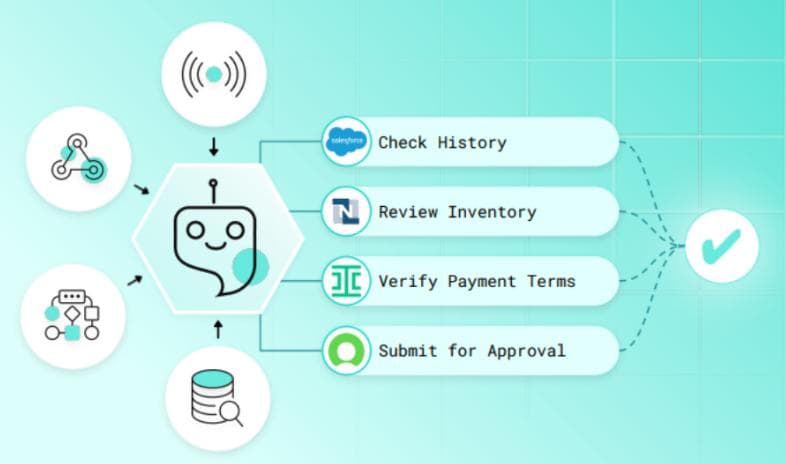 AI Execution
Why AI Execution Systems Will Define the Future of Enterprise Operations
The next frontier of enterprise competitive advantage is not strategy it is execution. AI execution systems that translate strategic intent into coordinated operational action, faster and more reliably than any human-managed process, are becoming the defining infrastructure of enterprise performance in every sector.
 Autonomous Coordination
The Rise of Autonomous Enterprise Coordination Platforms
Enterprise coordination the alignment of people, processes, information, and resources across organisational boundaries has always been expensive, slow, and error-prone when managed through human intermediaries alone. Autonomous coordination platforms powered by AI are replacing the coordination overhead of large organisations with intelligent systems that synchronise the enterprise continuously and without manual intervention.
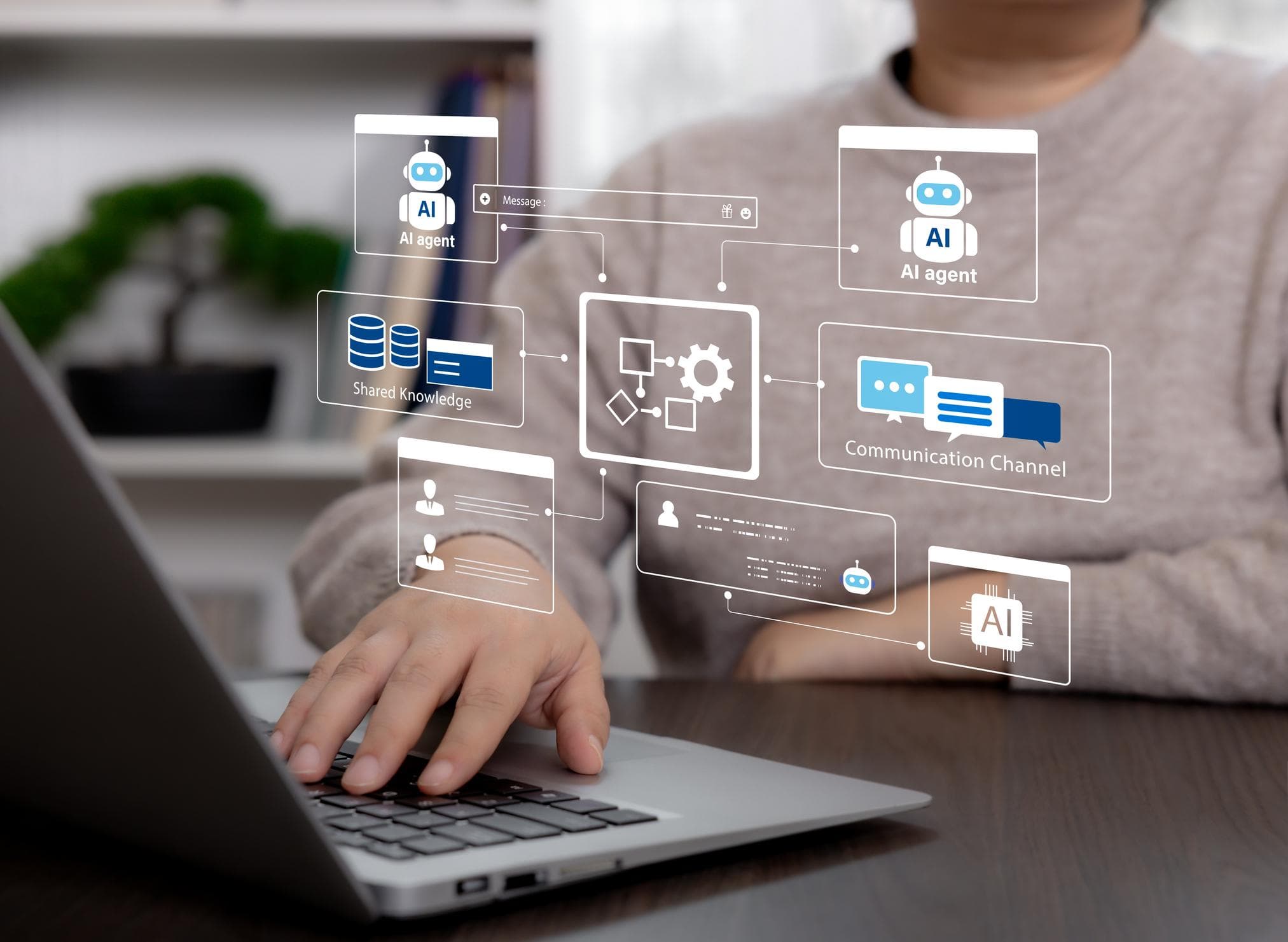 AI Agents
How AI Agents Are Transforming Enterprise Workflow Intelligence
AI agents autonomous systems that perceive their environment, reason about objectives, and take action across enterprise workflows are moving from research concept to operational reality. The enterprises deploying AI agents at scale are discovering that workflow intelligence is not just about automation it is about creating organisational capability that compounds with every cycle.