The Most Important Job of the Future Isn't Coding
Everyone raced to learn to code. Now AI codes. The job that's actually becoming the most valuable is one that most people have never heard of and it doesn't require writing a single line.
Aditya Sharma
Author

For most of the 2010s, 'learn to code' was the universal career advice. It was good advice for that era. Software ate the world, and the people writing the software got paid well. Then AI began writing the software. The advice didn't update fast enough. The most important job of the next decade isn't coding. It's something adjacent to coding, harder to automate, and almost completely missing from the current educational and career conversation.
Why Coding Alone Is No Longer the Answer
GitHub Copilot writes 46% of the code it's asked to complete. Claude Code can build a functional web application from a one-paragraph description. The gap between 'knowing how to code' and 'having a significant advantage over AI at coding' has closed for most routine programming tasks. That doesn't mean coding is worthless it means coding as a standalone skill has commoditized faster than any professional credential in recent memory.The market has already repriced this. Junior software engineering salaries have stagnated while senior and staff-level roles commanding AI orchestration skills have seen 1525% compensation increases between 2024 and 2026. The market is paying for something more than the ability to write code.
The Job That's Actually Rising: AI Systems Architect
The role doesn't have a consistent name yet it appears in job postings as 'AI product engineer,' 'AI systems designer,' 'technical product manager for AI,' and 'agentic systems architect.' What ties them together is a specific combination of skills: the ability to understand what AI systems can and cannot do reliably, the ability to design workflows where AI handles the automatable parts and humans handle the judgment-intensive parts, and the ability to communicate those designs to both technical and non-technical stakeholders.This is not a job that requires writing production code. It requires understanding systems well enough to know where AI breaks down, where human oversight is non-negotiable, and how to structure work so that the combination of AI and human produces better outcomes than either alone. It's closer to architecture and product design than to implementation.
The Skill Stack of the Most Valuable Future Workers
- Systems thinking: the ability to model how components of a complex system interact, fail, and compound without needing to implement every component personally.
- AI evaluation: the ability to assess AI output for correctness, bias, security risk, and fit for purpose not just whether it runs.
- Problem specification: the ability to translate a vague human need into a precise, unambiguous specification that an AI system can execute. This is harder than it sounds.
- Domain depth: deep expertise in a specific field medicine, law, finance, logistics gives context that no generalist AI possesses and no generalist human can fake.
- Stakeholder communication: the ability to explain technical constraints and AI limitations to non-technical decision-makers, and to translate business requirements back into technical specifications.
- Ethical and risk reasoning: as AI systems make more consequential decisions, the ability to identify and mitigate systemic risks bias, failure modes, unintended consequences becomes a core professional competency.
What This Means for Education
The current educational system is training people for 2015. Computer science curricula still center on algorithms, data structures, and implementation. Bootcamps still teach frameworks and syntax. Neither prepares students for the job that's actually in highest demand: someone who can think clearly about systems, work effectively with AI, and communicate technical judgment to non-technical stakeholders.The gap between what education produces and what the market wants is widening. The students who will have the most leverage in the next hiring market are those who supplement technical training with deep domain knowledge, systems thinking practice, and direct experience working with AI tools on real problems not more LeetCode.
Where This Role Exists Today
- At AI-native startups, where every engineer is expected to combine product intuition, AI direction, and technical judgment in a single role.
- At large enterprises deploying AI at scale, where someone needs to own the design of human-AI workflows across entire business functions.
- In regulated industries healthcare, finance, law where AI output must be verified against domain-specific standards and the cost of error is high.
- At AI labs themselves, where the fastest-growing non-research roles involve designing evaluation frameworks and deployment constraints for AI systems.
The Honest Conclusion
The most important job of the future is not about writing more code than AI. It's about knowing what to build with AI, how to direct it precisely, how to catch what it gets wrong, and how to communicate all of that to people who need to make decisions. That job doesn't have a clean title yet. But the skill set is clear, the demand is real, and the supply of people who genuinely have it is very small.If you're building your career around the assumption that being a good coder is enough, you are optimizing for the wrong thing. The value has moved up the stack to judgment, specification, and systems thinking. That's where the leverage is now.
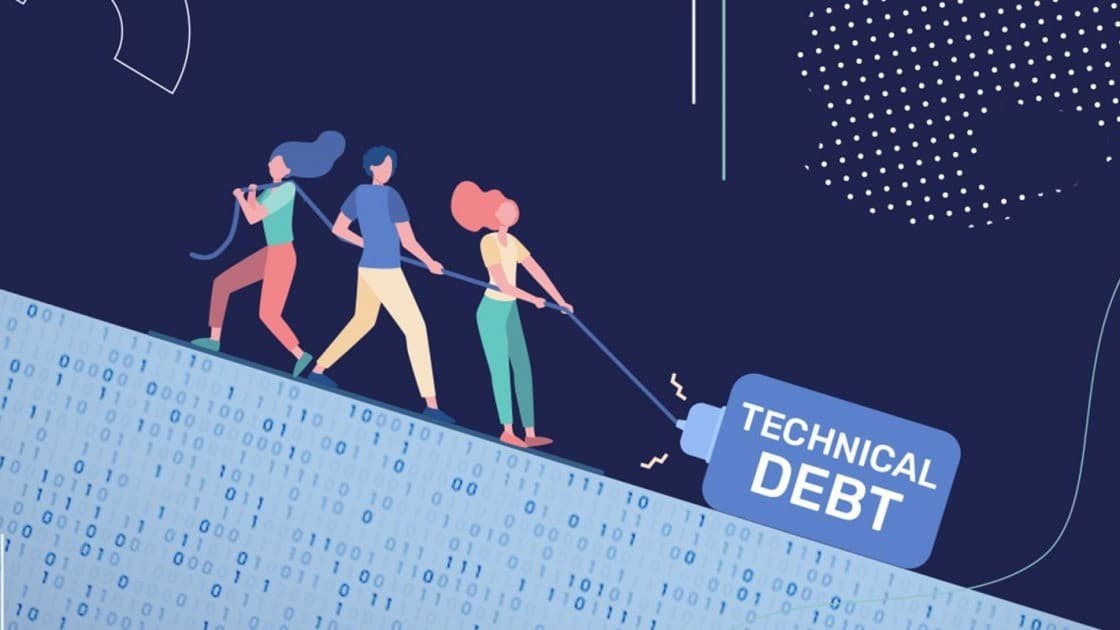
AI Is Increasing Technical Debt
Related articles
View all → Autonomous Coordination
The Rise of Autonomous Enterprise Coordination Platforms
Enterprise coordination the alignment of people, processes, information, and resources across organisational boundaries has always been expensive, slow, and error-prone when managed through human intermediaries alone. Autonomous coordination platforms powered by AI are replacing the coordination overhead of large organisations with intelligent systems that synchronise the enterprise continuously and without manual intervention.
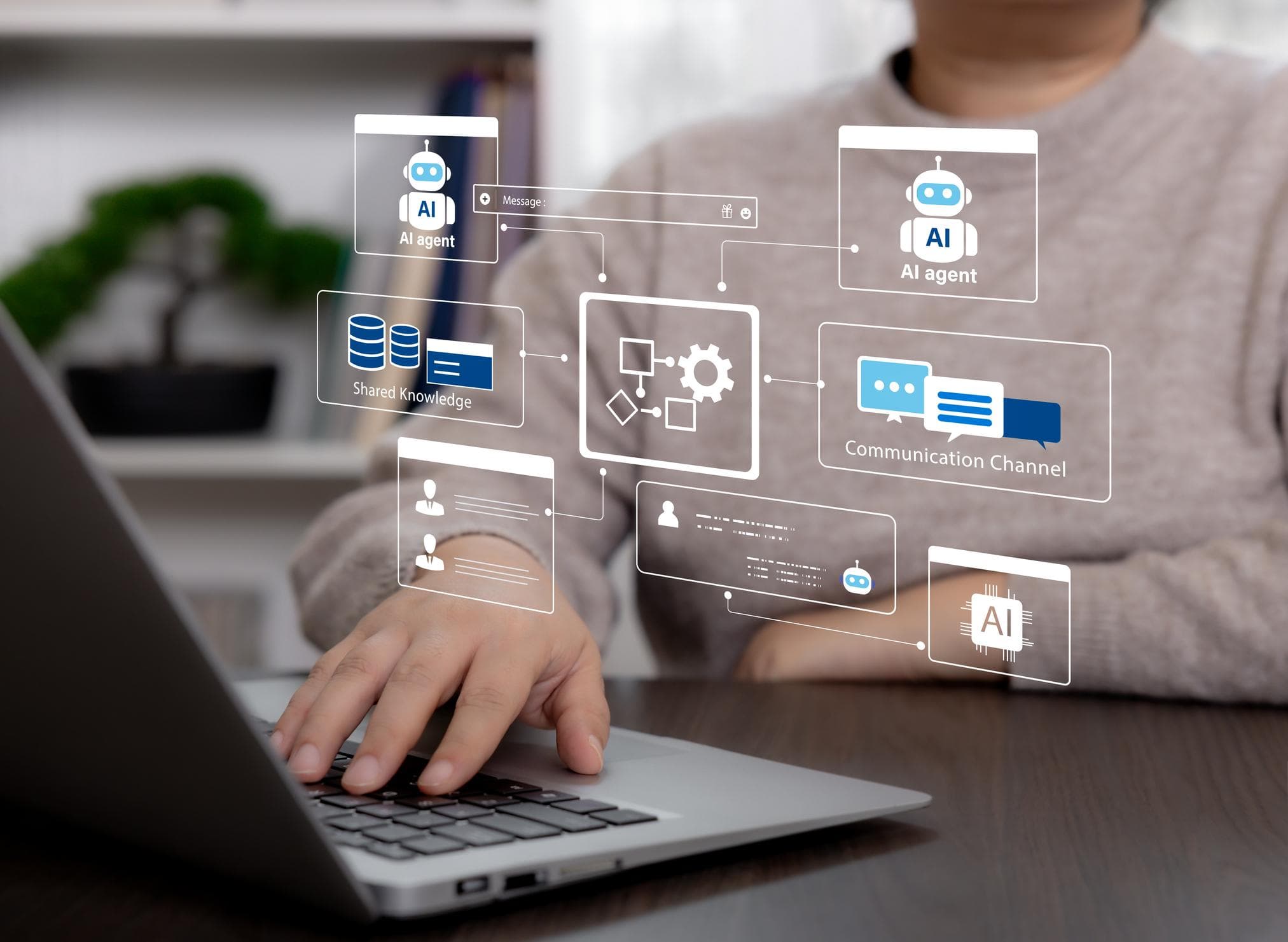 AI Agents
How AI Agents Are Transforming Enterprise Workflow Intelligence
AI agents autonomous systems that perceive their environment, reason about objectives, and take action across enterprise workflows are moving from research concept to operational reality. The enterprises deploying AI agents at scale are discovering that workflow intelligence is not just about automation it is about creating organisational capability that compounds with every cycle.
 AI-Native Infrastructure
Why Global Enterprises Need AI-Native Operational Infrastructure
The operational infrastructure that global enterprises built in the pre-AI era was designed for a different competitive environment. Enterprises that try to layer AI on top of legacy operational infrastructure will capture a fraction of AI's potential. The ones that rebuild their operational foundations as AI-native will gain structural advantages their competitors cannot close.