The New Logistics Game: Control vs Dependency
Every D2C brand is dependent on logistics partners for the operational capability that most directly determines its consumer promise: delivery speed and reliability. The brands that have accepted this dependency without questioning it are discovering that logistics partner performance is the most common cause of customer experience failures and that selective control over logistics is becoming a competitive requirement, not a luxury.
Nirmal Nambiar
Author
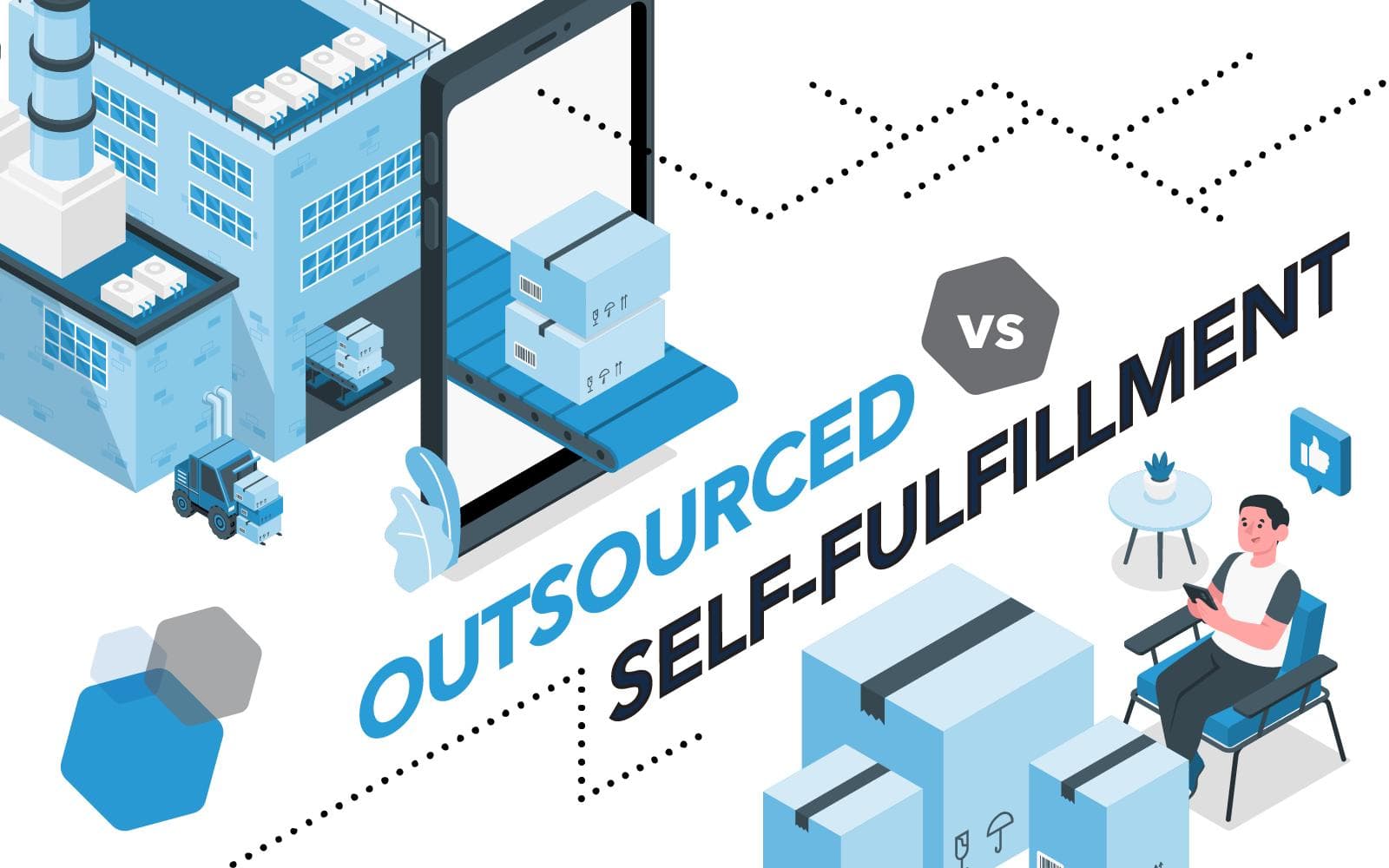
The brand's customer NPS dropped eighteen points in a single quarter. The product had not changed. The pricing had not changed. The marketing had not changed. What had changed was the logistics partner's performance: a volume surge at the 3PL during the Diwali season had created a fulfilment backlog that pushed average delivery times from 1.8 days to 4.6 days for three weeks. Returns processing had slowed to nine days. Customer support ticket volume had tripled. The brand had no operational visibility into the 3PL's backlog until it appeared as delivery delays in customer orders. It had no contractual remedy for the SLA breach because the 3PL agreement specified best-effort SLAs rather than guaranteed performance standards. And it had no backup logistics capability ready to absorb volume when the primary partner underperformed. The brand was dependent completely, structurally dependent on a logistics partner whose performance was outside the brand's control. The NPS drop was the consequence of having built the customer experience promise on an operational foundation the brand did not own.
The Dependency Problem: What Brands Have Built on Borrowed Infrastructure
The D2C growth of the last decade was built substantially on third-party logistics infrastructure 3PLs, last-mile carriers, marketplace fulfilment centres that allowed brands to achieve fast delivery and national reach without building their own logistics capability. This was the right trade-off in the early stage: the capital and operational complexity of building proprietary logistics infrastructure was prohibitive for brands at ₹10 to ₹50 lakh monthly revenue, and the third-party infrastructure available was generally adequate for the fulfilment SLAs that consumers expected in that period.The trade-off has become more consequential as the stakes have risen. Consumer delivery expectations have tightened from three-to-five-day to one-to-two-day. The brands that are winning market share are the ones with consistent, fast, reliable fulfilment a capability that is operationally dependent on logistics partner performance that the brand does not control. The brands that have experienced logistics partner failures backlogs, lost shipments, damaged inventory, slow returns processing have discovered that their most important consumer-facing operational promise is in the hands of an organisation whose primary accountability is to their own operational metrics, not the brand's consumer NPS.
The Control Spectrum: What Brands Can Actually Own
The logistics control spectrum runs from full dependency (all logistics functions outsourced to third parties with no owned capability) to full control (owned warehouses, owned last-mile fleet, owned returns processing). Full control is economically viable only for the largest brands the capital expenditure and operational management overhead of owned logistics infrastructure requires revenue scale that most D2C brands below ₹5 crore monthly revenue cannot justify. The strategic opportunity is in the middle of the spectrum: selective control over the logistics functions that most directly affect consumer experience, while maintaining third-party dependency for functions where the performance differential is lower.The logistics function with the highest consumer experience impact and therefore the highest priority for selective control is first-mile operations: the process of receiving, quality-checking, and preparing inventory for outbound fulfilment. Brands that operate their own or closely managed first-mile facilities can guarantee inventory accuracy, quality control, and order preparation speed in a way that fully outsourced 3PL operations cannot. The next highest-impact selective control is carrier diversification: maintaining active relationships with two to three last-mile carriers and the operational capability to shift volume between them based on performance rather than depending on a single carrier whose performance cannot be actively managed.
Building Control Without Building Everything
The practical path to meaningful logistics control for a mid-scale D2C brand (₹50 lakh to ₹3 crore monthly revenue) is a three-step sequence. The first step is contractual control: replacing best-effort SLA agreements with performance-guaranteed contracts that specify delivery time windows, returns processing timelines, inventory accuracy standards, and financial remedies for SLA breaches. Most logistics partners will negotiate on SLA terms if the brand's volume justifies the conversation and the act of negotiating puts the brand in a position to monitor and enforce performance rather than accept it passively.The second step is visibility infrastructure: implementing real-time tracking of fulfilment performance against contracted SLAs not through the logistics partner's reporting dashboard, which reflects the partner's own performance definition, but through independent tracking of the brand's shipments from dispatch to delivery confirmation. This visibility enables proactive exception management (the shipment that has not moved in forty-eight hours gets escalated before the customer asks) and provides the data needed to hold the partner accountable against the contracted SLAs. The third step is carrier diversification: onboarding a second last-mile carrier capable of handling 30 to 40% of the brand's volume, so that performance failures by the primary carrier can be absorbed by shifting volume to the alternative rather than by absorbing the consumer experience damage of extended delivery delays. These three steps do not give the brand full control over its logistics. They give it sufficient control to prevent the worst outcomes and to manage performance actively rather than reactively.
Why Retention Is the New Acquisition in D2C
Related articles
View all → Autonomous Coordination
The Rise of Autonomous Enterprise Coordination Platforms
Enterprise coordination the alignment of people, processes, information, and resources across organisational boundaries has always been expensive, slow, and error-prone when managed through human intermediaries alone. Autonomous coordination platforms powered by AI are replacing the coordination overhead of large organisations with intelligent systems that synchronise the enterprise continuously and without manual intervention.
 AI Agents
How AI Agents Are Transforming Enterprise Workflow Intelligence
AI agents autonomous systems that perceive their environment, reason about objectives, and take action across enterprise workflows are moving from research concept to operational reality. The enterprises deploying AI agents at scale are discovering that workflow intelligence is not just about automation it is about creating organisational capability that compounds with every cycle.
 Enterprise Management
The Future of Enterprise Management Through AI Execution Layers
Enterprise management is being restructured by AI execution layers intelligent systems that sit between strategic direction and operational action, translating intent into coordinated execution at a speed and consistency that human management hierarchies cannot match. The enterprises that deploy these layers effectively are redefining what management means and what managers do.