The Rise of AI-Powered Enterprise Governance and Operational Control
Enterprise governance has historically been a lagging function discovering problems after they have occurred and implementing controls to prevent recurrence. AI-powered governance and operational control systems are transforming this model into a real-time, predictive capability that identifies governance risks before they materialise and maintains operational control without the latency and overhead of traditional control mechanisms.
Nirmal Nambiar
Author
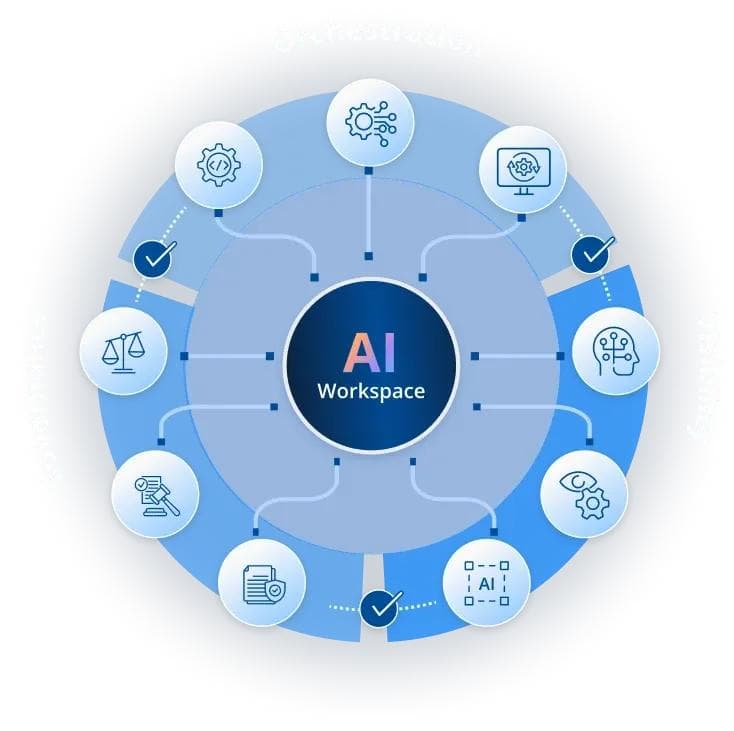
The governance function in large enterprises has a structural problem that has persisted through every generation of enterprise management technology: it operates primarily in the past. Internal audit discovers control failures after the fact. Compliance monitoring identifies violations after they have occurred. Risk management frameworks assess risks that have already materialised into losses. The controls that governance functions implement are designed to prevent the recurrence of problems that have already caused damage not to prevent the initial occurrence of problems that are emerging but not yet visible. AI-powered governance and operational control systems are solving this structural problem at its root. By monitoring the full breadth of enterprise operational activity in real time, applying AI models that identify the precursor patterns of governance failures and control breaches before they develop into material problems, and maintaining comprehensive audit trails that provide complete accountability for every operational decision and action, AI-powered governance systems are transforming enterprise governance from a lagging detective function into a leading preventive capability. The enterprises that deploy AI governance systems effectively are not just reducing the frequency and severity of governance failures they are building a governance infrastructure that creates competitive advantage through the operational reliability, stakeholder trust, and regulatory relationship quality that robust real-time governance produces.
Why Traditional Enterprise Governance Is Structurally Insufficient
Traditional enterprise governance operates through a combination of control design, periodic monitoring, and reactive investigation. Controls are designed at points in processes where governance failures are most likely approval requirements, segregation of duties, reconciliation processes, and audit checkpoints and are monitored through periodic review processes that sample compliance rather than providing comprehensive coverage. When control failures occur, investigation processes identify the root cause and produce remediation plans that tighten the controls or processes involved. This model has produced governance infrastructure that is adequate for the governance risks of a previous era the risks that historical patterns made predictable enough to design specific controls for but inadequate for the dynamic, complex, and often novel governance risks of the current enterprise environment.The inadequacy is visible in the frequency of significant governance failures in large enterprises despite substantial governance investment. Financial misstatements, regulatory violations, fraud losses, and operational control failures occur in organisations with mature, well-resourced governance functions not because the governance infrastructure is absent but because it cannot maintain real-time coverage across the full complexity of enterprise operations and cannot identify the novel failure patterns that have no historical precedent. AI-powered governance addresses both limitations: it provides comprehensive real-time coverage of enterprise operations that periodic sampling cannot achieve, and it identifies novel failure patterns by detecting statistical anomalies in operational data rather than requiring specific knowledge of the failure mode in advance.
Four AI Capabilities Transforming Enterprise Governance and Operational Control
Capability 1: Continuous controls monitoring
AI governance systems monitor the effectiveness of every control in the enterprise's control framework continuously not through periodic audit sampling but through real-time analysis of every transaction, approval, and operational action against the control objectives it is designed to satisfy. When a control is breached a transaction that bypasses required approval, a segregation of duties violation, a reconciliation exception that exceeds defined tolerance the system identifies it immediately and routes it to the appropriate governance or management function for investigation. The coverage improvement over periodic audit sampling is not incremental; AI continuous monitoring covers 100 percent of transactions rather than the 1 to 5 percent that sample-based auditing reviews a coverage level that changes the governance quality calculus fundamentally.
Capability 2: Predictive risk pattern identification
AI governance systems identify the statistical precursors of governance failures before the failures occur the patterns in transaction data, approval behaviour, process execution, and organisational dynamics that historically precede specific types of control failure. This predictive capability gives governance teams the advance warning to investigate emerging risks and strengthen controls before material failures occur, rather than investigating the causes of failures after they have produced losses. The predictive identification of fraud precursors is one of the most mature applications AI models that identify the behavioural patterns associated with fraud risk in employee actions and transaction flows give compliance teams investigation leads weeks or months before fraudulent activity would become detectable through conventional monitoring.
Capability 3: Automated regulatory compliance management
Regulatory compliance in large enterprises operating across multiple jurisdictions involves managing a complex, constantly changing set of requirements that generate significant operational overhead when managed manually. AI compliance management systems monitor regulatory developments across all operating jurisdictions in real time, assess the impact of regulatory changes on enterprise operations and controls, update compliance monitoring parameters to reflect new requirements, and generate the regulatory reports and documentation that each jurisdiction requires automatically and continuously rather than through the manual processes that most enterprises currently maintain. The cost reduction relative to manually managed multi-jurisdiction compliance is significant, and the quality improvement in coverage breadth, update speed, and documentation completeness is equally significant.
Capability 4: Complete operational audit trails and accountability infrastructure
AI-powered governance systems maintain comprehensive, tamper-evident records of every operational decision, action, and event across the enterprise creating an audit trail that provides complete accountability for governance purposes, regulatory examination, and internal investigation. The completeness and reliability of AI-maintained audit trails is categorically superior to manually maintained records: the AI system captures everything that happens in monitored systems, maintains it in an immutable format, and makes it searchable and analysable in ways that paper-based and manually maintained records cannot support. For enterprises in regulated industries where audit trail quality is a regulatory requirement, AI-maintained records provide the documentation standard that regulatory examinations increasingly expect.
AI Governance and Operational Control Diagnostic
- What percentage of your enterprise's transactions and operational actions are covered by real-time controls monitoring versus periodic audit sampling? The gap between real-time coverage and current coverage is the governance exposure that AI continuous monitoring closes.
- How quickly does your governance function currently identify a significant control breach and what is the average loss or regulatory exposure generated between the breach occurring and its identification? Both measures quantify the value of moving from periodic to continuous controls monitoring.
- Do you have the analytical capability to identify statistical precursors of governance failures in your operational data the patterns that historically precede specific types of control failure? Without predictive pattern identification, your governance function is permanently reactive rather than preventively oriented.
- What is the current cost of maintaining regulatory compliance across all your operating jurisdictions in headcount, external advisor fees, and management overhead and how does this compare to what AI-automated compliance management could deliver at comparable or better quality? This comparison is the financial case for AI compliance automation investment.
- How complete and reliable are your operational audit trails and how quickly can your governance function reconstruct a complete account of a specific operational event or decision sequence for regulatory or investigation purposes? Incomplete audit trails are a governance risk and a regulatory liability that AI-maintained records eliminate.
- What governance failures has your enterprise experienced in the past three years and what proportion of them would have been prevented or identified earlier by real-time AI monitoring of the operational patterns that preceded them? This retrospective analysis is often the most compelling internal justification for AI governance system investment.
Related articles
View all →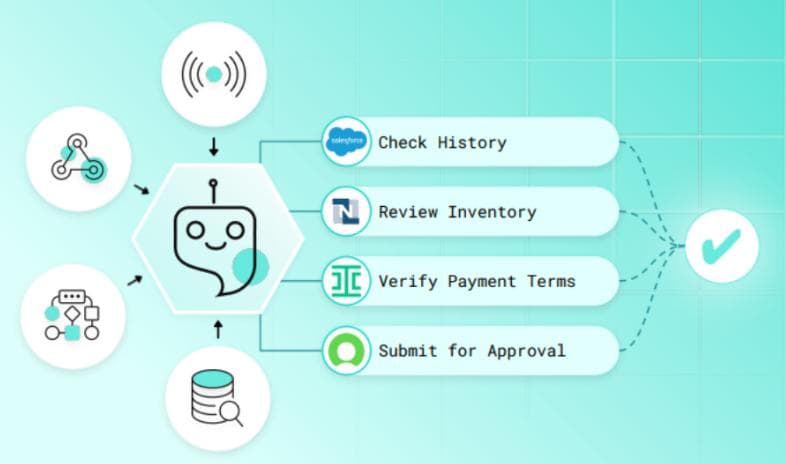 AI Execution
Why AI Execution Systems Will Define the Future of Enterprise Operations
The next frontier of enterprise competitive advantage is not strategy it is execution. AI execution systems that translate strategic intent into coordinated operational action, faster and more reliably than any human-managed process, are becoming the defining infrastructure of enterprise performance in every sector.
 Autonomous Coordination
The Rise of Autonomous Enterprise Coordination Platforms
Enterprise coordination the alignment of people, processes, information, and resources across organisational boundaries has always been expensive, slow, and error-prone when managed through human intermediaries alone. Autonomous coordination platforms powered by AI are replacing the coordination overhead of large organisations with intelligent systems that synchronise the enterprise continuously and without manual intervention.
 AI Agents
How AI Agents Are Transforming Enterprise Workflow Intelligence
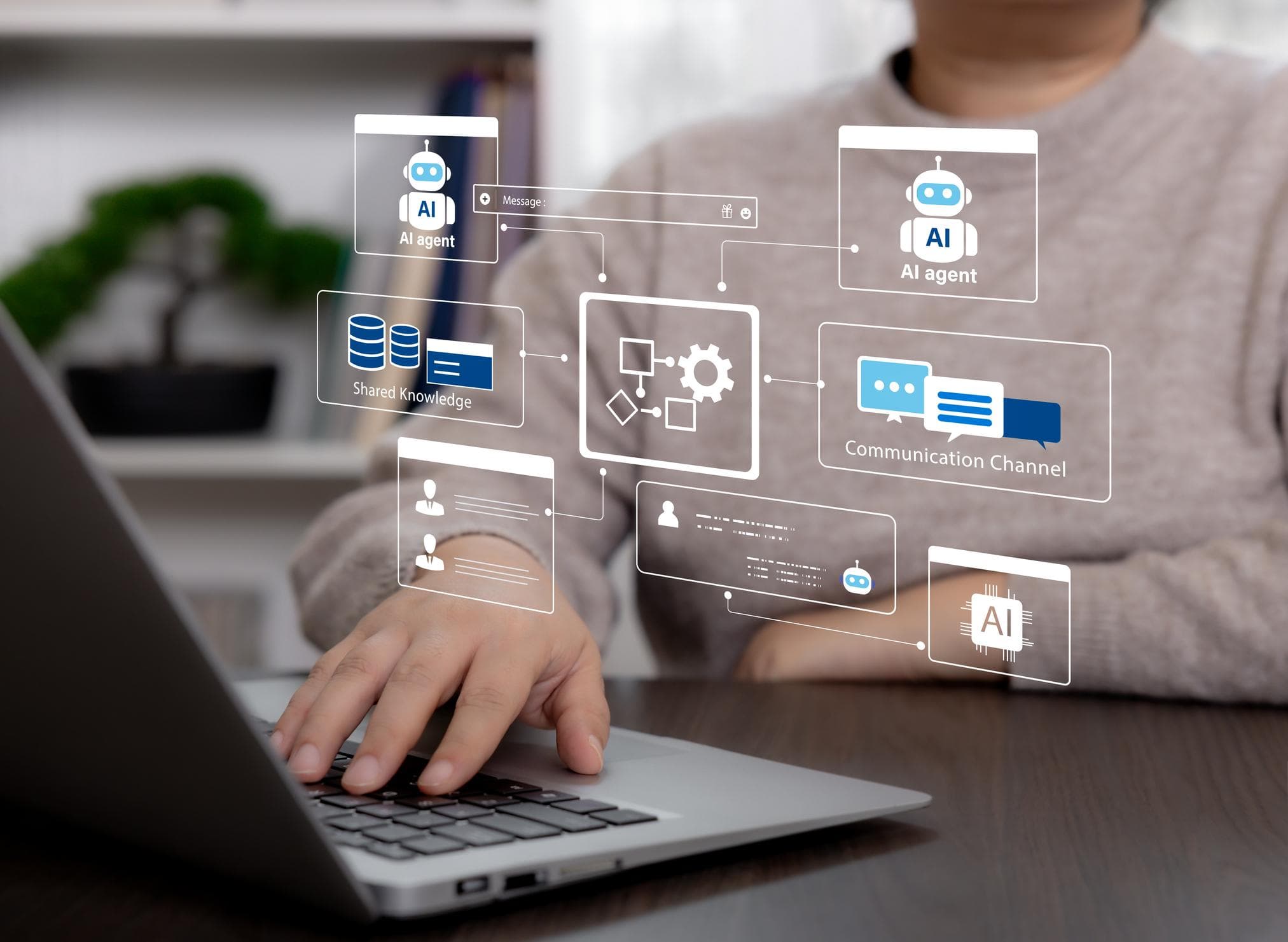
AI agents autonomous systems that perceive their environment, reason about objectives, and take action across enterprise workflows are moving from research concept to operational reality. The enterprises deploying AI agents at scale are discovering that workflow intelligence is not just about automation it is about creating organisational capability that compounds with every cycle.