The Shift from Factory → Customer: Direct Manufacturing Model
Every intermediary in the traditional supply chain distributor, wholesaler, retailer extracts margin and adds time. The direct manufacturing model eliminates or compresses these intermediaries, moving product from factory to customer with fewer steps, higher margins, and faster feedback loops. For the brands that execute it well, it is the highest-margin play available in consumer goods.
Nirmal Nambiar
Author
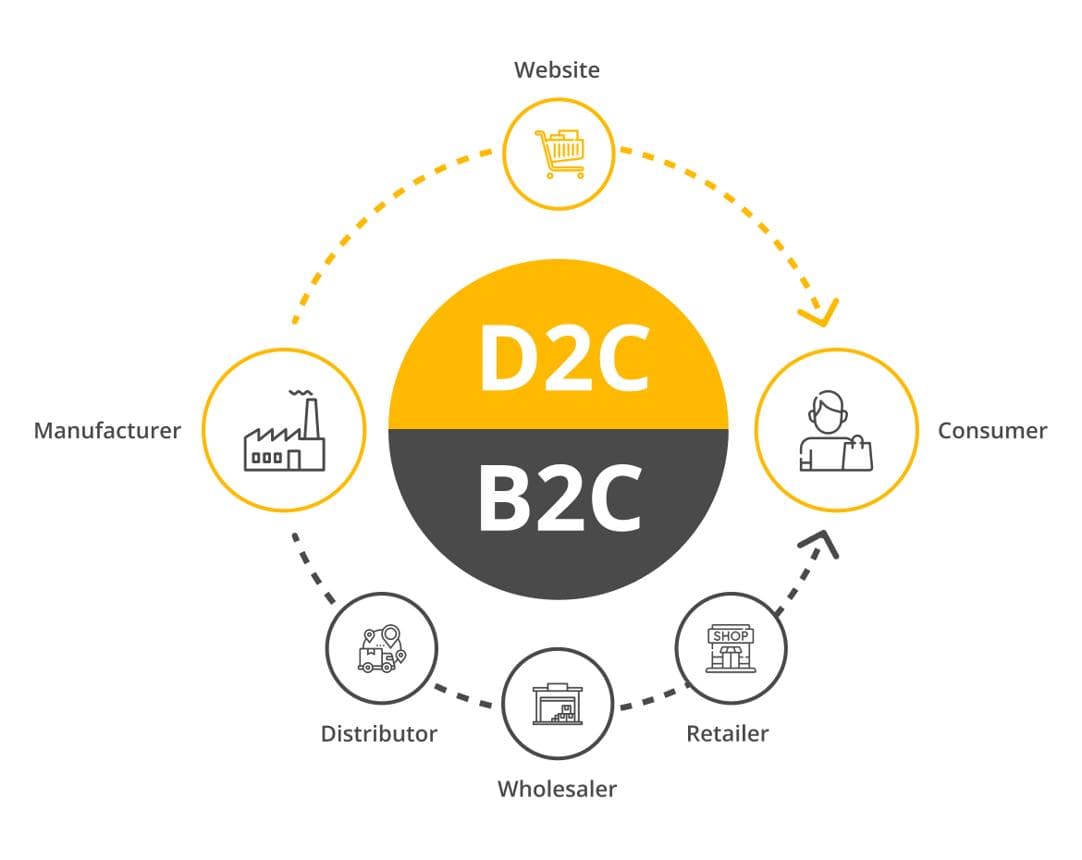
A skincare brand in Bengaluru sources its active ingredients, owns its formulation IP, and contracts with a manufacturing partner on a tolling arrangement where the brand supplies the ingredients and the contract manufacturer supplies the equipment, facilities, and production labour. The finished product moves from the contract manufacturer's facility directly to the brand's 3PL warehouse, from which it is fulfilled directly to the consumer through the brand's website and marketplace listings. The MRP is ₹799. The brand's landed cost ingredients, manufacturing, packaging, inbound logistics is ₹148. The gross margin is 81.5%. The traditional FMCG brand in the same category, selling through a distributor-retailer chain, would have a landed cost of similar magnitude but a net realisation after distributor margin (12%), retailer margin (25%), and trade promotion spend (8%) of approximately ₹415 a gross margin of 48%. The 33-percentage-point margin difference is not primarily a product of better formulation or better sourcing. It is primarily a product of supply chain architecture the elimination of the intermediary margin stack that separates the traditional manufacturer from the consumer.
The Intermediary Margin Stack: What It Costs
The traditional FMCG supply chain factory to carrying and forwarding agent to distributor to retailer to consumer was designed for a world in which the manufacturer had no mechanism for reaching the consumer directly. Each link in the chain provided a genuine service: geographic reach, local market knowledge, credit extension to retail, physical shelf management. Each link also extracted a margin typically 5 to 8% for the C&F agent, 10 to 15% for the distributor, 20 to 30% for the retailer that compresses the brand's net realisation to 40 to 60% of the consumer price.For large FMCG manufacturers with the scale to fund national distribution infrastructure and the negotiating leverage to extract favourable terms from distributors and retailers, this structure is manageable. For mid-size and emerging brands, the intermediary margin stack creates a fundamental unit economics problem: the consumer price required to deliver acceptable margin at the manufacturer level makes the product uncompetitive against established brands that have amortised their distribution costs across higher volumes. The direct manufacturing model is the structural alternative and the growth of e-commerce, quick commerce, and modern trade has created the consumer access infrastructure that makes it viable for brands without national distribution networks.
What the Direct Manufacturing Model Actually Requires
The direct manufacturing model is not simply selling online instead of through retail. It is a specific set of supply chain design decisions that, together, eliminate or compress the intermediary margin stack. The first is formulation and IP ownership the brand owns the product specifications rather than sourcing a white-label product, creating the product differentiation that justifies direct consumer engagement and the formulation leverage that reduces dependence on contract manufacturer pricing.The second is ingredient sourcing control the brand sources key raw materials directly from ingredient suppliers rather than through the contract manufacturer, creating cost visibility and pricing control that prevents margin erosion as the manufacturing relationship matures. The third is a tolling or CMO arrangement with a contract manufacturer that clearly separates the manufacturing service (which the CMO provides) from the product (which the brand owns), ensuring that scale benefits in ingredient sourcing accrue to the brand rather than to the manufacturer. The fourth is direct-to-consumer fulfilment infrastructure the operational capability to receive finished goods from the contract manufacturer and deliver them to the consumer without an intermediary taking margin on the transaction.
The Margin Reinvestment Opportunity
The 20 to 35 percentage-point gross margin advantage of the direct manufacturing model over the traditional distribution model is not simply a profit improvement. It is a strategic resource margin that can be reinvested in customer acquisition, product quality, or price competitiveness in ways that create sustainable competitive advantages that intermediary-dependent brands cannot match. A brand with 78% gross margin can spend 35% of revenue on customer acquisition and still have 43% gross margin remaining to cover fixed costs and generate profit. The equivalent traditional brand with 48% gross margin that spends 35% of revenue on customer acquisition is generating 13% gross margin a position from which fixed cost coverage and profitability are extremely difficult to achieve at any but the largest scales.The reinvestment of direct manufacturing margin into product quality better ingredients, better formulation, more rigorous quality control creates the product performance differentiation that generates the review volume, repeat purchase rates, and word-of-mouth recommendation that reduce customer acquisition costs over time. The brands that have built direct manufacturing models and reinvested the margin advantage into product quality and customer experience are compounding their advantage with each growth cycle creating a business architecture that is structurally more profitable and more defensible than the intermediary-dependent models they are replacing.
Supply Chain as a Competitive Advantage
Related articles
View all → AI
AIThe Future of AI-Powered Digital Marketplaces
Digital marketplaces are evolving from transactional platforms into intelligent commerce ecosystems. AI is reshaping how buyers discover products, how sellers manage operations, and how platforms create value for everyone in the ecosystem and the pace of this transformation is accelerating.
 Customer Support
How AI Can Transform Enterprise Customer Support Systems
Customer support is one of the highest-cost, highest-impact functions in a growing enterprise. AI is transforming it from a cost centre with linear scaling constraints into an intelligent service layer that delivers better customer outcomes at a fraction of the traditional cost per interaction.
 Logistics
The Future of Smart Logistics and Autonomous Delivery Systems
Autonomous vehicles, drone delivery, AI-powered routing, and real-time supply chain visibility are moving from pilot projects to operational infrastructure. The logistics industry is undergoing its most significant transformation since containerisation and the businesses that adapt earliest will define the next era of commerce.