Why AI Is Killing SaaS (Faster Than Anyone Expected)
The SaaS model was built on a specific assumption about how software is delivered and consumed. AI has invalidated that assumption and the revenue impact is already visible.
Nirmal Nambiar
Author

The SaaS business model had a beautiful run. Recurring revenue, predictable churn, seat-based pricing, and a world where the more users interacted with your product, the stickier it became. That model is being disrupted not by a better SaaS company but by a fundamentally different model of software delivery. AI doesn't deliver tools. It delivers outcomes. And customers, once they experience the difference, are willing to pay for outcomes in ways that make per-seat pricing look like a rounding error or nothing at all.
The SaaS Model's Core Assumption
SaaS was built on the idea that software enables humans to do work more efficiently. The human is still doing the work the software is the tool. Pricing based on seats made sense because the more people using the tool, the more value delivered. Retention was driven by workflow integration and switching costs. The more your team used Salesforce, Notion, or Jira, the harder it became to leave.AI disrupts this at the foundational level. When software doesn't just enable a human to do work, but does the work autonomously, the per-seat model becomes incoherent. You don't price a factory robot per person who would have done the job. You price it on the value of the work it replaces or the outcomes it produces.
Where the Revenue Impact Is Already Visible
Several SaaS categories are already seeing structural revenue compression. In customer support, companies deploying AI agents are reporting 4070% reductions in human support headcount and corresponding reductions in per-seat support software licenses. In content creation, the market for individual writer and editor SaaS tools has contracted as AI writing tools deliver output that meets the quality threshold for most use cases at a fraction of the cost. In data analysis, BI tools built around human analysts are facing displacement by AI systems that answer the same questions faster and without requiring the analyst.The leading SaaS companies are not immune. Salesforce, HubSpot, and Zendesk all reported slower seat expansion in 2025 than in any year since their respective IPOs. The cause is not competition from other SaaS companies. It is AI reducing the number of seats needed to do the same amount of work.
The New Business Models Replacing SaaS
- Outcome-based pricing: customers pay for results leads generated, support tickets resolved, documents processed rather than for seats. This aligns vendor incentives with customer value in a way that per-seat pricing never did.
- Usage-based AI pricing: consumption measured in tokens, API calls, or compute units. Revenue scales with actual use, not headcount. This favors companies with efficient models and penalizes those with high infrastructure costs.
- Embedded AI in workflows: instead of selling a standalone product, the model becomes integration-as-a-service AI embedded deeply into existing enterprise systems. Revenue from integration depth rather than seat adoption.
- AI agents as a subscription: instead of subscribing to a tool, companies subscribe to an AI agent that performs a function. The pricing is for the function performed, not the software running it.
Which SaaS Companies Survive the Transition
The SaaS companies best positioned for the transition share specific characteristics: they sit on proprietary data that makes AI more accurate and more valuable than generic models, they are embedded in workflows where the outcome delivered is directly measurable, and they have the engineering resources to shift from tool delivery to outcome delivery.Veeva in life sciences, Procore in construction, and niche vertical SaaS players with deep industry-specific data and workflow integration are more defensible than horizontal productivity tools. The defensibility comes from the same source as AI-native startup defensibility: data moats, workflow integration, and domain-specific outcomes that generic AI cannot match.
What Founders and Investors Should Be Watching
The SaaS metrics that mattered most Monthly Recurring Revenue, net revenue retention, seat expansion are becoming less reliable predictors of business health in an AI environment. A company with declining seat count but rising outcome volume is a healthier business than traditional SaaS metrics suggest. A company with strong seat growth but rising churn as customers discover AI alternatives is weaker than its metrics show.The transition from tool-based to outcome-based pricing is not optional for most SaaS categories. It is a question of when, not if. The companies managing this transition deliberately and early will capture the new model's revenue. The companies holding onto per-seat pricing until customers force a change will lose margin and market share simultaneously.
The Honest Conclusion
AI is killing SaaS faster than the industry expected because the core assumption of the SaaS model software as a tool that enables humans to do work is being replaced by a model where software does the work. The transition is not uniform across categories, and the timing is not synchronized. But the direction is not in doubt. The companies that treat this as a temporary disruption to be managed are the ones that will be most surprised by how permanent it turns out to be.
Related articles
View all → Autonomous Coordination
The Rise of Autonomous Enterprise Coordination Platforms
Enterprise coordination the alignment of people, processes, information, and resources across organisational boundaries has always been expensive, slow, and error-prone when managed through human intermediaries alone. Autonomous coordination platforms powered by AI are replacing the coordination overhead of large organisations with intelligent systems that synchronise the enterprise continuously and without manual intervention.
 AI Agents
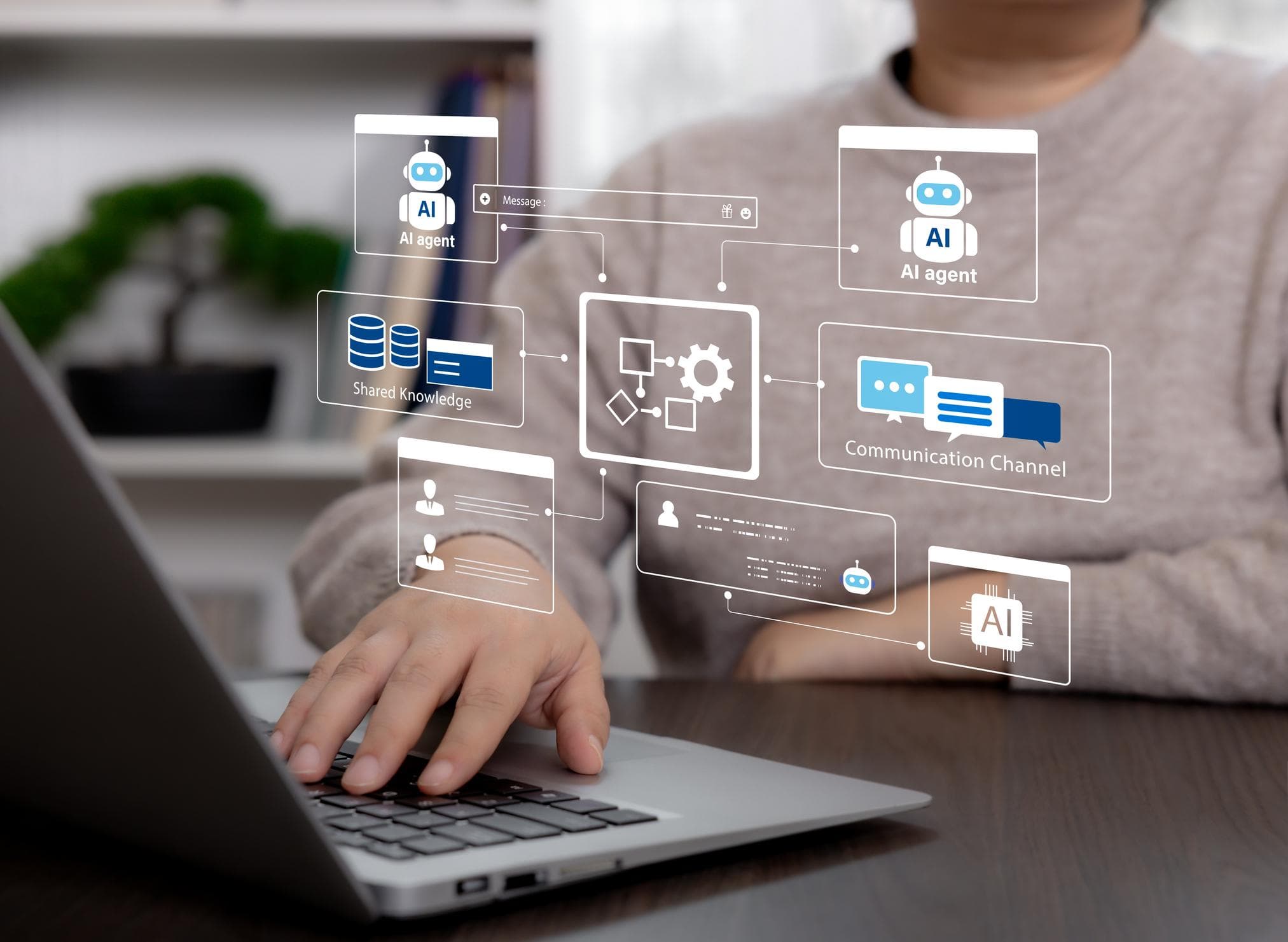
How AI Agents Are Transforming Enterprise Workflow Intelligence
AI agents autonomous systems that perceive their environment, reason about objectives, and take action across enterprise workflows are moving from research concept to operational reality. The enterprises deploying AI agents at scale are discovering that workflow intelligence is not just about automation it is about creating organisational capability that compounds with every cycle.
 AI-Native Infrastructure
Why Global Enterprises Need AI-Native Operational Infrastructure
The operational infrastructure that global enterprises built in the pre-AI era was designed for a different competitive environment. Enterprises that try to layer AI on top of legacy operational infrastructure will capture a fraction of AI's potential. The ones that rebuild their operational foundations as AI-native will gain structural advantages their competitors cannot close.