Why 'Availability' Is the New Marketing
The most effective marketing a D2C or FMCG brand can do in 2026 is ensuring that when a consumer wants the product, it is available at the right place, in the right channel, in the right format, immediately. Distribution is no longer a logistics function. It is a growth function. And the brands that understand this are building distribution advantages that no amount of creative advertising can overcome.
Prince Kumar
Author

A consumer walks into a pharmacy and asks for an ashwagandha supplement. The pharmacist reaches for the brand that is on the shelf. Not the brand with the best Instagram content. Not the brand with the most compelling founder story. Not the brand with the highest-rated product on an e-commerce platform. The brand that is physically present at the moment of purchase intent. In quick commerce, the equivalent dynamic is even more concentrated: the consumer opens Blinkit, searches for a protein bar, and buys one of the first two results that shows 'Available in 10 minutes' in their delivery zone. The brand that does not have dark store inventory in that zone does not exist for that consumer at that moment. Availability is not a supply chain metric. It is a market share metric. The brands that are available consistently across the channels where their consumers make purchase decisions are capturing sales that their competitors regardless of marketing investment or product quality simply cannot win because they are not present.
The Purchase Moment Is Where Brands Are Won and Lost
The conventional model of brand building create awareness, build consideration, convert at the point of purchase assumes that the consumer who has been made aware of and has developed a preference for a brand will seek it out at the point of purchase even if it requires some effort. This assumption held in a market where consumers had limited purchase options and were willing to search for their preferred brand. It does not hold in a market where the consumer has immediate access to multiple alternatives through their smartphone or through the shelf directly in front of them.The consumer who has seen ten impressions of a brand's Instagram advertising and has a positive brand association will buy the competitor's product if the competitor is available in the Blinkit listing and the brand is not. The consumer who asked their pharmacist for a specific brand will accept the pharmacist's alternative recommendation if the preferred brand is out of stock. Purchase intent, even strong purchase intent, converts to a competitor when availability fails. The marketing investment that created the purchase intent is wasted and worse, it has created a consumer who now has a purchase experience with the competitor rather than with the brand.
Distribution as a Growth Strategy: What It Requires
Treating availability as a growth strategy rather than a logistics function requires a fundamental shift in how distribution investments are evaluated and prioritised. In the conventional model, distribution is a cost to be minimised warehouse costs, logistics rates, distributor margins, and platform fees are negotiated downward and kept as low as possible. In the availability-as-marketing model, distribution is an investment to be optimised the question is not what is the cheapest way to get the product to the shelf, but what distribution investment produces the highest incremental revenue per rupee spent.This reframing changes the decision logic for distribution expansion. Adding a quick commerce dark store in a geography where the brand has strong demand signals is not a logistics cost it is a customer acquisition investment with a measurable CAC (the cost of inventory positioning and platform fees per new customer acquired through that dark store) and a measurable LTV (the repeat purchase value of a quick commerce customer in that geography). Evaluated on these terms, distribution expansion often has a better ROI than equivalent marketing spend because it captures purchase intent that already exists rather than creating new intent from scratch.
The Availability Audit: A Practical Framework
The availability audit is the practical tool for identifying where a brand's distribution gaps are creating the largest revenue losses. It starts with consumer demand mapping using sales data, search volume data, and quick commerce demand signals to identify the geographies and channels where consumer interest in the category is highest. It then maps the brand's current availability against that demand map identifying the specific geographies, channels, and time periods where consumer demand exists but the brand is not available to capture it.The output of this audit is a prioritised list of availability investments the specific dark store expansions, retail outlet additions, or channel listings that would close the largest demand-availability gaps. Prioritisation is driven by the magnitude of the gap (how much demand is present that the brand cannot currently capture) and the cost-per-order of closing it (the working capital and operational cost of the distribution investment divided by the expected incremental order volume). The brands that conduct this audit regularly quarterly is the appropriate cadence for a growing D2C brand and act on its findings consistently are the ones that build the distribution advantages that compound over time into market share positions that marketing spend alone cannot achieve.
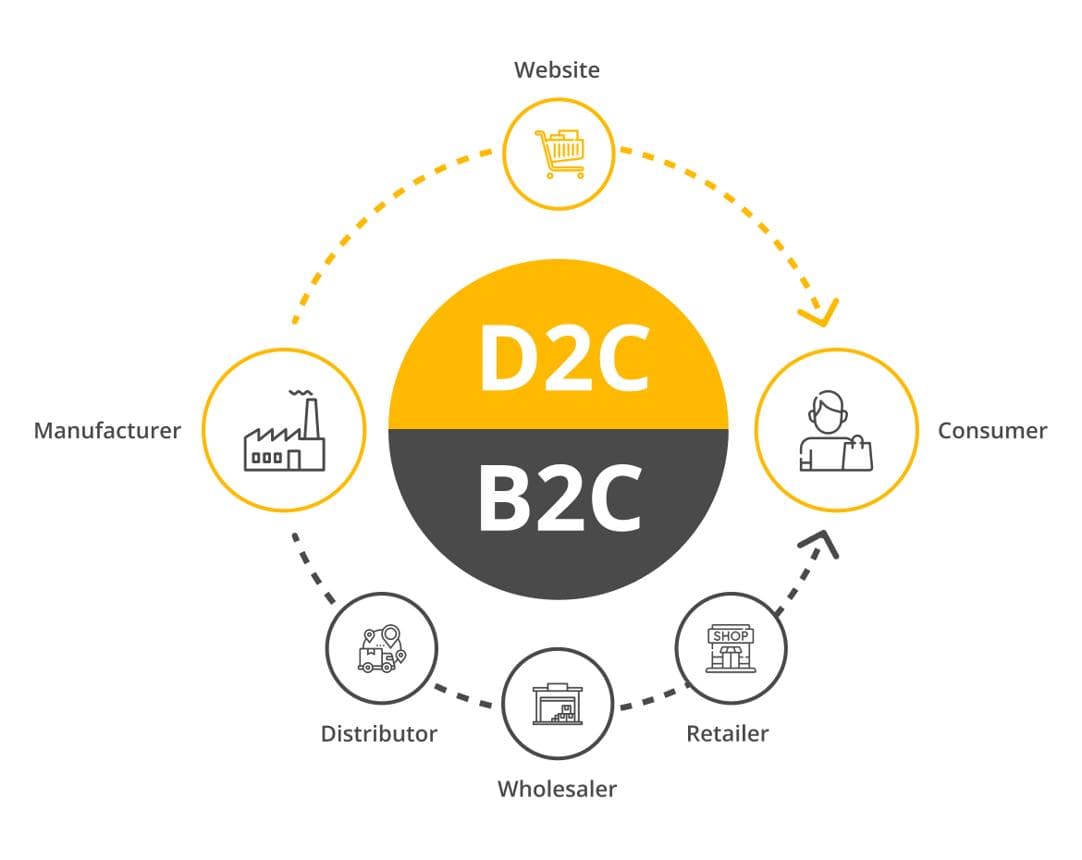
The Shift from Factory → Customer: Direct Manufacturing Model
Related articles
View all → AI
AIThe Future of AI-Powered Digital Marketplaces
Digital marketplaces are evolving from transactional platforms into intelligent commerce ecosystems. AI is reshaping how buyers discover products, how sellers manage operations, and how platforms create value for everyone in the ecosystem and the pace of this transformation is accelerating.
 Customer Support
How AI Can Transform Enterprise Customer Support Systems
Customer support is one of the highest-cost, highest-impact functions in a growing enterprise. AI is transforming it from a cost centre with linear scaling constraints into an intelligent service layer that delivers better customer outcomes at a fraction of the traditional cost per interaction.
 Logistics
The Future of Smart Logistics and Autonomous Delivery Systems
Autonomous vehicles, drone delivery, AI-powered routing, and real-time supply chain visibility are moving from pilot projects to operational infrastructure. The logistics industry is undergoing its most significant transformation since containerisation and the businesses that adapt earliest will define the next era of commerce.