Why CIOs and COOs Need an AI Execution Layer to Scale Enterprise Operations
For CIOs and COOs managing the operational complexity of large enterprises, the AI execution layer is not a future consideration it is the missing infrastructure that determines whether the organisation can scale without scaling its operational cost and complexity at the same rate.
Manthan Sharma
Author

The CIO and COO roles have never been more consequential or more difficult. The operational complexity of large enterprises has grown faster than the management tools and frameworks available to handle it. More systems, more data sources, more regulatory requirements, more stakeholder groups, more geographic markets, more product lines all of which need to be coordinated, monitored, and managed with a team and a technology stack that cannot scale infinitely. The AI execution layer is the infrastructure that addresses this scaling constraint. Not by replacing the CIO and COO's judgment which remains essential for strategic direction, stakeholder management, and novel situation handling but by handling the volume of routine operational execution that currently consumes the majority of their organisation's management bandwidth. For CIOs and COOs who have spent years trying to scale enterprise operations through headcount, process improvement, and conventional technology investment, the AI execution layer represents a qualitatively different scalability tool one that addresses the root cause of operational scaling constraints rather than its symptoms.
The Operational Scaling Problem and the AI Execution Solution
The operational scaling problem facing CIOs and COOs can be stated precisely: the volume and complexity of operational coordination tasks grows faster than the management capacity available to handle them. Each new product line adds procurement complexity, inventory management complexity, and supply chain coordination complexity. Each new market adds compliance complexity, localisation complexity, and logistics coordination complexity. Each new system adds integration complexity, data management complexity, and security monitoring complexity. The conventional response more headcount, more process standardisation, more tools addresses the symptoms without changing the underlying dynamic. AI execution layers change the dynamic by handling operational coordination autonomously at scale, breaking the link between operational complexity and management headcount that is the root cause of the scaling problem.The CIO who deploys an AI execution layer for IT operations automated incident detection and response, autonomous change management coordination, AI-powered capacity planning and resource optimisation is not just improving IT operations efficiency. They are fundamentally changing the ratio of operational complexity to management bandwidth that their organisation can sustain. The COO who deploys an AI execution layer for supply chain and operations autonomous procurement coordination, AI-powered inventory management, automated compliance monitoring is achieving the same fundamental transformation in operational scalability.
Building the AI Execution Layer: A CIO and COO Roadmap
The Assessment and Prioritisation Phase
Building an AI execution layer begins with a systematic assessment of where operational management bandwidth is being consumed most heavily relative to the strategic value of those activities. The processes consuming significant management time for routine coordination status tracking, exception handling, reporting, resource scheduling are the highest-priority candidates for AI execution layer deployment. For CIOs, this typically means IT service management, change management, and infrastructure operations. For COOs, it typically means supply chain coordination, procurement operations, and compliance monitoring. Prioritising by a combination of management bandwidth consumption and AI execution feasibility based on process structure, data availability, and risk profile produces a deployment roadmap with the highest near-term impact.
The Governance and Risk Management Framework
CIOs and COOs deploying AI execution layers must establish governance frameworks that define the boundaries of autonomous AI execution and the human oversight mechanisms that ensure those boundaries are respected. This is not a compliance exercise it is a risk management imperative. AI execution systems operating without adequate governance can amplify errors, violate regulatory requirements, or take actions that conflict with organisational policy. The governance framework must define: which operational decisions AI systems can execute autonomously, which require human notification before execution, and which require human approval before execution. It must also define the monitoring mechanisms that detect when AI systems are operating outside their intended parameters and the escalation protocols for addressing those situations.
CIO and COO AI Execution Layer Questions
- What proportion of your operations team's management bandwidth is currently consumed by routine coordination activities that an AI execution layer could handle autonomously?
- Which operational domains in your enterprise have the data infrastructure, process structure, and risk profile that make AI execution layer deployment most viable in the near term?
- What governance framework would you need to deploy an AI execution layer with confidence and do you have the internal capability to design and implement that framework, or do you need external support?
- How would you measure the operational impact of an AI execution layer deployment and what metrics would you track to evaluate whether the deployment is delivering the scalability improvement you need?
- What is your current plan for building AI execution layer capability and does the timeline of that plan match the pace at which your operational complexity is growing?
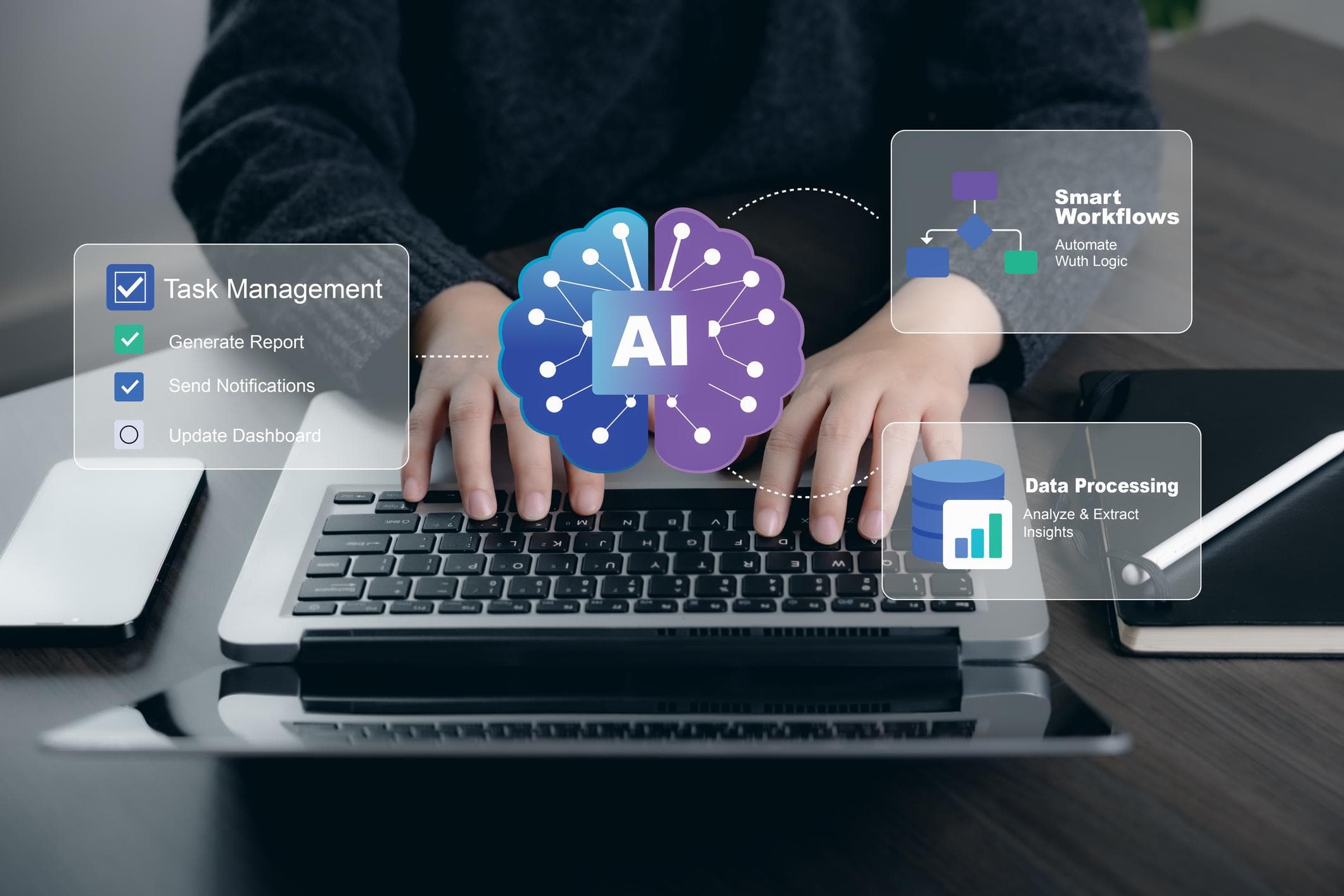
Building Autonomous Enterprises with AI Coordination and Workflow Intelligence
Related articles
View all →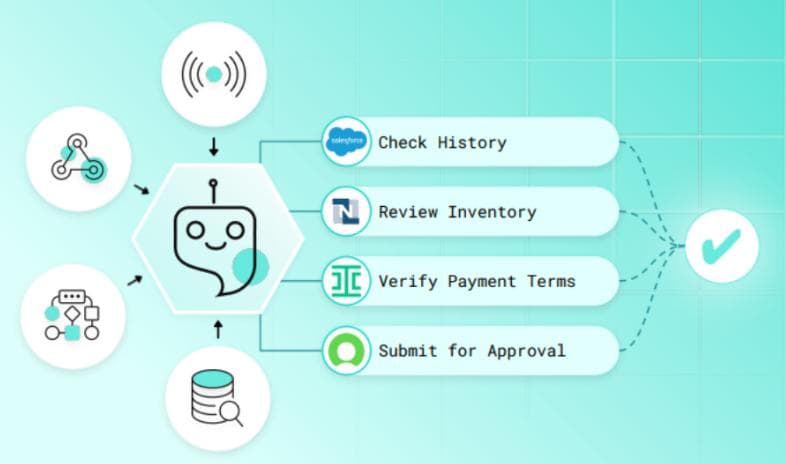 AI Execution
Why AI Execution Systems Will Define the Future of Enterprise Operations
The next frontier of enterprise competitive advantage is not strategy it is execution. AI execution systems that translate strategic intent into coordinated operational action, faster and more reliably than any human-managed process, are becoming the defining infrastructure of enterprise performance in every sector.
 AI-Native Infrastructure
Why Global Enterprises Need AI-Native Operational Infrastructure
The operational infrastructure that global enterprises built in the pre-AI era was designed for a different competitive environment. Enterprises that try to layer AI on top of legacy operational infrastructure will capture a fraction of AI's potential. The ones that rebuild their operational foundations as AI-native will gain structural advantages their competitors cannot close.
 Enterprise Management
The Future of Enterprise Management Through AI Execution Layers
Enterprise management is being restructured by AI execution layers intelligent systems that sit between strategic direction and operational action, translating intent into coordinated execution at a speed and consistency that human management hierarchies cannot match. The enterprises that deploy these layers effectively are redefining what management means and what managers do.