Why Cybersecurity Will Become AI-Driven by Default
The human analyst reviewing security alerts at 2 AM is already losing the speed battle against automated threats. AI-driven cybersecurity is not a future option it is the only architecture that can match the velocity, scale, and sophistication of AI-powered attacks.
Aditya Sharma
Author

The average time between a sophisticated attacker gaining initial access to an enterprise network and achieving their primary objective data exfiltration, ransomware deployment, or system disruption is now measured in hours, not days. The average time for an enterprise security team to detect a breach is still measured in days, sometimes weeks. The gap between attacker speed and defender speed is not a staffing problem. It is not a budget problem. It is an architectural problem: enterprise cybersecurity built on human-speed detection and response cannot match machine-speed attacks. AI-driven cybersecurity is not a new category of security product. It is a fundamental architectural shift in how security functions operate from human analysts reviewing alerts generated by rule-based systems, to machine learning models detecting anomalies in real time, AI systems correlating signals across the entire enterprise attack surface, and automated response systems containing threats faster than any human can be notified. Understanding this shift what it means for enterprise security architecture, for security team composition, and for the vendor landscape is the strategic priority for every enterprise security leader in the next three years.
The Speed Asymmetry: Why Human-Speed Defence Is No Longer Viable
The threat landscape has changed in two ways that make human-speed security architecturally insufficient. First, attack automation has reached the point where a threat actor can deploy thousands of simultaneous, customised phishing attempts, probe millions of endpoints for known vulnerabilities, and launch coordinated multi-vector attacks faster than any human security team can process the alert volume. Second, AI-powered attacks are beginning to emerge: malware that adapts its behaviour to evade signature-based detection, phishing content generated by large language models that passes human review, and automated exploitation chains that combine multiple vulnerabilities in novel sequences that rule-based detection systems have never seen before. The human analyst reviewing a security information and event management dashboard is operating at a fundamental speed and scale disadvantage against these threats. The analyst's value is not in reviewing the 10,000 alerts generated per day it is in designing the detection models, investigating the anomalies that AI systems flag as genuinely novel, and making strategic decisions about security architecture. The operational security function must be AI-driven.The transition to AI-driven security is not optional for enterprises above a certain scale and complexity. The attack surface of a modern enterprise cloud infrastructure, remote endpoints, SaaS applications, API integrations, supply chain software dependencies is too large and too dynamic for human-curated rule sets to cover adequately. Machine learning models that learn the normal behaviour of every user, endpoint, and system, and flag deviations from that baseline in real time, are the only architecture that can provide adequate coverage across a modern enterprise attack surface. The question is not whether to adopt AI-driven security, but how to build the architecture, select the vendors, and retain the human expertise that makes AI-driven security effective.
The Four Pillars of AI-Driven Enterprise Security Architecture
Pillar 1: Behavioural AI for anomaly detection
Traditional security detection relies on signatures known patterns of malicious behaviour that have been catalogued and encoded into detection rules. Signature-based detection is inherently reactive: it only detects threats that have been seen before. Behavioural AI builds a dynamic model of normal behaviour for every entity in the enterprise environment users, devices, applications, and network flows and detects deviations from that baseline that may indicate compromise. Behavioural detection catches novel threats that signature-based systems miss, identifies insider threats that don't match external attack patterns, and reduces the false positive rate that makes alert fatigue a chronic problem in traditional security operations.
Pillar 2: AI-powered threat intelligence and correlation
The modern enterprise generates an enormous volume of security-relevant signals across endpoint detection systems, network monitoring, cloud security tools, identity systems, and application logs. Human analysts cannot correlate this signal volume in real time. AI-powered threat intelligence platforms ingest and correlate signals across all these sources, identify attack patterns that span multiple systems and timeframes, and surface the small number of genuinely significant incidents that require human investigation. The value is not just in detection speed it is in the ability to see the full scope of an attack campaign that, viewed through any single tool, appears as unrelated low-severity events.
Pillar 3: Automated response and containment
Detection without automated response still leaves a time gap between threat identification and containment that attackers can exploit. AI-driven security operations centres are moving toward automated response playbooks: when a user account shows signs of compromise, the system automatically forces re-authentication, restricts access to sensitive resources, and notifies the security team all within seconds of detection. When an endpoint shows signs of malware execution, the system automatically isolates the endpoint from the network while preserving forensic evidence for investigation. Automated response shrinks the time between detection and containment from hours to seconds, dramatically reducing the blast radius of security incidents.
Pillar 4: AI-augmented security team operations
AI-driven security does not eliminate the need for human security expertise it fundamentally changes what human security professionals do. Security analysts in AI-augmented operations spend less time reviewing alerts and more time investigating genuinely novel threats, improving detection models, designing security architecture, and conducting adversarial simulation to find gaps before attackers do. This requires a different skill profile than traditional security operations: analysts who understand machine learning model behaviour, can identify when AI systems are being deceived by adversarial inputs, and can translate threat intelligence into model improvements. Building this skill profile in the security team is as important as selecting the right AI security platforms.
The AI Security Readiness Diagnostic
- What is your current mean time to detect a security incident, and what percentage of your detection capability relies on rule-based signature matching versus behavioural anomaly detection?
- How much of your security team's time is consumed by alert triage and false positive review, and what AI-driven triage capability could be applied to reduce this overhead?
- Have you assessed your attack surface comprehensively cloud infrastructure, remote endpoints, SaaS applications, API integrations, and supply chain software and does your current detection architecture cover all of these surfaces?
- Do you have automated response playbooks for your highest-probability threat scenarios, and have you tested these playbooks in simulated attack exercises?
- Are your security team members developing the skills to operate in an AI-augmented environment understanding model behaviour, adversarial input risks, and the integration of threat intelligence into machine learning systems?
The Rise of Digital Economies Powered by Intelligent Platforms
Related articles
View all →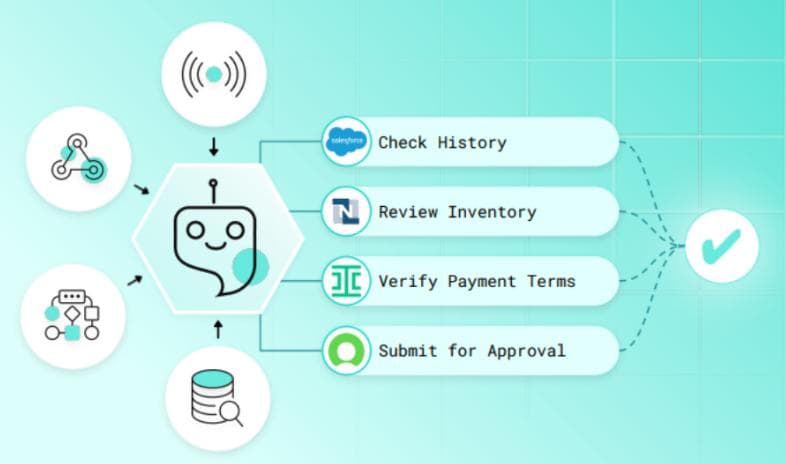 AI Execution
Why AI Execution Systems Will Define the Future of Enterprise Operations
The next frontier of enterprise competitive advantage is not strategy it is execution. AI execution systems that translate strategic intent into coordinated operational action, faster and more reliably than any human-managed process, are becoming the defining infrastructure of enterprise performance in every sector.
 Autonomous Coordination
The Rise of Autonomous Enterprise Coordination Platforms
Enterprise coordination the alignment of people, processes, information, and resources across organisational boundaries has always been expensive, slow, and error-prone when managed through human intermediaries alone. Autonomous coordination platforms powered by AI are replacing the coordination overhead of large organisations with intelligent systems that synchronise the enterprise continuously and without manual intervention.
 AI Agents
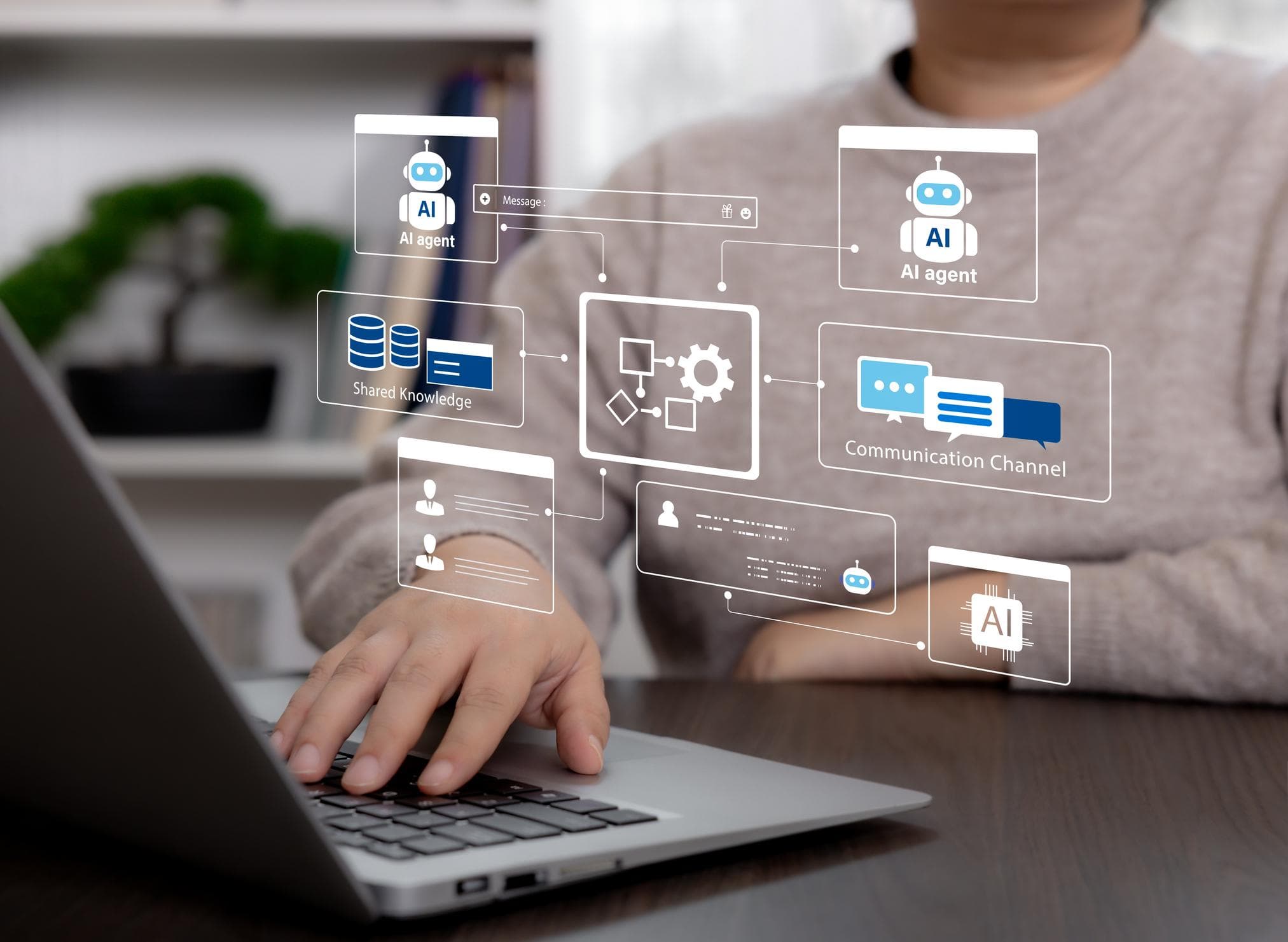
How AI Agents Are Transforming Enterprise Workflow Intelligence
AI agents autonomous systems that perceive their environment, reason about objectives, and take action across enterprise workflows are moving from research concept to operational reality. The enterprises deploying AI agents at scale are discovering that workflow intelligence is not just about automation it is about creating organisational capability that compounds with every cycle.