How Smart Automation Is Reshaping Global Industries
Smart automation the combination of AI, robotics, and intelligent software is moving beyond factory floors into every industry. The organisations that understand how to deploy it strategically are achieving cost structures, quality levels, and operational speeds that are redefining industry benchmarks.
Aditya Sharma
Author

The first wave of industrial automation replaced physical labour in repetitive, structured manufacturing tasks. The assembly line, the CNC machine, the robotic welder these technologies reduced the human labour content of manufacturing and increased output consistency. But they were narrow. They could perform the specific task they were programmed for and nothing else. Changing the task required reprogramming and the cost and complexity of that reprogramming meant that automation was viable only for high-volume, stable production environments. Smart automation is fundamentally different. AI-powered systems that can perceive their environment, adapt their behaviour based on what they observe, learn from experience, and handle variability that rigid programmed systems cannot. This flexibility is what makes smart automation applicable across industries that the first wave of automation could not penetrate healthcare, logistics, agriculture, professional services, retail, and financial services.
The Dimensions of Smart Automation
Smart automation operates across three dimensions that distinguish it from traditional automation. The first is perceptual intelligence: the ability to sense and interpret the environment using computer vision, natural language processing, and sensor fusion. A smart automation system can read an unstructured document, interpret a spoken instruction, identify a defect by visual inspection, or navigate an unstructured physical environment. These perceptual capabilities open automation to tasks that previously required human sensory judgment.The second dimension is adaptive behaviour: the ability to modify responses based on changing conditions rather than executing a fixed programme. A smart automation system managing warehouse picking can adapt its route based on real-time inventory location changes, handle exceptions when items are not where the system expects them, and prioritise orders dynamically based on shipping deadlines. The third dimension is continuous learning: the ability to improve performance over time as the system accumulates experience making smart automation more valuable with deployment duration rather than depreciating like traditional capital equipment.
Smart Automation by Industry Sector
Logistics and Supply Chain: The Efficiency Frontier
Logistics is the sector where smart automation is delivering the most immediate and measurable impact. Autonomous mobile robots in fulfilment centres that navigate dynamically, adapting to changing warehouse layouts and inventory positions, are achieving pick rates three to five times higher than manual operations while reducing error rates by 60 to 80 percent. AI-powered demand forecasting systems are reducing inventory holding costs by optimising stock levels across distribution networks with a precision that manual planning cannot achieve. For Indian logistics operators and the D2C brands that depend on them, smart automation in the logistics layer is not a future consideration it is an active competitive dynamic reshaping cost structures now.
Financial Services: Automation of Judgment Tasks
In financial services, smart automation is extending into judgment tasks that were previously the exclusive domain of human professionals. AI-powered credit underwriting systems that evaluate loan applications using hundreds of data signals process applications in seconds with accuracy that matches or exceeds experienced underwriters. Intelligent document processing systems that extract, validate, and route information from unstructured financial documents eliminate manual data entry from compliance and reporting workflows. The financial services organisation with mature smart automation has a cost structure and processing speed that creates a significant competitive advantage in customer acquisition and operational efficiency.
Smart Automation Strategy Questions
- Which of your current operational processes involve high volumes of repetitive tasks, structured data processing, or rule-based decision making that could be candidates for smart automation?
- What is your current cost per transaction in your highest-volume operational processes and what would a 40 to 60 percent reduction in that cost enable for your business model?
- Have you evaluated smart automation solutions in your industry over the last 12 months and do you have a clear view of what competitors are deploying?
- What is the primary barrier to smart automation adoption in your organisation technology availability, implementation capability, change management, or investment justification?
- How would you measure the ROI of a smart automation investment and what is the minimum return threshold that would justify a pilot deployment?

Related articles
View all →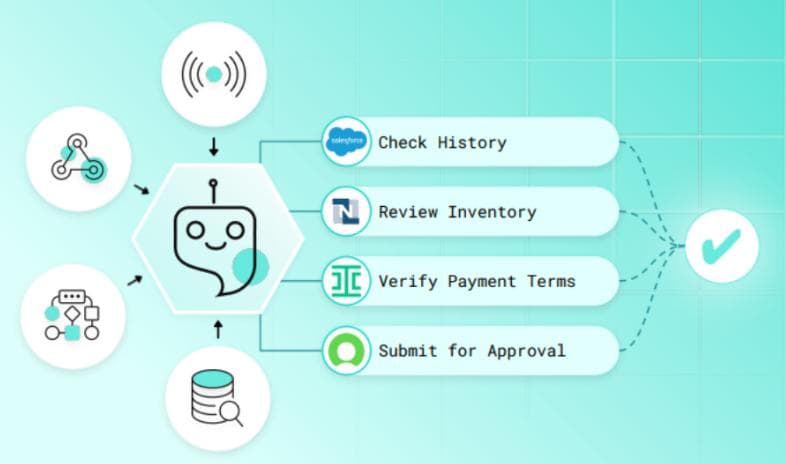 AI Execution
Why AI Execution Systems Will Define the Future of Enterprise Operations
The next frontier of enterprise competitive advantage is not strategy it is execution. AI execution systems that translate strategic intent into coordinated operational action, faster and more reliably than any human-managed process, are becoming the defining infrastructure of enterprise performance in every sector.
 Autonomous Coordination
The Rise of Autonomous Enterprise Coordination Platforms
Enterprise coordination the alignment of people, processes, information, and resources across organisational boundaries has always been expensive, slow, and error-prone when managed through human intermediaries alone. Autonomous coordination platforms powered by AI are replacing the coordination overhead of large organisations with intelligent systems that synchronise the enterprise continuously and without manual intervention.
 AI Agents
How AI Agents Are Transforming Enterprise Workflow Intelligence
AI agents autonomous systems that perceive their environment, reason about objectives, and take action across enterprise workflows are moving from research concept to operational reality. The enterprises deploying AI agents at scale are discovering that workflow intelligence is not just about automation it is about creating organisational capability that compounds with every cycle.