The Shift: Autonomous Execution Layer Where AI Takes Action, Not Just Notes
An autonomous execution layer does not flag problems for humans to resolve. It owns workflows, triggers actions across integrated SaaS and ERP tools, coordinates teams, and closes loops surfacing only genuine exceptions for human review. This is the architectural shift that separates AI that creates value from AI that creates dashboards.
Prince Kumar
Author
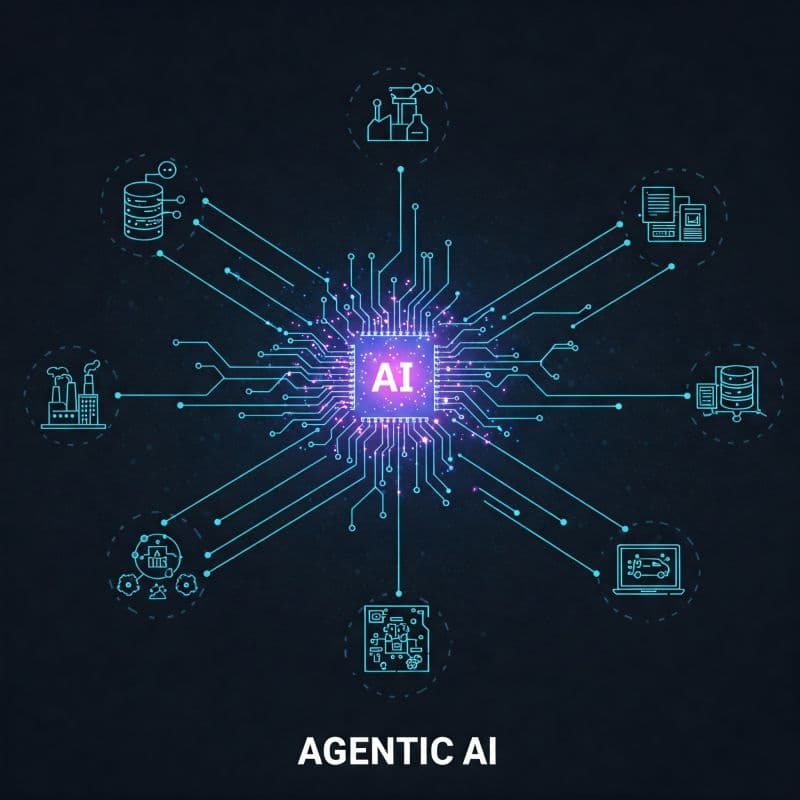
The vendor payment was overdue by eleven days. The AI system detected the overdue status, cross-referenced the approved payment schedule, confirmed that the vendor's bank details in the ERP matched the latest invoice, checked that the payment fell within the pre-approved threshold for autonomous release, released the payment from the treasury system, sent a confirmation to the vendor's accounts contact, updated the ERP record, and logged the complete action trail for the finance team's review. No human was involved. No email was sent asking someone to check on it. No status meeting was needed to discuss why the payment was delayed. The workflow opened and closed in eleven minutes. This is what an autonomous execution layer does and it is the architectural shift that separates AI that creates value from AI that creates dashboards.
Defining the Autonomous Execution Layer
An autonomous execution layer is a system that owns enterprise workflows from signal to resolution. It is not an AI assistant that helps humans take actions more efficiently. It is not a workflow automation tool that executes pre-scripted process flows without intelligence. It is the combination of AI-driven decision-making and automated action execution a system that can interpret a complex operational signal, determine the appropriate response, and execute that response across the enterprise's integrated tool ecosystem without human intervention for routine cases.The three defining characteristics of an autonomous execution layer are: it takes actions (not suggestions), it coordinates across systems and teams (not within a single tool), and it closes loops automatically by verifying outcomes and logging results. A system that does two of these three is a partial solution. A system that does all three is an execution layer.
Three Core Capabilities
The first capability is cross-system action execution. An autonomous execution layer must be able to take actions in the systems where work actually happens create and update tickets in project management tools, approve and route purchase orders in ERP systems, reconcile and release payments in treasury systems, update records in CRM systems, and send structured communications through email and messaging platforms. It must act where the work lives, not in a separate interface.The second capability is cross-team coordination. Enterprise workflows do not live within a single team. A procurement workflow involves finance, operations, and legal. A customer escalation involves sales, customer success, and engineering. An autonomous execution layer must be able to assign tasks, trigger approvals, and escalate delays across team boundaries with defined ownership and accountability at each step.The third capability is automatic loop closure. Every workflow the system initiates must have a defined resolution state a condition that, when met, closes the loop and logs the outcome. The system must verify that the resolution state has been reached, not simply that an action was taken. A payment released must be confirmed received. A ticket created must be confirmed resolved. An approval routed must be confirmed completed. Loop closure is what separates an execution layer from a sophisticated notification system.
The Human Role: Exceptions, Not Operations
The autonomous execution layer does not eliminate human judgment from enterprise operations. It relocates human judgment to where it is genuinely needed at the exception level, not the routine operational level. Humans review the cases where the system's confidence in the appropriate action is below the defined threshold. Humans handle the edge cases that fall outside the defined workflow parameters. Humans set the policies and thresholds that govern autonomous action. Humans review the audit trail and adjust the system's behaviour based on outcomes.What humans no longer do is route emails, follow up on approval status, chase overdue actions, and coordinate the resolution of routine workflow exceptions. SuperManager is designed as this autonomous execution layer a system that owns enterprise workflows, acts across integrated tools, and surfaces only genuine exceptions for human review.
Agentic AI in Action: 3 Real-World Use Cases (Finance, Ops, Engineering)
Related articles
View all →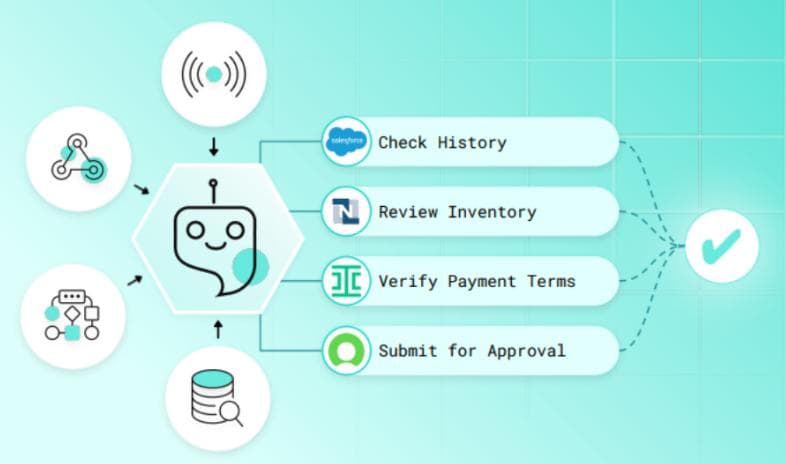 AI Execution
Why AI Execution Systems Will Define the Future of Enterprise Operations
The next frontier of enterprise competitive advantage is not strategy it is execution. AI execution systems that translate strategic intent into coordinated operational action, faster and more reliably than any human-managed process, are becoming the defining infrastructure of enterprise performance in every sector.
 Autonomous Coordination
The Rise of Autonomous Enterprise Coordination Platforms
Enterprise coordination the alignment of people, processes, information, and resources across organisational boundaries has always been expensive, slow, and error-prone when managed through human intermediaries alone. Autonomous coordination platforms powered by AI are replacing the coordination overhead of large organisations with intelligent systems that synchronise the enterprise continuously and without manual intervention.
 AI Agents
How AI Agents Are Transforming Enterprise Workflow Intelligence
AI agents autonomous systems that perceive their environment, reason about objectives, and take action across enterprise workflows are moving from research concept to operational reality. The enterprises deploying AI agents at scale are discovering that workflow intelligence is not just about automation it is about creating organisational capability that compounds with every cycle.