What Enterprises Should Do Next: Audit, Identify, Execute
The path from AI that produces insights to AI that executes workflows is not a rip-and-replace technology project. It is a three-step operational process: audit your recurring manual handoffs, identify the highest-friction coordination patterns, and introduce autonomous execution in the one workflow where the ROI is clearest and the risk is lowest.
Prince Kumar
Author

The single most common mistake enterprises make when they decide to move from insight-generating AI to execution-capable AI is starting with the technology selection. They evaluate platforms, run RFPs, compare integrations, and negotiate contracts before they have a clear map of which workflows they are trying to automate, what the manual steps in those workflows cost, and what the minimum viable execution capability looks like for their specific operational context. The right starting point is not a technology decision. It is an operational audit. Three steps audit, identify, execute define the practical path from where most enterprises are today to where autonomous execution delivers measurable ROI in under ninety days.
Step 1: Audit Your Recurring Manual Handoffs
A manual handoff is any step in a recurring workflow where a human receives information, decides what to do with it, and forwards it to the next person or system. In most enterprises, these handoffs are so embedded in daily operations that they are invisible they appear in email threads, Slack messages, and the muscle memory of the people who perform them, but not in any system-of-record that makes them visible and measurable.The audit process is straightforward: for every recurring workflow that crosses two or more team boundaries, map every step where a human is acting as a router receiving information from one source and forwarding it, with or without transformation, to another. Document the average time each routing step takes, the frequency at which the workflow recurs, and the downstream cost of delays at each step. This audit will produce a prioritised list of manual handoffs ranked by frequency, time cost, and downstream impact the input to step two.
Step 2: Identify Repetitive Coordination Patterns
Within the manual handoff audit, a subset of workflows will have a characteristic that makes them ideal candidates for autonomous execution: they are repetitive and rule-based. The routing decision is the same every time, or varies according to a small number of conditions that can be explicitly defined. Status emails sent every Monday. Slack pings triggered when a ticket has been in a specific state for more than forty-eight hours. Daily standup follow-ups on items flagged in the previous day's meeting. PO approval routing based on value threshold and category.These repetitive coordination patterns are the highest-value targets for autonomous execution not because they are the most complex workflows, but because they are the ones where the cost of manual coordination is highest relative to the complexity of the automation required. Identify the three to five patterns with the highest weekly coordination time and the clearest routing logic. These are the workflows where autonomous execution will deliver the fastest ROI.
Step 3: Introduce Execution Systems Starting with One Workflow
The execution principle that separates enterprises that successfully deploy autonomous execution from those that stall in planning is starting with one workflow, not ten. Choose the highest-friction, lowest-risk process from your identified patterns a strong default is PO approval under a defined value threshold and deploy the autonomous execution layer for that single workflow with full audit trail and human-in-the-loop escalation for exceptions.Measure the before-and-after cycle time, the reduction in manual coordination hours, and the exception rate (what percentage of workflows required human escalation). Use these metrics to build the internal ROI case and the operational confidence for the next deployment. The critical warning: do not buy another dashboard. The enterprises that audit their workflows and conclude they need better visibility are solving the wrong problem. The visibility already exists. What is missing is the execution layer that acts on what the visibility reveals.

From Insights to Execution: Why SuperManager Is the Autonomous Layer Your Enterprise Needs
Related articles
View all →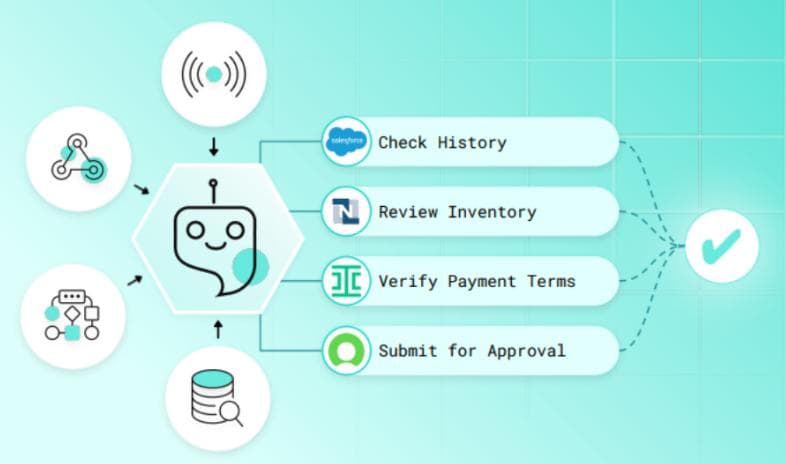 AI Execution
Why AI Execution Systems Will Define the Future of Enterprise Operations
The next frontier of enterprise competitive advantage is not strategy it is execution. AI execution systems that translate strategic intent into coordinated operational action, faster and more reliably than any human-managed process, are becoming the defining infrastructure of enterprise performance in every sector.
 Autonomous Coordination
The Rise of Autonomous Enterprise Coordination Platforms
Enterprise coordination the alignment of people, processes, information, and resources across organisational boundaries has always been expensive, slow, and error-prone when managed through human intermediaries alone. Autonomous coordination platforms powered by AI are replacing the coordination overhead of large organisations with intelligent systems that synchronise the enterprise continuously and without manual intervention.
 AI Agents
How AI Agents Are Transforming Enterprise Workflow Intelligence
AI agents autonomous systems that perceive their environment, reason about objectives, and take action across enterprise workflows are moving from research concept to operational reality. The enterprises deploying AI agents at scale are discovering that workflow intelligence is not just about automation it is about creating organisational capability that compounds with every cycle.